If you have been told to cut back on protein because of your liver condition, stop right there. That advice is outdated and could actually be doing more harm than good. For decades, doctors feared that eating too much protein would trigger confusion or brain fog in patients with cirrhosis a chronic liver disease characterized by scarring and loss of function. But modern science has flipped this script completely. Today, we know that starving your body of protein accelerates muscle wasting, a condition called sarcopenia loss of skeletal muscle mass and strength associated with aging or disease, which drastically increases the risk of death and hospitalization.
The goal isn't just survival; it's keeping your muscles strong enough to handle daily life, recover from illness, and improve your overall quality of life. This guide breaks down exactly how much protein you need, where to get it, and how to time your meals to fight back against muscle loss without worsening your symptoms.
Why Protein Is Non-Negotiable for Liver Health
You might wonder why protein matters so much when your liver is struggling. The answer lies in how your body handles energy. Cirrhosis puts your body in a state of high stress, burning through energy reserves at an accelerated rate. When you don’t eat enough protein, your body starts breaking down its own muscle tissue to find the amino acids it needs to survive. This process releases ammonia, a waste product that a healthy liver clears easily but a damaged liver struggles with. High ammonia levels can lead to hepatic encephalopathy a decline in brain function that occurs as a result of severe liver disease, causing confusion and drowsiness.
Historically, doctors tried to prevent this confusion by restricting protein. However, a landmark study published in 2004 by Córdoba et al. proved this wrong. They found that patients who ate normal amounts of protein did not have worse brain symptoms than those who restricted it. In fact, the low-protein group lost more muscle mass. Less muscle means less capacity to clear ammonia naturally, creating a vicious cycle. Current guidelines from the American Association for the Study of Liver Diseases (AASLD) now state clearly: do not restrict protein unless absolutely necessary under strict medical supervision. Instead, aim to feed your muscles to keep them working.
How Much Protein Do You Actually Need?
Most people think they need about 0.8 grams of protein per kilogram of body weight. If you have cirrhosis, that number is far too low. Your requirements are significantly higher to counteract the catabolic (muscle-breaking) state of the disease.
| Patient Status | Protein Target (g/kg) | Notes |
|---|---|---|
| Clinically Stable | 1.2 - 1.5 g/kg | Based on Ideal Body Weight (IBW) |
| With Sarcopenia | 1.5 g/kg | Higher target to rebuild muscle |
| Critically Ill/Hospitalized | 1.2 - 2.0 g/kg | Requires close monitoring |
A crucial detail here is what "weight" you use for these calculations. Many people with cirrhosis suffer from fluid retention, known as ascites or edema. If you weigh yourself on a scale, that number includes extra water, not just muscle and fat. Using your total weight will lead to overestimating your needs if you have massive swelling, or underestimating them if you are severely malnourished. Experts recommend using your ideal body weight or dry body weight (your weight without excess fluid) for these calculations. A registered dietitian can help determine this accurately.
For example, if your ideal body weight is 70 kg (about 154 lbs), you should aim for roughly 84 to 105 grams of protein every single day. To put that in perspective, a standard serving of chicken breast (3 ounces) has about 27 grams of protein. You’d need three servings just to hit the lower end of that range. This is why meal planning becomes essential.
Choosing the Right Protein Sources
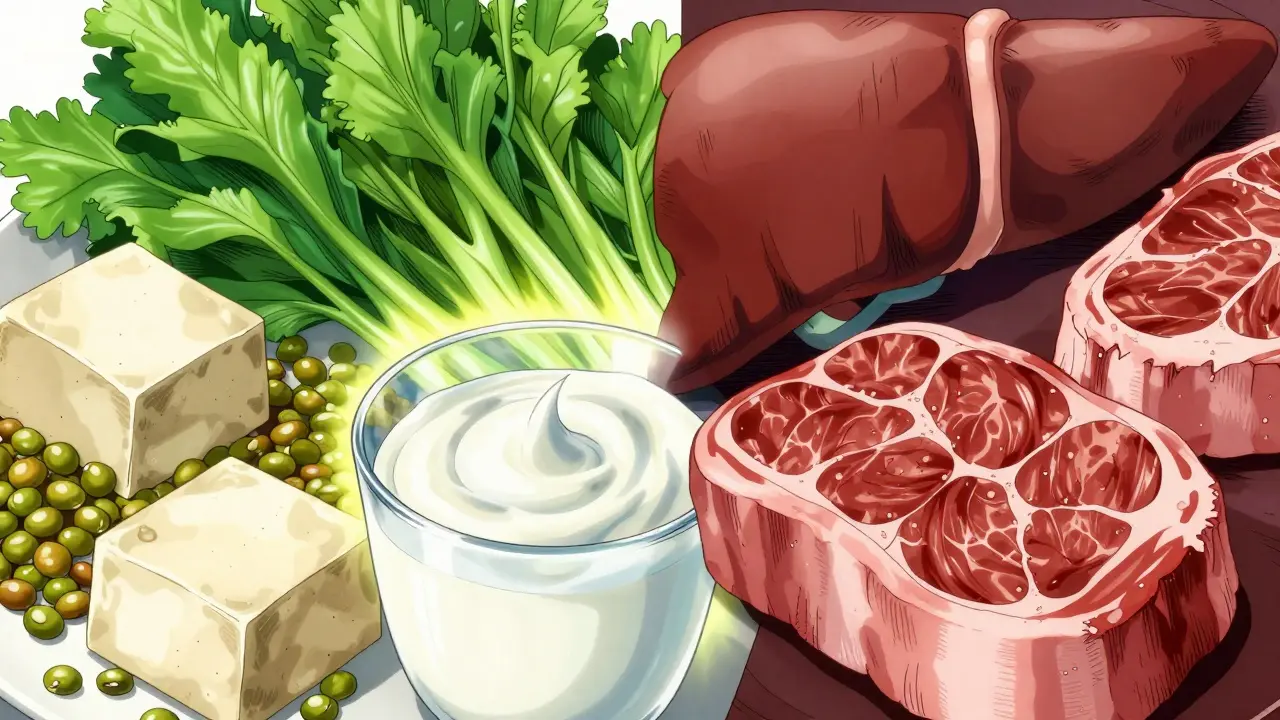
Not all proteins are created equal when it comes to liver health. While meat is a complete protein source, it can sometimes be harder for the liver to process, potentially leading to higher ammonia spikes in sensitive individuals. Research consistently shows that vegetable-based and dairy-based proteins are better tolerated and may even help reduce the risk of hepatic encephalopathy episodes.
- Dairy Products: Milk, yogurt, and low-salt cheese are excellent choices. An 8-ounce glass of milk provides about 8 grams of protein. Yogurt also offers probiotics, which can support gut health-a key factor in managing ammonia levels.
- Plant-Based Proteins: Lentils, beans, peas, tofu, and soy milk are highly recommended. The fiber in plant proteins helps bind toxins in the gut before they reach the liver. Aim to make plant sources the majority of your protein intake if possible.
- Eggs: One large egg contains about 6 grams of high-quality protein and is generally well-tolerated.
- Lean Meats and Fish: If you prefer animal protein, choose lean cuts like skinless chicken breast or white fish. Limit red meat, as it is denser in certain amino acids that produce more ammonia during digestion.
Try to vary your sources throughout the day. For breakfast, have Greek yogurt with berries. At lunch, enjoy a lentil soup. For dinner, pair grilled salmon with quinoa. This variety ensures you get a full spectrum of amino acids while minimizing digestive stress.
The Power of Meal Timing and Frequency
What you eat is important, but when you eat matters just as much. People with cirrhosis often have poor appetites due to early satiety (feeling full quickly) caused by fluid buildup in the abdomen. Eating three large meals can feel impossible and leads to long periods of fasting, which triggers muscle breakdown.
The solution? Eat small, frequent meals. Aim for 5 to 6 smaller meals spread evenly across your waking hours. Try to eat something every 2 to 3 hours. This keeps a steady supply of nutrients flowing to your body, preventing it from entering a starvation mode where it eats its own muscle for fuel.
One specific strategy stands out as critical: the late-night snack. During sleep, you fast for 8 to 10 hours. For someone with cirrhosis, this overnight gap is dangerous. It causes a surge in muscle breakdown. Studies show that consuming a high-protein, complex-carbohydrate snack 1 to 2 hours before bed improves nitrogen balance and preserves muscle mass overnight.
Good options for this bedtime snack include:
- A bowl of oatmeal made with milk
- Cottage cheese with fruit
- A protein shake with banana
- Whole-grain toast with peanut butter
This simple habit can significantly impact your ability to maintain strength and stability.

Micronutrients and Hidden Deficiencies
Protein isn't the only piece of the puzzle. Liver disease interferes with the absorption and storage of vital vitamins and minerals. Deficiencies in zinc, thiamine (Vitamin B1), folate, and magnesium are common and can worsen muscle weakness and fatigue.
Zinc, in particular, plays a role in ammonia metabolism. Some studies suggest that zinc supplementation (typically 50 mg of elemental zinc daily) may help improve hepatic encephalopathy symptoms and support immune function. However, always consult your doctor before starting supplements, as excessive amounts of certain vitamins like Vitamin A and D can be toxic to a compromised liver. Similarly, if you have hemochromatosis (iron overload), avoid Vitamin C supplements as they increase iron absorption.
Practical Tips for Sticking to the Plan
Knowing what to eat is one thing; actually doing it when you feel sick or bloated is another. Here are some realistic strategies to help you meet your nutritional goals:
- Boost Calorie Density: If you can’t eat large volumes, make every bite count. Add olive oil, avocado, or nut butters to your meals. Choose whole milk instead of skim milk. These additions provide calories without adding bulk.
- Use Supplements Wisely: If food isn’t enough, oral nutritional supplements designed for liver disease can help. Look for products containing branched-chain amino acids (BCAAs), which are easier for the liver to process and may help preserve muscle. Brands like Nutren Hepatic or specialized BCAA powders are often recommended by dietitians.
- Manage Sodium Carefully: While you need protein, you likely need to limit salt to control fluid retention. Avoid processed meats like bacon or ham, which are high in sodium. Opt for fresh ingredients and season with herbs, lemon juice, or garlic instead of salt.
- Track Your Progress: Keep a simple food diary for a week. Check if you’re hitting your protein targets. If you’re falling short, identify which meals were easiest to eat and replicate those patterns.
Remember, this is a marathon, not a sprint. Small, consistent changes add up. Working closely with a hepatologist and a registered dietitian who specializes in liver disease will give you the best chance at maintaining your strength and improving your outcomes.
Can I eat red meat if I have cirrhosis?
You can eat red meat, but it should not be your primary protein source. Red meat is harder to digest and produces more ammonia compared to plant-based or dairy proteins. If you have a history of hepatic encephalopathy, it is best to minimize red meat intake and focus on poultry, fish, eggs, legumes, and dairy.
Does protein restriction help with hepatic encephalopathy?
No, current medical consensus advises against protein restriction. Restricting protein leads to muscle loss (sarcopenia), which reduces the body’s ability to clear ammonia naturally, potentially worsening encephalopathy in the long run. Adequate protein intake is essential for maintaining muscle mass and overall survival.
What is the best bedtime snack for cirrhosis patients?
An ideal bedtime snack combines complex carbohydrates and protein to prevent overnight muscle breakdown. Good options include oatmeal with milk, cottage cheese with fruit, whole-grain crackers with cheese, or a protein smoothie. Aim to eat this snack 1-2 hours before going to sleep.
How do I calculate my protein needs if I have fluid retention?
Do not use your current scale weight if you have significant ascites or edema. Instead, work with a dietitian to determine your 'dry weight' or 'ideal body weight.' Protein recommendations (1.2-1.5 g/kg) should be based on this adjusted weight to ensure accurate dosing without overestimating needs.
Are protein supplements safe for liver disease?
Yes, but you should choose supplements specifically formulated for liver health, such as those rich in branched-chain amino acids (BCAAs). Standard gym protein powders may contain additives or imbalances that aren't suitable. Always consult your healthcare provider before starting any new supplement regimen.
