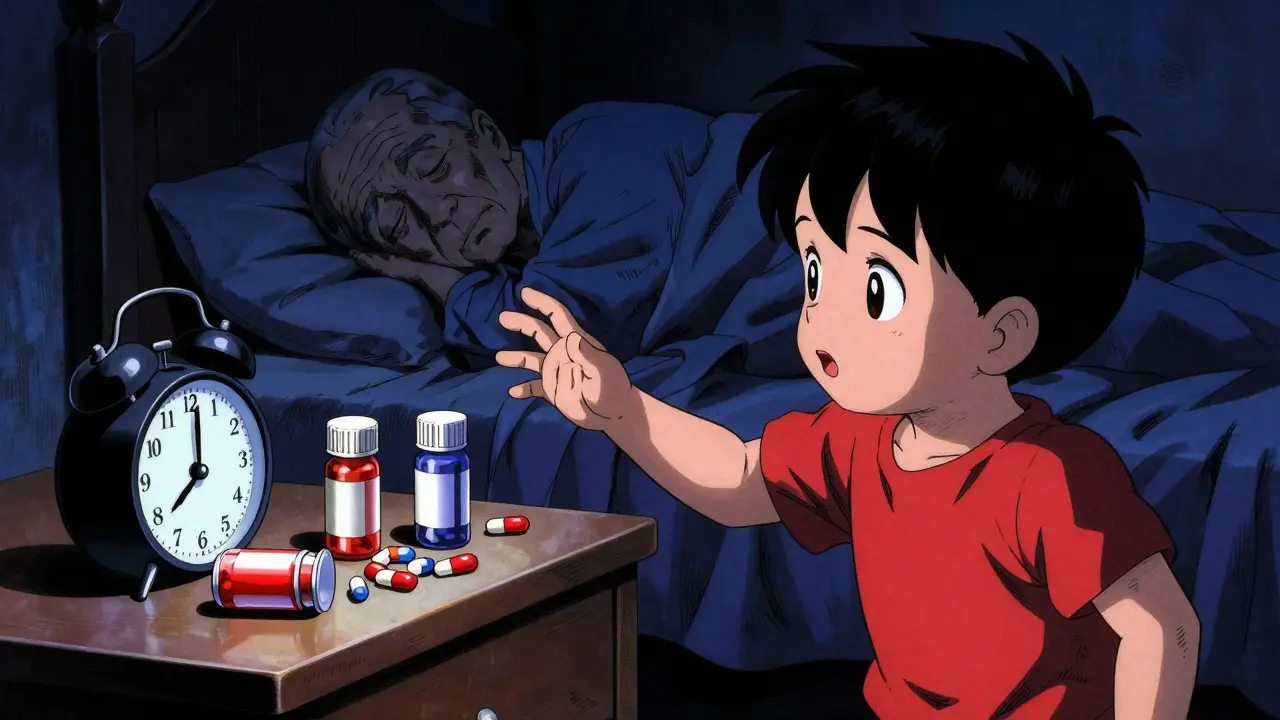
It is a terrifying thought for any family: a curious toddler finds a bottle of pills on the nightstand. While most parents are vigilant about locking away medications, grandparents often hold the key to a hidden danger. In fact, data from the U.S. Consumer Product Safety Commission reveals that grandparents are the source of medicine-related poisonings requiring emergency evaluation in 38% of pediatric cases. This isn't just bad luck; it is a systemic issue driven by demographic shifts, polypharmacy in older adults, and outdated safety habits.
As more seniors take daily prescriptions-34% of grandparents report daily use-the risk to visiting grandchildren skyrockets. Yet, only half of these caregivers store meds safely when kids are over. The good news? A single 15-minute educational intervention can double safe storage practices. This guide breaks down how families, healthcare providers, and community groups can effectively involve grandparents in keeping children safe from accidental poisoning.
The Hidden Risk: Why Grandparents Are a Critical Focus
To understand the problem, we must look at the numbers. Older adults make up only 13% of the U.S. population but account for 34% of prescription medication use. When you combine this high volume of drugs with the fact that 7 million grandparents live with their grandchildren, the exposure risk becomes significant.
The National Poll on Healthy Aging (a comprehensive survey conducted by the University of Michigan tracking health trends in older adults) highlights several alarming behaviors:
- Inaccessible Storage: 12% of daily caregiver grandparents keep prescription meds on bedroom nightstands or dressers.
- Container Changes: 29% transfer medications to non-childproof containers, such as weekly pill sorters or small jars.
- Personal Items: 31% keep medications in purses or handbags, which are easily accessible to climbing toddlers.
Why does this happen? Often, it is not negligence but convenience. Many grandparents view their home as a safe haven where "accidents don't happen." They may also suffer from age-related memory issues or physical limitations like arthritis, making child-resistant caps difficult to open. Consequently, they remove them or use easier-to-access containers, inadvertently creating hazards.
Bridging the Gap: Parent vs. Grandparent Habits
There is a distinct difference in how parents and grandparents approach medication safety. According to the American Academy of Pediatrics (AAP), parents demonstrate proper medication storage 68% of the time. Grandparents lag behind at 52%. However, the stakes are higher for grandparents because they manage more complex medication regimens.
| Safety Metric | Parents (Ages 30-49) | Grandparents (Caregivers) |
|---|---|---|
| Daily Prescription Use | 42% | 74% |
| Average Daily Medications | 2.1 | 4.7 |
| Proper Storage Rate | 68% | 52% |
| Use of Locked Storage | 58% | 22% |
| Transfer to Non-Childproof Containers | 8% | 29% |
| Belief that Child-Resistant Caps Are Foolproof | 12% | 36% |
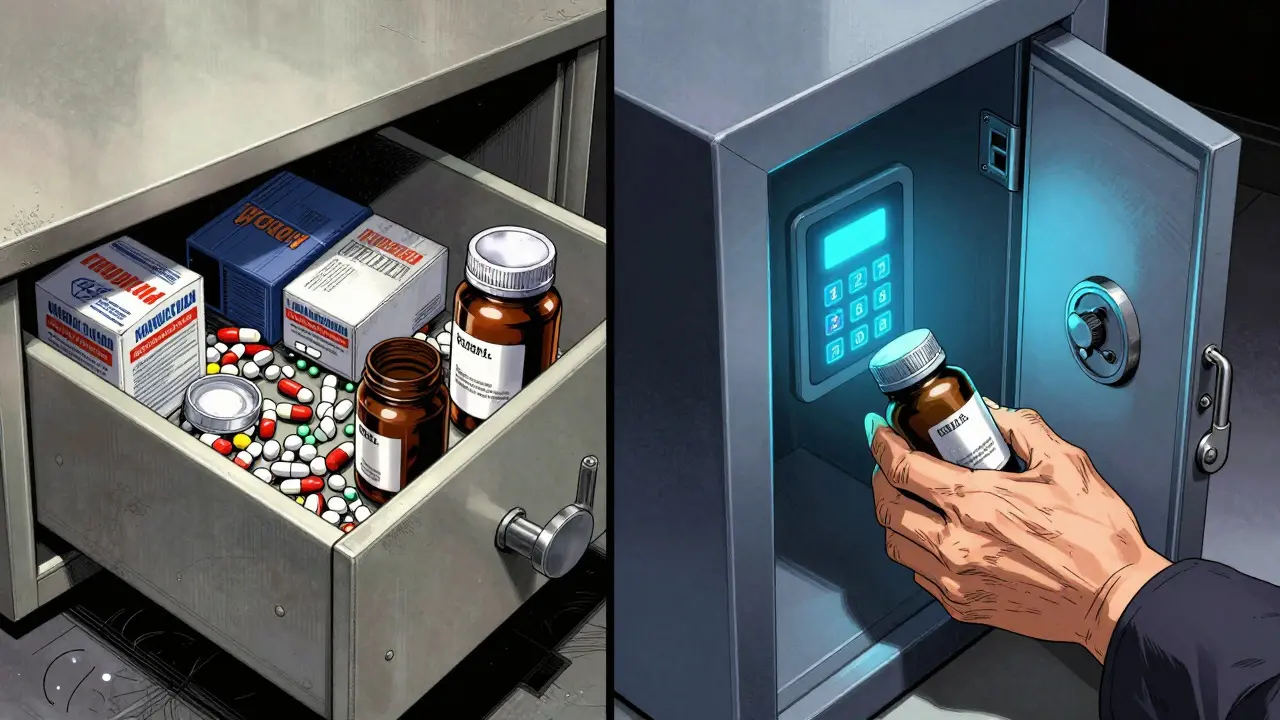
This table shows a clear gap. Grandparents are more likely to believe that standard packaging is sufficient protection. Research indicates that 30% of 4-year-olds can defeat child-resistant mechanisms within five minutes. Relying solely on these caps is a false sense of security. Effective safety requires a second layer of defense: locked cabinets or high shelves.
Evidence-Based Strategies for Intervention
You cannot simply tell grandparents they are doing something wrong. That approach triggers defensiveness. Instead, use evidence-based strategies that empower them. The NIH study (PMC5690368) proved that a brief, supportive educational session could improve safe storage from 39% to 78% in just three months.
- Reframe the Conversation: Avoid blame. Use phrases like "keeping our grandkids safe" rather than "you are endangering them." Focus on shared values.
- Demonstrate, Don't Just Tell: Show grandparents how to use child-resistant containers correctly. Only 54% of seniors can open them properly according to CDC testing. Provide hands-on practice.
- Upgrade Storage Solutions: Recommend specific hardware. Cabinets should be latched with locks requiring 15+ pounds of force to open. Store meds at eye level or higher, out of reach of climbing children.
- Address Physical Barriers: If arthritis makes caps hard to open, suggest adaptive tools or ask pharmacists for easier-to-open alternatives that still meet safety standards. Never default to an open jar.
The PROTECT Initiative's "Up & Away and Out of Sight" campaign provides excellent visual aids. These materials should be culturally appropriate and available in multiple languages. For tech-savvy families, the CDC's "Grandparent Guardian" digital toolkit offers multilingual videos demonstrating proper storage techniques.
The "Safety Talk": Engaging Children Directly
Physical barriers are essential, but education is the final line of defense. Teach your grandchildren simple rules. The CDC recommends a three-step "Safety Talk" that grandparents can repeat during visits:
- Rule 1: "Medicine is not candy." It looks colorful, but it is dangerous.
- Rule 2: "Only adults give medicine." Never take a pill unless Mom, Dad, or Grandma says so.
- Rule 3: "If you find medicine, tell an adult immediately." Do not hide it or try to eat it.
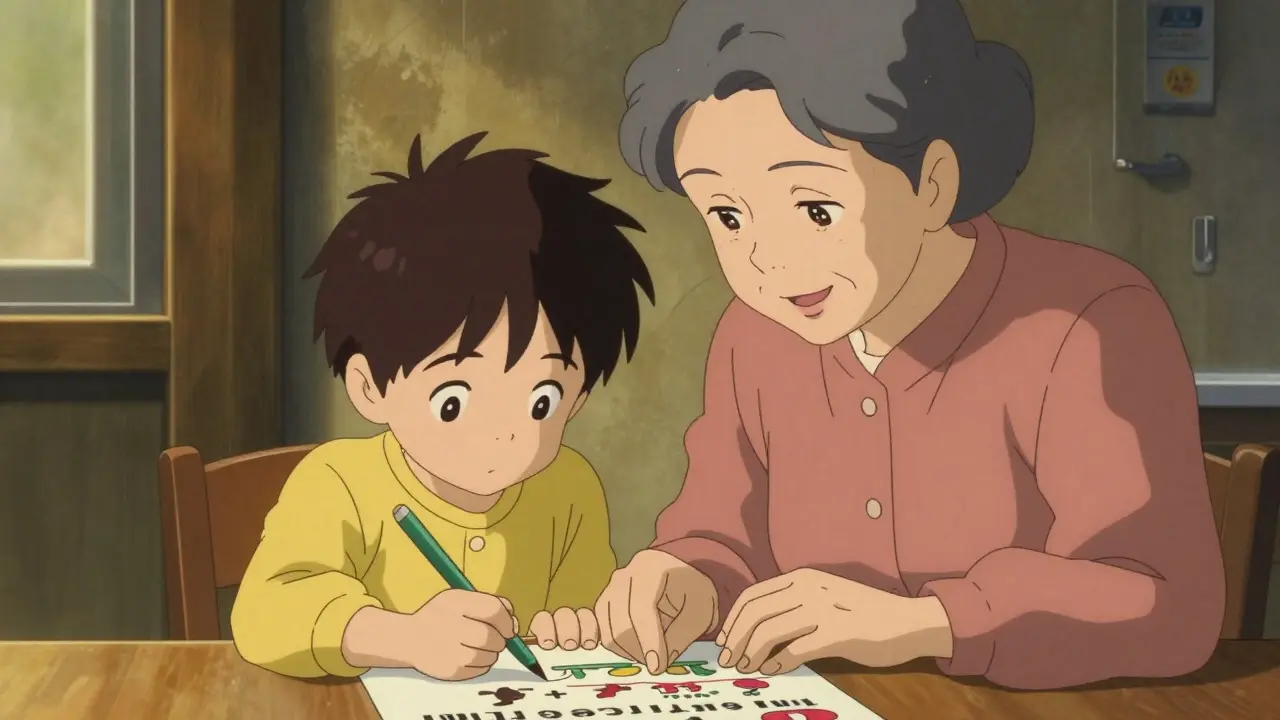
Make this interactive. Have grandchildren draw "medicine safety" posters. This reinforces the message without fear-mongering. One Reddit user, "GrandmaJen42," shared success after her grandson found blood pressure pills in her purse. She now uses a locked box and explains to him that these are "Grandma's special vitamins" that only adults touch. This narrative helps children understand boundaries.
Overcoming Resistance and Practical Barriers
Some grandparents resist change. AARP forums show that while 68% adopt safety measures after education, 24% cite practical barriers. Common objections include:
- "It feels insulting." Some feel criticized for their caregiving abilities. Counter this by framing safety as a modern update, not a correction of past mistakes.
- "I have too many pills." Polypharmacy (taking multiple meds) complicates organization. Suggest using a single, locked cabinet rather than spreading pills across nightstands and kitchen counters.
- "I forget where I put them." Memory lapses are real. Encourage a "one place" rule. All meds go into one locked container after each dose.
Pharmacists play a crucial role here. The Poison Control report notes that 78% of grandparents modified storage practices after receiving personalized safety assessments during pickup. Advocate for pharmacist counseling for all patients over 60 with visiting grandchildren. California’s AB 1862 mandates this, and other states should follow suit.
Next Steps for Families and Providers
If you are a parent, start the conversation gently. Visit your parents' home and observe where meds are stored. Offer to buy a lockbox as a gift. Say, "I saw this cool gadget and thought it would help keep things organized." For healthcare providers, integrate medication safety into annual wellness visits. The American Geriatrics Society added this to its Beers Criteria update in 2023. Ask every senior patient: "Do you have grandchildren who visit? How do you store your medicines?"
Community organizations can host workshops. AARP's "Safety at 65+" program increased proper storage from 41% to 79% in six months. Partner with local pharmacies to distribute free lockboxes. The cost is low ($15-$20 per participant), but the impact on preventing ER visits is immense.
Finally, remember that consistency matters. Reinforce these habits with regular check-ins. Send a text reminder before holiday visits. Share a new safety tip. By working together, we can turn grandparents from a potential risk factor into the strongest guardians of pediatric health.
Why are grandparents involved in so many pediatric medication poisonings?
Grandparents are involved in 38% of pediatric medication poisonings because they often take more daily prescriptions (polypharmacy) and may store them in accessible places like nightstands or purses. Additionally, many transfer meds to non-childproof containers for ease of use, unaware that young children can access these areas.
Are child-resistant caps enough to protect children?
No. Research shows that 30% of 4-year-olds can open child-resistant caps within five minutes. Experts recommend a two-layer approach: use child-resistant packaging AND store medications in a locked cabinet or high shelf out of reach.
How can I talk to my parents about medication safety without offending them?
Frame the conversation around shared love for the grandchildren. Avoid blame. Offer solutions, such as gifting a lockbox or helping organize their meds. Use phrases like "Let's make sure everything is super safe for the kids" rather than criticizing their current habits.
What should I do if a grandchild ingests medication?
Call Poison Control immediately at 1-800-222-1222 (in the US) or your local emergency number. Do not wait for symptoms to appear. Have the medication bottle ready to provide exact details to the specialist.
Is there a way to get free safety resources for grandparents?
Yes. Many pharmacy chains offer free lockboxes to senior customers. The CDC and AARP provide free digital toolkits and printables. Check with local senior centers for workshops funded by initiatives like the PROTECT Campaign.
