
Imagine your emotions are a car with broken brakes. You’re speeding down a hill, panic rising in your chest, and every instinct screams to crash into something just to make the noise stop. For people living with Borderline Personality Disorder, a mental health condition characterized by intense emotional instability and fear of abandonment, this isn’t a metaphor. It’s Tuesday.
You don’t need more advice on how to calm down. You need a plan for when the storm hits so hard that thinking feels impossible. That is where Dialectical Behavior Therapy (DBT), an evidence-based treatment developed by Dr. Marsha Linehan comes in. Unlike standard talk therapy, which often focuses on analyzing the past, DBT gives you concrete tools to survive the present moment without hurting yourself or others.
The Core Problem: Emotional Dysregulation
To understand why crisis planning matters, you have to understand the engine behind BPD. Most people feel emotions, process them, and move on. People with BPD often experience emotions with higher intensity, faster onset, and longer duration. This is called emotional dysregulation.
When you are triggered-maybe a partner didn’t text back, or a colleague criticized your work-your nervous system goes into overdrive. The rational part of your brain (the prefrontal cortex) gets hijacked by the emotional center (the amygdala). In that window, logic doesn’t exist. If you try to use logic during a crisis, you will fail. You need skills that bypass the need for logic entirely.
DBT addresses this by teaching four main skill sets:
- Mindfulness: Learning to be present without judgment.
- Distress Tolerance: Surviving crises without making them worse.
- Emotion Regulation: Understanding and changing how you feel.
- Interpersonal Effectiveness: Asking for what you need while maintaining respect.
For crisis planning, Distress Tolerance and Mindfulness are your primary weapons. Let’s look at how they work in practice.
Immediate Crisis Tools: When You Are About to Snap
If you are reading this because you are currently in pain, skip the theory. Here are two specific DBT skills designed to lower your physiological arousal quickly. These are not cures; they are fire extinguishers.
The STOP Skill
This is your first line of defense against impulsive actions like self-harm, sending angry texts, or leaving a situation abruptly.
- S - Stop. Freeze. Do not move. Do not speak. Just pause for one second.
- T - Take a step back. Physically create space if possible, or mentally detach from the immediate pressure.
- O - Observe. What is happening inside you? Is your heart racing? Are you clenching your jaw? Name the emotion without judging it as 'bad' or 'good.'
- P - Proceed mindfully. Ask yourself: "What do I want to happen here?" Then act based on that goal, not the impulse.
The TIPP Skill
Sometimes stopping isn't enough because your body is flooded with adrenaline. TIPP changes your biology to force your nervous system to calm down. It works best when emotions are at an 8 or higher on a scale of 10.
- Temperature: Splash ice-cold water on your face or hold an ice cube in your hand until it melts. This triggers the mammalian dive reflex, which instantly slows your heart rate.
- Intense Exercise: Burn off the adrenaline. Run in place, do push-ups, or sprint up stairs for 20 seconds. Get your heart rate up, then let it drop.
- Paced Breathing: Slow your breathing down. Inhale for 4 seconds, hold for 7, exhale for 8. This signals safety to your brain.
- Paired Muscle Relaxation: Tense your muscles tightly while exhaling, then release completely. Repeat this cycle.
Building Your Personal Crisis Plan
Knowing the skills is different from using them. In a crisis, working memory drops significantly. You cannot remember complex instructions when you are panicking. A crisis plan acts as an external hard drive for your brain.
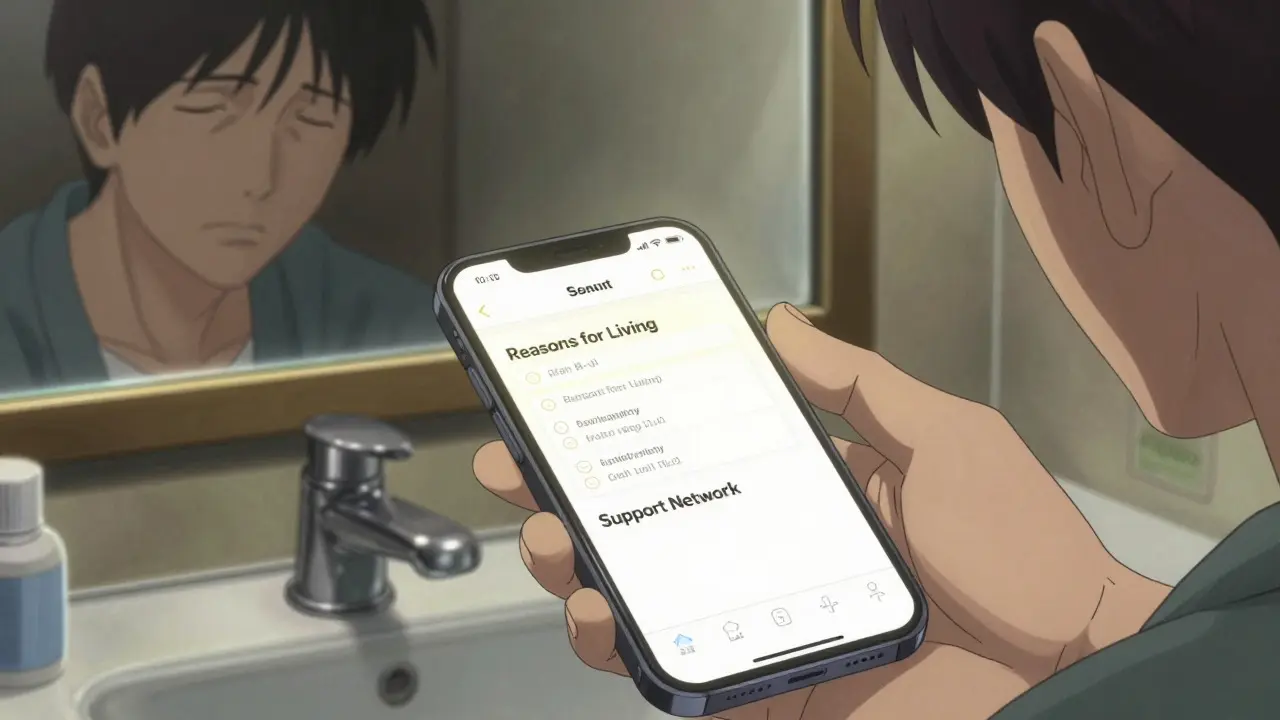
Create a physical document or a note on your phone that includes the following sections:
| Section | Purpose | Example Content |
|---|---|---|
| Early Warning Signs | Identify triggers before they escalate | "I start picking at my skin," "I feel empty in my chest," "I replay arguments in my head." |
| Immediate Actions | Physiological regulation | "Hold ice cube," "Call Sarah," "Go for a 10-minute walk." |
| Distractors | Shift focus away from pain | "Play Angry Birds," "Watch comfort show," "Listen to loud music." |
| Support Network | Human connection | Therapist number, trusted friend, crisis hotline (988 in US). |
| Reasons for Living | Anchor to future goals | "My dog needs feeding," "I want to see the new Marvel movie," "My mom loves me." |
Keep this plan visible. Tape it to your bathroom mirror. Save it as your phone’s lock screen. The goal is to reduce the cognitive load required to make a safe choice.

Long-Term Stability: Emotion Regulation
Crisis skills keep you alive today. Emotion regulation skills help you live well tomorrow. Once the immediate wave passes, you need to address the underlying vulnerability.
One key concept in DBT is PLEASE, which stands for treating Physical illness, Balanced Eating, Avoiding mood-altering drugs, Balanced Sleep, and Exercise. Sounds basic, right? But for someone with BPD, neglecting these basics drastically lowers your threshold for emotional sensitivity. If you are sleep-deprived and hungry, a minor criticism can feel like a life-threatening attack. Prioritizing biological needs is a form of emotional hygiene.
Another powerful tool is Opposite Action. If your emotion dictates an action that doesn’t fit the facts, do the opposite. If anxiety tells you to hide, go out. If anger tells you to yell, speak softly. Over time, this rewires your emotional response patterns.
Why DBT Works Better Than Standard Therapy for BPD
Standard Cognitive Behavioral Therapy (CBT) assumes that changing your thoughts will change your feelings. For many with BPD, this fails because the emotions are too intense to reason with. DBT integrates acceptance strategies (mindfulness) with change strategies (behavioral skills). This dialectic-balancing acceptance and change-is crucial.
Research supports this approach. Studies show that comprehensive DBT reduces self-harm incidents by 46% compared to treatment-as-usual. It also decreases hospitalization rates significantly. The structure of DBT, which includes individual therapy, skills groups, and phone coaching, provides a safety net that standalone therapy lacks.
Common Pitfalls to Avoid
Even with the best skills, setbacks happen. Here are common mistakes that undermine progress:
- Waiting for motivation: You won’t feel like doing the skills when you’re in crisis. Practice them when you’re calm so they become automatic.
- Judging yourself: If you slip up and self-harm, don’t spiral into shame. Shame fuels BPD. Use the skill, analyze what happened, and try again.
- Relying solely on willpower: Willpower is a finite resource. Use environmental controls (like removing sharp objects) to support your efforts.
Finding the Right Support
Not all therapists are trained in DBT. Look for providers who are certified through the Linehan Board of Certification or have extensive training in the model. If access to in-person DBT is limited, consider telehealth options or validated workbooks like The Dialectical Behavior Therapy Skills Workbook by McKay, Wood, and Brantley. While no substitute for professional care, these resources provide structured guidance for practicing skills independently.
Remember, recovery is not linear. Some days you will master the skills effortlessly. Other days, just getting out of bed will be a victory. Both are valid. The goal is not perfection; it’s progress.
How long does it take to learn DBT skills?
Most comprehensive DBT programs last 6 to 12 months. However, you can start benefiting from individual skills like STOP and TIPP within the first few weeks. Mastery of all modules typically requires consistent practice over several months.
Is DBT only for people with Borderline Personality Disorder?
No. While DBT was originally developed for BPD, it is now used effectively for depression, eating disorders, PTSD, and substance abuse. Any condition involving emotional dysregulation can benefit from DBT skills.
What should I do if my crisis plan isn't working?
If your current plan fails, review it after the crisis has passed. Identify what didn’t work and adjust. Try different distraction techniques or add new supporters to your list. If crises remain frequent, consult your therapist to explore underlying triggers or medication adjustments.
Can I practice DBT skills alone?
Yes, you can practice skills independently using workbooks or apps. However, full DBT treatment includes individual therapy and group sessions to provide feedback and accountability. Self-help is a good supplement but may not replace professional care for severe cases.
How do I handle invalidating environments?
Invalidating environments dismiss your feelings. Use Interpersonal Effectiveness skills like DEAR MAN to assert your needs clearly. Set boundaries with people who consistently invalidate you. Surround yourself with validating relationships where possible.
