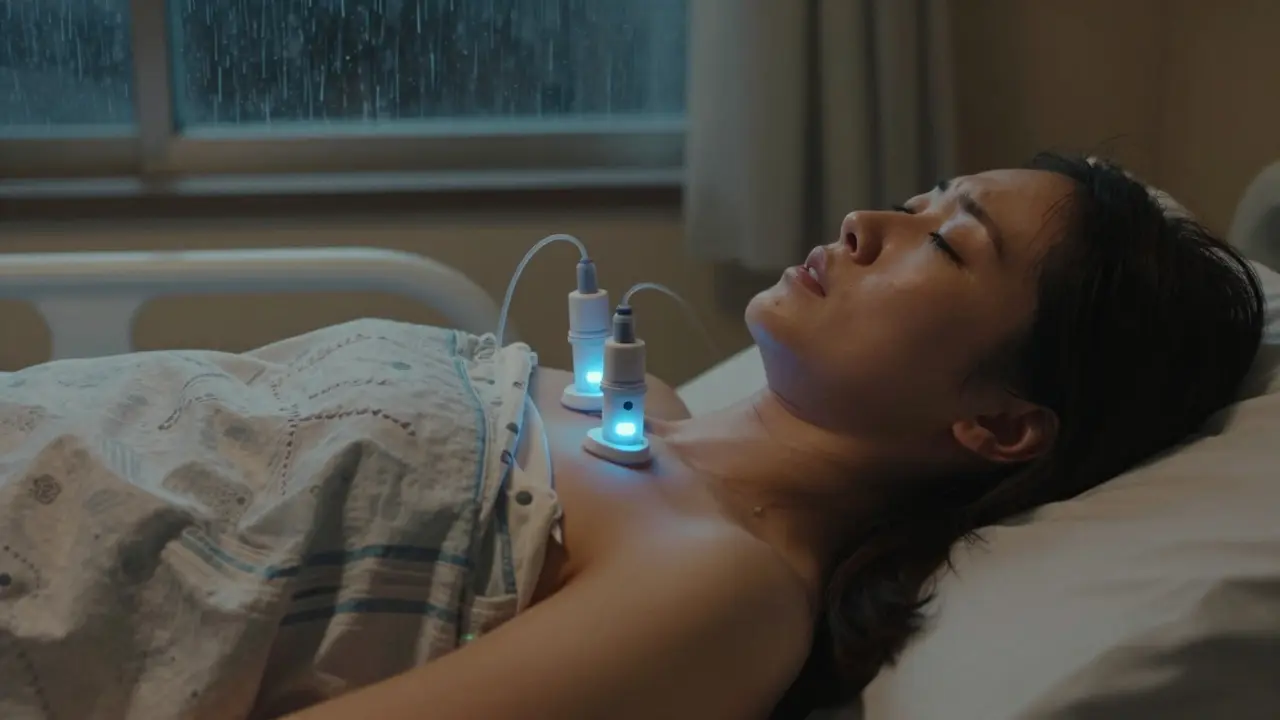
When your back aches, your knees throb, or labor contractions hit hard, reaching for a pill isn’t always the best or safest option. That’s where TENS therapy comes in - a simple, non-drug way to ease pain using a small device that sends gentle electrical pulses through your skin. It’s not magic, but for millions of people, it’s a game-changer.
What Exactly Is TENS Therapy?
TENS stands for Transcutaneous Electrical Nerve Stimulation. It’s a method that uses low-voltage electrical currents to target nerves and interrupt pain signals before they reach your brain. The device itself is small - often about the size of a deck of cards - with wires connected to sticky pads (electrodes) you place on your skin near the painful area. It’s been around since the 1970s, but the science behind it goes back even further. In 1965, researchers Ronald Melzack and Patrick Wall proposed the Gate Control Theory of Pain. Their idea? Your nervous system has gates that can be closed to block pain signals. TENS works by turning up the volume on non-painful sensations (like tingling or buzzing) to shut those gates. Think of it like turning on a loud fan to drown out a noisy neighbor - your brain focuses on the buzz, not the ache.How Does TENS Actually Reduce Pain?
There are two main ways TENS works, depending on how you set it up. The first is called conventional TENS. You set the frequency high - between 50 and 100 pulses per second - and keep the intensity strong enough to feel a clear tingling, but not painful. This activates the large nerve fibers that carry touch and vibration signals. These fibers outrun the pain signals, closing the gate in your spinal cord. The result? Immediate relief while the device is on. This works best for sharp, sudden pain like after surgery or during labor. The second method is acupuncture-like TENS. Here, you use low frequencies - just 2 to 5 pulses per second - with higher intensity. This doesn’t just block pain; it triggers your body to release its own natural painkillers: endorphins and enkephalins. These are the same chemicals your brain makes during exercise or a good laugh. The relief builds over time and can last for hours after you turn the device off. This is the go-to setting for chronic pain like arthritis or lower back pain. Some modern TENS units even have a burst mode, which mixes both approaches. It delivers quick bursts of high-frequency pulses at a slow rhythm, giving you both instant blocking and longer-lasting endorphin release. It’s a smart combo for people who need both quick and lasting results.What Conditions Can TENS Help With?
TENS isn’t a cure-all, but it’s been shown to help with several common pain issues:- Lower back pain - Especially when it’s caused by muscle strain or degenerative disc issues. Studies show up to a 35% reduction in pain for some users.
- Osteoarthritis - Knee and hand pain from wear-and-tear responds well. One study found TENS cut pain more than placebo by over 20%.
- Post-surgical pain - Patients using TENS after operations needed 27% less opioid painkillers and reported fewer side effects like nausea and drowsiness.
- Labor pain - A 2020 Cochrane Review found women using TENS during childbirth reported 31% more pain relief than those using a placebo device.
- Neuropathic pain - Nerve-related pain from diabetes or shingles can improve, though results vary more here.

Why People Love It (and Why Some Don’t)
Users who find TENS helpful often say the same things:- Instant relief - Many feel the difference within minutes.
- No drugs - No stomach upset, no dizziness, no risk of addiction.
- Portable - You can wear it under clothes, use it at work, or take it on a trip.
- Skin irritation - The adhesive on electrodes can cause redness or itching, especially with long-term use.
- Inconsistent results - One day it works wonders; the next, it feels like nothing. Often, it’s because the electrodes moved or the intensity dropped.
- Battery life - At high settings, most units last only 90 minutes to 2 hours. Users report having to recharge mid-day.
- Too weak - Many people turn the dial just a little, expecting a miracle. But if the tingling isn’t strong enough, it won’t work. Research shows 68% of failed TENS treatments happened because users didn’t turn the intensity up high enough.
How to Use TENS Right
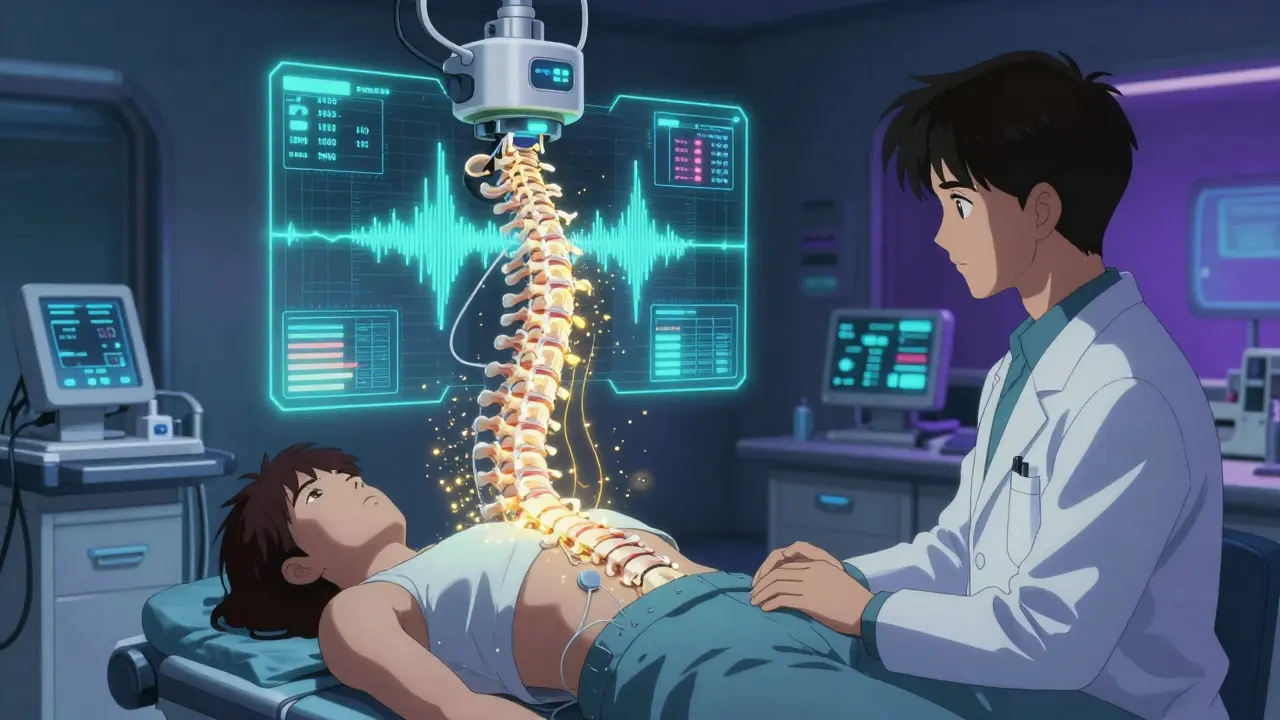
Getting results isn’t just about owning a device - it’s about using it correctly. Step 1: Find the right spot Place electrodes within 2 to 3 centimeters of where you feel the pain. For lower back pain, put one pad on each side of your spine, just above the hips. For knee pain, place one above and one below the kneecap. If you’re unsure, a physical therapist can show you the best placement - and this is worth the time. A 2021 study found that 41% of TENS failures were due to wrong electrode placement. Step 2: Choose your setting- For acute pain (recent injury, post-op): Use 80-100 Hz, low to moderate intensity.
- For chronic pain (arthritis, back pain lasting months): Use 2-5 Hz, higher intensity.
- For mixed results: Try burst mode (100 Hz pulses, 2-3 bursts per second).
Who Shouldn’t Use TENS?
TENS is safe for most people, but there are important exceptions:- Pregnant women - Avoid using it on the abdomen or lower back during pregnancy unless approved by your doctor.
- People with pacemakers or implanted devices - The electrical pulses can interfere with these devices.
- People with epilepsy - Stimulating nerves near the head or neck could trigger seizures in rare cases.
- Open wounds or infections - Don’t place electrodes over broken skin.
- Those on opioid medication - Some research suggests opioids can block the endorphin effect of low-frequency TENS, making it less effective.
The Future of TENS
TENS isn’t stuck in the 1970s. New tech is making it smarter. In May 2023, the FDA cleared the first AI-powered TENS device called NeuroLoop AI. It uses sensors to read your body’s response in real time and adjusts the settings automatically. In a trial, it delivered 44% more pain relief than traditional TENS. Researchers are also testing “smart electrodes” with built-in sensors that monitor skin conductivity and tweak the current to keep the signal strong - no more guessing if the pads are still working. Meanwhile, companies like Amazon are using TENS units in warehouses to help workers manage back pain. Their 2022 report showed a 19% drop in lost workdays. The CDC now recommends TENS as a first-line option for chronic pain - especially to avoid opioids. With the global TENS market expected to hit $782 million by 2028, this isn’t a passing trend. It’s becoming part of mainstream pain care.Is TENS Right for You?
Ask yourself:- Do you want to reduce or avoid painkillers?
- Is your pain localized - not all over your body?
- Are you willing to try different settings and placements?
- Can you afford a decent unit? (Basic ones start at $30; professional ones cost $150-$300.)
Can TENS therapy cure chronic pain?
No, TENS doesn’t cure the underlying cause of chronic pain - like arthritis, nerve damage, or degenerative disc disease. But it can significantly reduce the pain signals your brain receives, helping you manage symptoms, stay active, and reduce reliance on medications. Think of it as pain control, not pain repair.
How long does TENS pain relief last?
It depends on the setting. High-frequency TENS (50-100 Hz) gives relief only while the device is on. Low-frequency TENS (2-5 Hz) can provide relief for up to 4-6 hours after turning it off, thanks to endorphin release. Most people use it 2-4 times a day for ongoing control.
Is TENS safe to use every day?
Yes, for most people, daily use is safe as long as you avoid placing electrodes over broken skin, sensitive areas like the neck or eyes, or if you have a pacemaker. Take breaks every few hours to let your skin rest, and clean the pads regularly to prevent irritation.
Can I use TENS with other pain treatments?
Absolutely. TENS works well alongside physical therapy, stretching, heat therapy, and even some medications. In fact, combining it with movement and exercise often improves outcomes. Just avoid using it with other electrical devices like muscle stimulators on the same area without consulting a professional.
Do I need a prescription to buy a TENS unit?
No, you don’t need a prescription in most countries, including the U.S. and Australia. You can buy TENS units over the counter at pharmacies, medical supply stores, or online. However, if you want insurance to cover the cost - like Medicare in the U.S. - you’ll need a doctor’s note and a specific code (E0720).
Why does my TENS unit stop working after a few minutes?
This usually happens because the electrodes have dried out or lost contact with your skin. Sweat, movement, or poor adhesion can break the circuit. Try cleaning your skin with alcohol before applying pads, use conductive gel, or replace worn-out electrodes. Also, check if your battery is low - high settings drain power fast.

Shanahan Crowell
January 3, 2026 AT 10:48OMG I’ve been using TENS for my sciatica for 3 years now-this is the most accurate breakdown I’ve ever read. Seriously, the burst mode tip? Life-changing. I used to think I was just bad at using it, but turns out I was just too timid with the intensity. Cranked it to 80% and now I can walk my dog without wincing. 🙌
Tiffany Channell
January 5, 2026 AT 04:26Let’s be real-TENS is just placebo with wires. If it worked so well, why are people still on opioids? The studies are cherry-picked, and the FDA clearance doesn’t mean it’s effective-it just means someone paid the right people. Also, ‘smart electrodes’? Sounds like a Silicon Valley scam to sell overpriced gadgets to desperate people.
Haley Parizo
January 6, 2026 AT 14:22You know what’s wild? That the medical industrial complex lets you buy this thing at Walmart like it’s a stress ball. Meanwhile, real pain management-like nerve ablation or spinal cord stimulators-costs $20k and requires 3 months of bureaucracy. TENS is the opioid alternative they want you to believe in so they don’t have to fix the system. It’s not therapy-it’s distraction capitalism.
Joy F
January 6, 2026 AT 15:37Okay but have you considered that TENS doesn’t just block pain-it reprograms your nervous system’s relationship to suffering? The low-frequency mode isn’t just releasing endorphins-it’s whispering to your limbic system like a hypnotist. It’s biofeedback meets ancient acupuncture meets quantum neurology. And yet, the FDA only recognizes it as ‘non-invasive analgesia’? That’s like calling the internet ‘a bunch of tubes.’ We’re barely scratching the surface of what this tech can do.
JUNE OHM
January 7, 2026 AT 23:46THEY’RE HIDING THE TRUTH!! 🤫 TENS was developed by the CIA in the 80s to pacify veterans without giving them real meds. Now it’s sold to moms with back pain so they don’t ask why their insurance won’t cover physical therapy. Also, the electrodes? They’re micro-tracking your muscle tension. Next thing you know, your smart fridge knows you’re in pain and sells you protein powder. #TENSIsASurveillanceTool 😈
Neela Sharma
January 8, 2026 AT 14:44I use TENS daily in Delhi-my spine screams after sitting on the bus for hours. The tingling feels like a thousand tiny hands massaging my nerves. No pills. No waiting. Just me, my device, and peace. Sometimes the best medicine is the one you hold in your hand. 🌿
Ian Detrick
January 9, 2026 AT 11:10If you’re new to TENS, don’t give up after one try. I tried it for a week and thought it was useless-until I finally cranked the intensity and placed the pads correctly. Now I use it before yoga. It’s not magic, but it’s the closest thing to a free, do-it-yourself physio session you’ll ever find. Just be patient and precise.
Philip Leth
January 10, 2026 AT 14:00My dad used this after his knee replacement. He said it felt like someone was tickling his bones with a battery. But after two weeks? He stopped asking for pain meds. That’s the real win. No side effects, no pharmacy runs. Just a little box that lets you feel human again. Worth every penny.
Brittany Wallace
January 11, 2026 AT 08:13I love how TENS bridges ancient wisdom and modern tech. The gate control theory? That’s basically the same idea as acupuncture-stimulating the body to heal itself. And now we’ve got AI tuning it? That’s beautiful. We’re not replacing medicine-we’re enhancing it. Let’s celebrate tools that help people feel better without poisoning their systems. 🌱❤️
Tru Vista
January 12, 2026 AT 20:07Most TENS units are garbage. The ones on Amazon? 80% are underpowered junk. You need a medical-grade one. Also, conductive gel? Nobody uses it. That’s why it fails. And yes, opioids block endorphins-so if you’re on them, TENS is pointless. Stop wasting your time.
Vincent Sunio
January 14, 2026 AT 13:15The claim that TENS reduces opioid use by 27% is statistically insignificant in a cohort of self-selected users. The Cochrane review on labor pain? Methodologically flawed. The market projection of $782M? Proof of corporate manipulation, not clinical efficacy. This is not evidence-based medicine-it’s wellness marketing dressed in scientific jargon.
Angela Fisher
January 14, 2026 AT 18:19I used TENS for 6 months and it was the only thing that helped my fibro pain… until I realized the electrodes were leaking tiny amounts of nickel. My skin broke out, my joints swelled, and my doctor said I had a delayed hypersensitivity reaction. Now I’m on immunosuppressants. I thought I was healing myself-but I was slowly poisoning myself. The company didn’t warn me. They just sold me hope. And now I’m stuck with chronic inflammation because I trusted a gadget. Don’t be me.
Shruti Badhwar
January 15, 2026 AT 01:13While TENS may provide symptomatic relief, it does not address the root cause of musculoskeletal dysfunction. For long-term outcomes, integration with corrective exercise, posture retraining, and biomechanical assessment remains essential. TENS is an adjunct-not a solution. Relying on it exclusively may delay necessary interventions.
Kerry Howarth
January 15, 2026 AT 17:56Just turned it up. It works.