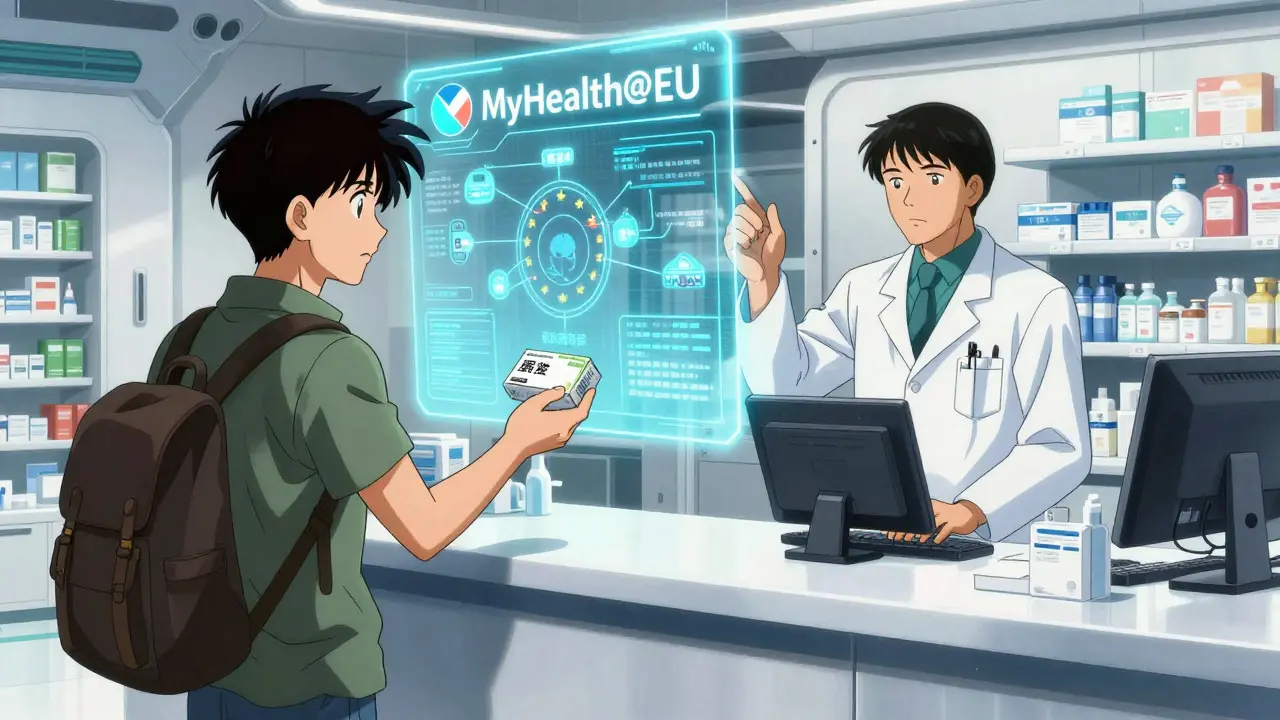
Imagine you are on vacation in France, your chronic medication runs out, and you need a refill. In the past, this meant calling home for a paper prescription to be scanned and emailed, hoping it would arrive before your trip ended. Today, thanks to cross-border pharmacy services within the European Union, that process is shifting toward seamless digital integration. The movement of generic drugs and medications across national borders while ensuring patient safety is no longer just a theoretical ideal; it is a rapidly evolving reality driven by new regulations and digital infrastructure.
The core challenge has always been balancing accessibility with strict regulatory compliance. Generic drugs, which make up the bulk of prescriptions in Europe, must meet identical quality standards regardless of where they are manufactured or dispensed. However, national laws have historically created silos. Now, frameworks like the MyHealth@EU initiative are breaking down these walls, allowing citizens to access their health data and prescriptions abroad. This shift isn't just about convenience; it’s about addressing critical medicine shortages and improving healthcare efficiency across the continent.
The Digital Backbone: MyHealth@EU and eHDSI
At the heart of this transformation is the eHealth Digital Service Infrastructure (eHDSI), branded as MyHealth@EU. This secure communication portal connects national health systems across the EU, enabling bidirectional exchange of health data. By late 2025, this network had expanded significantly, with countries like Iceland completing their integration to allow full health data sharing.
The system operates on two primary services:
- ePrescription/eDispensation: Allows patients to obtain medication in foreign pharmacies using electronic prescriptions transferred securely from their country of residence. As of November 2025, this service was operational in 27 EU/EEA countries.
- Patient Summaries: Provides critical health information-including allergies, current medications, and medical history-in the practitioner's local language, overcoming linguistic barriers that often complicate cross-border care.
For this to work, patient consent is paramount. Users log into national portals, such as Iceland’s island.is, using electronic identification to authorize specific time periods or countries for data sharing. This ensures that while mobility increases, privacy remains protected under strict GDPR-aligned protocols.
Regulatory Shifts and the 2025 Overhaul
The legal framework supporting these services stems from Directive 2011/24/EU, which established patients' rights in cross-border healthcare. However, the landscape changed dramatically with the EU’s 2025 pharmaceutical package reforms. These updates introduced stricter monitoring and new tools to combat drug shortages, a persistent issue exacerbated by fragmented supply chains.
One major change is the implementation of the Critical Medicines Act, which mandates marketing authorization holders to proactively report supply and demand data. This transparency helps regulators predict and mitigate shortages before they impact patients. Additionally, Italy replaced traditional pharmaceutical 'bollino' stickers with GS1 DataMatrix codes on prescriptions effective February 9, 2025, streamlining verification processes for pharmacists dealing with international scripts.
Despite these advancements, regulatory disparities remain. Only eight EU member states have adopted comprehensive rules governing pharmacists' conduct in e-pharmacies. This uneven implementation creates confusion for both providers and patients. For instance, prescriptions issued outside the EU/EEA are invalid in Ireland, and even UK-issued prescriptions face scrutiny if they lack required information or originate from telehealth services not recognized under Irish law.
The Role of E-Pharmacies and the EAEP Action Plan
Digital pharmacies are becoming central players in this ecosystem. The European Association of E-Pharmacies (EAEP) launched a comprehensive Action Plan in June 2025, outlining five strategic priorities to integrate online pharmacies into Europe's health systems. These include pan-European prescription delivery, secure access to Electronic Health Records, and expanding telepharmacy services to underserved areas.
The EAEP represents approximately 120 registered e-pharmacies across 15 EU countries. Their push for fair reimbursement for digital pharmacy services aims to level the playing field against traditional brick-and-mortar stores. Studies cited by the EAEP show measurable benefits: a 22% reduction in medication errors and a 17% improvement in chronic disease management compliance when digital services are utilized effectively.
| Feature | Traditional Model | Digital/EAEP Model |
|---|---|---|
| Prescription Transfer | Paper/Email (Slow, Error-prone) | Secure ePrescription via MyHealth@EU |
| Data Access | Limited to local records | Bidirectional access to Patient Summaries |
| Shortage Mitigation | Reactive, localized | Proactive via Critical Medicines Act reporting |
| Geographic Reach | Physical location dependent | Nationwide/Cross-border capability |
Practical Challenges for Patients and Pharmacists
While the technology exists, practical hurdles persist. A Copenhagen Economics survey from June 2025 revealed stark differences in user experience based on geography. In border regions like the Netherlands-Germany frontier, 78% of patients reported successful cross-border prescription fulfillment. In contrast, only 42% succeeded in non-border regions due to inconsistent implementation of MyHealth@EU services.
Pharmacists also face a steep learning curve. Managing cross-border workflows requires approximately 40 hours of specialized training. Common challenges include navigating language barriers, understanding differing medication formulations across countries, and verifying prescriber registration. In Ireland, for example, pharmacists must screen prescriptions carefully, rejecting those from unrecognized UK telehealth services to comply with local regulations.
User feedback highlights frustration with complex consent procedures. Many patients report needing multiple authentication steps to authorize health data sharing, which can deter use despite the potential benefits. Simplifying these interfaces is a key recommendation from industry experts to improve adoption rates.
Future Outlook: Harmonization and Growth
The market for EU cross-border pharmacy services is projected to grow at a 14.3% CAGR through 2030, driven by aging populations and increasing chronic disease prevalence. IQVIA forecasts that successful implementation could reduce medication access disparities by up to 35% by 2030. However, this requires sustained political commitment to overcome current fragmentation.
Looking ahead, the European Commission plans to expand shared health data to include medical images, lab results, and hospital discharge reports by 2027. This will further enhance the utility of cross-border services, moving beyond simple prescription refills to comprehensive care coordination. Yet, without swift action to ensure regulatory alignment, digital inclusion risks remaining uneven across member states.
For patients, staying informed about their rights under Directive 2011/24/EU is crucial. Currently, only 38% of EU citizens are aware of their cross-border prescription rights, though awareness jumps to 72% in border regions. Education campaigns and clearer communication from national health authorities will be essential to unlock the full potential of this evolving system.
Can I use my EU prescription in another country?
Yes, if your country participates in the MyHealth@EU ePrescription service. You can present an electronic prescription at a participating pharmacy in another EU/EEA country. The pharmacist will verify its validity through the secure network. Ensure you have given consent for data sharing via your national health portal.
Are UK prescriptions valid in the EU?
Generally, no. Post-Brexit, prescriptions issued in the UK are not automatically valid in the EU. Some countries may accept them under specific conditions, but many, like Ireland, explicitly reject them unless they contain all required information and meet local regulatory standards. It is safest to assume they are invalid for cross-border travel.
What is the Critical Medicines Act?
The Critical Medicines Act is part of the EU’s 2025 pharmaceutical reforms. It requires companies that manufacture medicines to report supply and demand data proactively. This helps regulators identify and address drug shortages faster, ensuring better availability of essential generics across borders.
How does MyHealth@EU protect my data?
MyHealth@EU uses strict patient consent protocols. You must actively authorize specific time periods or countries for health data sharing through your national portal. The infrastructure complies with GDPR and Regulation (EU) 2025/327, ensuring high standards for security, confidentiality, and personal data protection.
Why do some countries have better cross-border pharmacy access than others?
Implementation varies because national laws differ. While the EU provides a framework, each member state must adapt its own systems. Border regions often have established networks and higher awareness, leading to smoother experiences. Non-border regions may face technical glitches, lower pharmacist training levels, or complex consent procedures.
