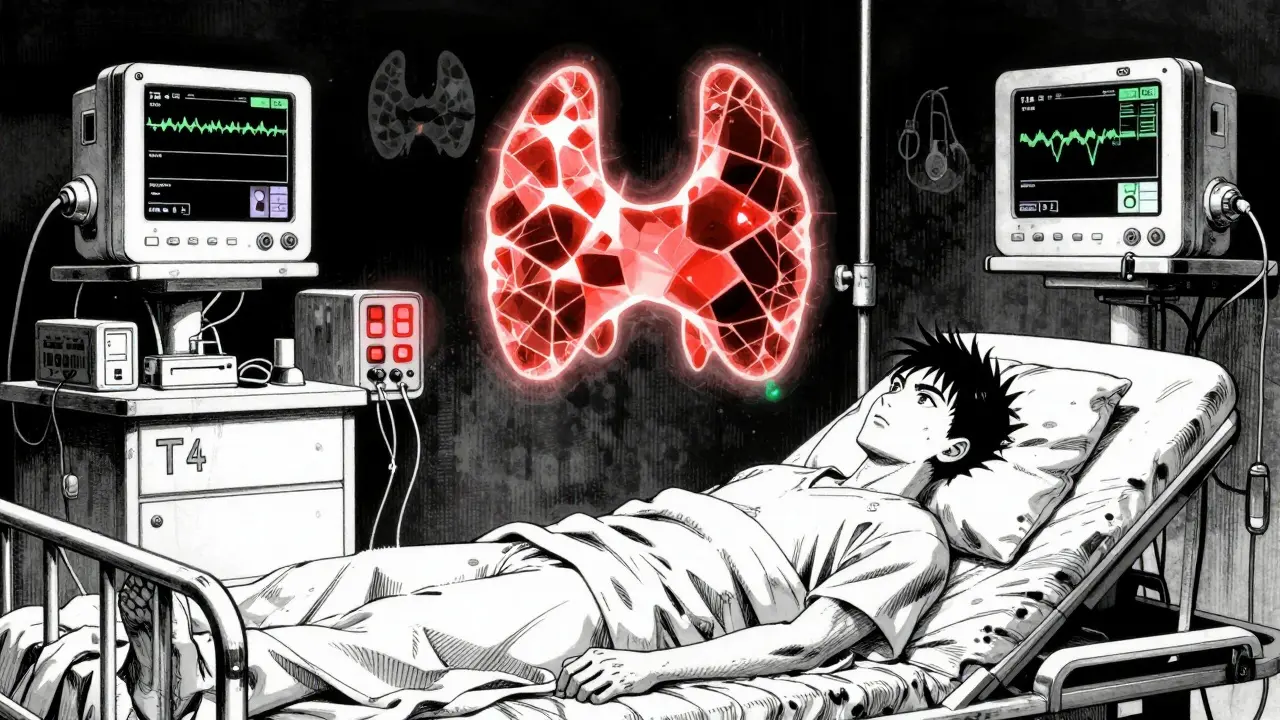
You are in the intensive care unit. The monitors beep. Your blood work comes back, and suddenly you have a "thyroid problem." But here is the twist: your thyroid gland is actually fine. What you are seeing on that lab report is not a disease of the thyroid itself. It is a survival tactic.
This phenomenon is called Sick Euthyroid Syndrome (ESS), also known as Nonthyroidal Illness Syndrome (NTIS) or Low T3 Syndrome. It happens when severe physical stress tricks your body into altering how it processes thyroid hormones. For doctors and patients alike, this can be confusing. If you treat ESS like regular hypothyroidism, you might do more harm than good. Understanding why this happens, what the labs look like, and-most importantly-when to leave them alone is crucial for anyone navigating critical care or chronic illness.
The Body's Emergency Brake
To understand ESS, you first need to see the thyroid not just as a hormone factory, but as part of a complex energy management system. Under normal conditions, your thyroid produces thyroxine (T4), which is essentially a storage form. Your liver, kidneys, and other tissues convert T4 into triiodothyronine (T3), the active hormone that tells your cells to burn energy and generate heat.
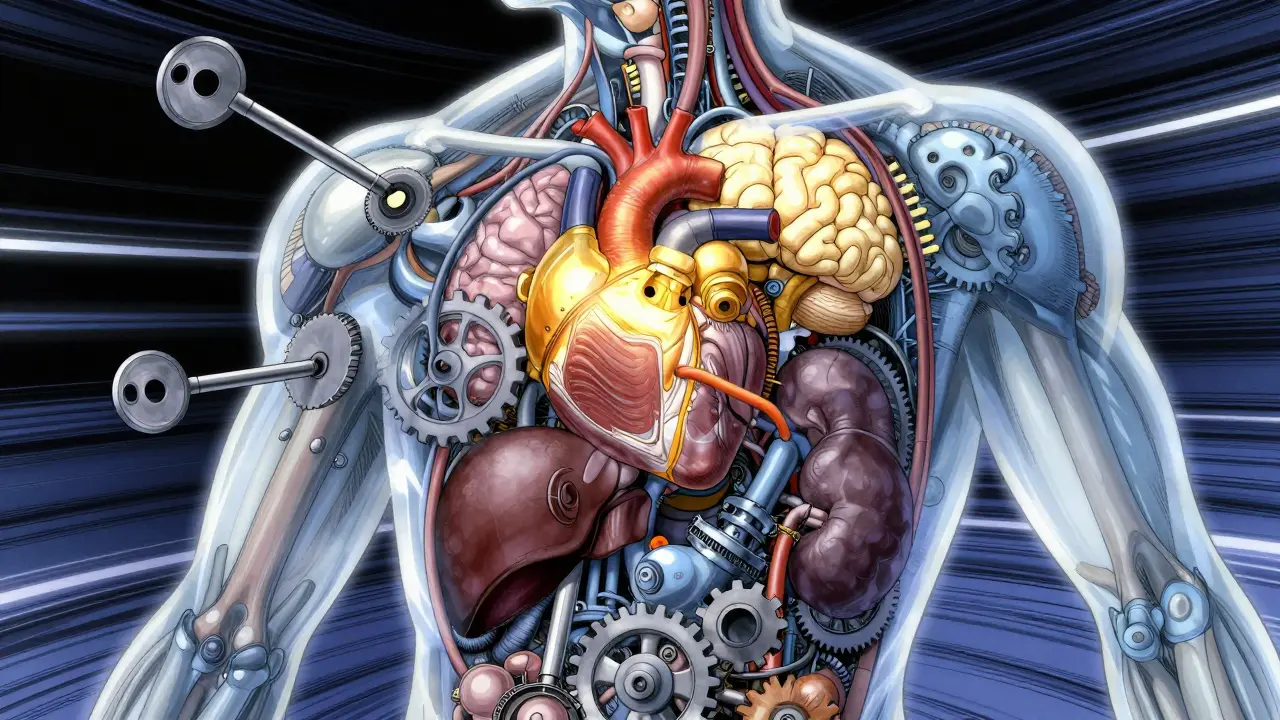
When you get severely ill-think sepsis, major surgery, or a heart attack-your body shifts gears. It enters a conservation mode. Imagine your car running out of gas; you don't floor the accelerator. You coast. In ESS, the body deliberately slows down metabolism to preserve energy for vital organs like the heart and brain. It does this by reducing the conversion of T4 to T3. This isn't a malfunction. It is an adaptive response designed to keep you alive during a crisis.
Research from the 1970s first identified this pattern, and modern studies confirm it affects up to 75% of critically ill patients. The lower your T3 levels drop, the sicker the patient often is. In fact, some endocrinologists view the degree of T3 suppression as a marker of illness severity rather than a thyroid disorder requiring treatment.
Decoding the Confusing Lab Results
If you have never looked at a thyroid panel during a hospital stay, the numbers can look alarming. Here is how ESS typically skews the results compared to true thyroid disease:
- Low T3: This is the hallmark of ESS. About 95% of cases show decreased triiodothyronine. Your body simply stops making the active hormone because it doesn't want to spend the energy right now.
- Elevated Reverse T3 (rT3): Instead of turning T4 into active T3, the body converts it into reverse T3, an inactive form. Think of rT3 as a "dummy" key that fits in the lock but doesn't turn it. Levels of rT3 rise significantly in ESS.
- Normal or Low TSH: Thyroid-Stimulating Hormone (TSH) usually stays within the normal range (0.4-4.0 mIU/L). In acute, severe stress, TSH might even dip slightly below normal. If TSH were very high, it would suggest primary hypothyroidism (like Hashimoto's), not ESS.
- Variable T4: In mild cases, T4 remains normal. In severe, prolonged illness, T4 may drop because the binding proteins that carry it through the blood become saturated or reduced.
The key takeaway? In ESS, the thyroid gland itself is working. The pituitary gland (which makes TSH) is mostly working. The disruption happens in the peripheral tissues where the conversion takes place. This distinction is vital because it changes everything about how you manage the condition.
| Lab Marker | Sick Euthyroid Syndrome (ESS) | Primary Hypothyroidism |
|---|---|---|
| T3 (Active Hormone) | Low | Low |
| T4 (Storage Hormone) | Normal or Low (in severe cases) | Low |
| TSH (Pituitary Signal) | Normal, Low, or Mildly High | High |
| Reverse T3 (rT3) | High | Normal or Low |
| Thyroid Antibodies | Negative | Often Positive (e.g., Anti-TPO) |
Who Gets Sick Euthyroid Syndrome?
ESS does not pick its victims randomly. It shows up when the body is under extreme duress. You will most commonly see these lab patterns in patients with:
- Sepsis: A systemic infection triggers massive inflammation. Cytokines like interleukin-6 and tumor necrosis factor-alpha directly suppress the enzymes needed to activate thyroid hormones.
- Major Surgery or Trauma: The physical shock of injury or operative stress forces the metabolic slowdown.
- Severe Burns: Burn patients often exhibit profound hormonal changes as the body diverts resources to tissue repair.
- Chronic Organ Failure: Advanced liver cirrhosis or kidney failure alters how hormones are cleared and bound in the blood.
- Starvation or Anorexia Nervosa: When caloric intake plummets, the body assumes famine conditions and lowers T3 to reduce basal metabolic rate.
Interestingly, certain medications can mimic or worsen ESS. Drugs like glucocorticoids (steroids), dopamine, and propylthiouracil interfere with thyroid hormone conversion. If a patient is on high-dose steroids for asthma or autoimmune issues, their thyroid labs may look "sick" even if they aren't critically ill.
The Danger of Misdiagnosis
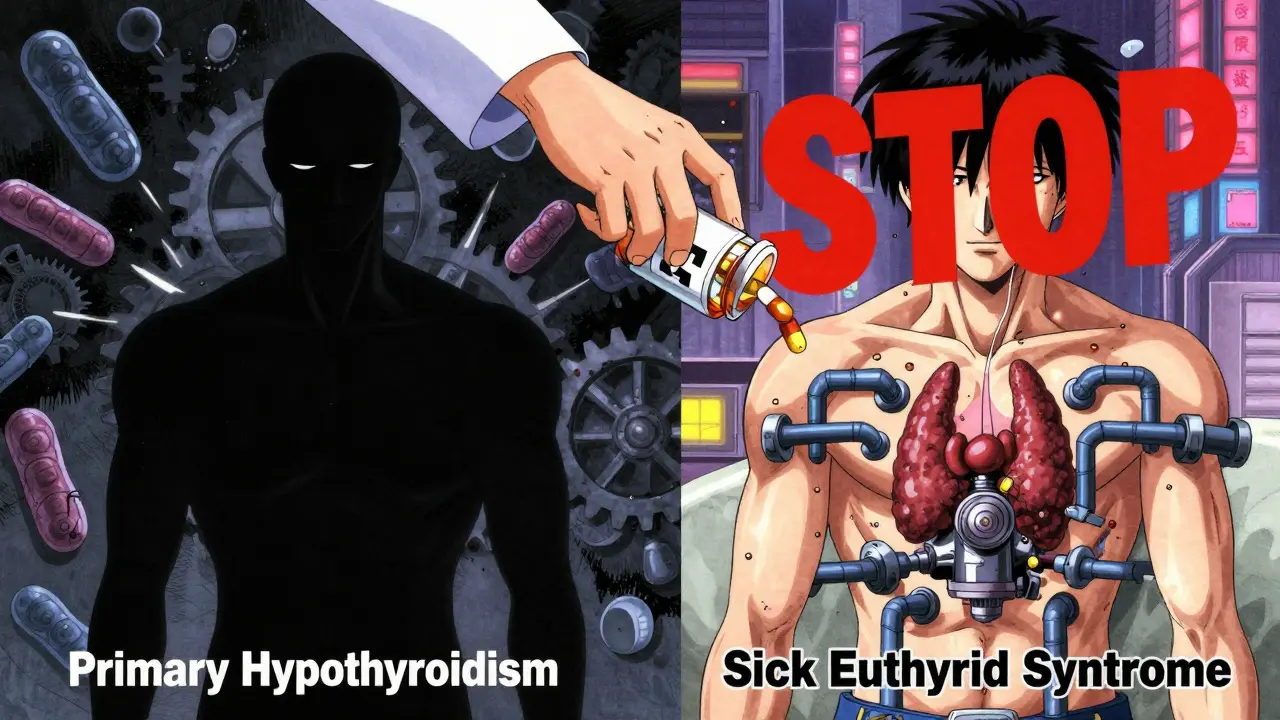
Here is where things get tricky. Symptoms of ESS overlap heavily with hypothyroidism. Patients feel fatigued, weak, cold, and sluggish. It is tempting for a clinician-or a well-meaning family member-to say, "Their T3 is low; let's give them thyroid hormone replacement."
But current medical consensus, backed by the American Thyroid Association and the Endocrine Society, strongly advises against treating ESS with levothyroxine or liothyronine (T3 supplements). Why? Because you are fighting the body's natural defense mechanism. Adding external thyroid hormone forces the metabolism to speed up when the body is trying to conserve energy. This can increase oxygen demand on a stressed heart or strain already failing organs.
A 2022 randomized controlled trial published in the *New England Journal of Medicine* followed 450 critically ill patients. Those who received thyroid hormone replacement had no better survival rates than those who didn't. In fact, inappropriate treatment has been linked to worse outcomes in retrospective studies. The goal is not to normalize the labs. The goal is to treat the underlying illness-whether that is antibiotics for sepsis, fluids for dehydration, or nutrition for starvation.
When to Worry and When to Wait
So, how do you know if it is truly ESS or a coincidental thyroid failure? Context is king. If a patient has a history of thyroid disease, presents with specific symptoms like myxedema (swelling of the skin), or has persistently elevated TSH after recovery, then true thyroid dysfunction is likely.
For most acute cases, the strategy is "watchful waiting." As the underlying illness resolves, the thyroid axis usually rebounds. T3 levels creep back up, rT3 drops, and TSH stabilizes. Doctors typically recommend rechecking thyroid function tests 4 to 6 weeks after the patient has recovered from the acute event. If the labs are still abnormal after that window, then further investigation for primary thyroid disease is warranted.
Patient advocacy tip: If you are recovering from a serious illness and your doctor mentions "low thyroid," ask specifically, "Could this be Sick Euthyroid Syndrome due to my recent hospitalization?" This simple question can prevent months of unnecessary medication trials.
Future Directions in Research
Science is moving beyond just identifying ESS. Researchers are now looking at whether specific patterns of thyroid hormone change can predict who will survive and who won't. Some studies suggest that extremely low T3 levels correlate with higher mortality, making it a potential prognostic tool. Others are investigating if selective deiodinase inhibitors could one day help modulate this response safely, though that is far from clinical practice today. For now, the message remains clear: ESS is a sign of stress, not a target for treatment.
Is Sick Euthyroid Syndrome permanent?
No, ESS is almost always temporary. It is a physiological response to acute stress or illness. Once the underlying condition (such as infection, surgery, or malnutrition) is resolved, thyroid hormone levels typically return to normal within weeks to months.
Should I take thyroid medication if my T3 is low?
Not necessarily. If your low T3 is caused by Sick Euthyroid Syndrome due to a recent illness, taking thyroid medication is generally discouraged and can be harmful. Medication is only appropriate if you have confirmed primary hypothyroidism, which is characterized by high TSH and positive antibodies, not just low T3.
What causes Reverse T3 (rT3) to go up?
Reverse T3 rises because the body shifts its metabolic priority. During severe stress, the enzymes that convert T4 into active T3 are suppressed. Instead, T4 is converted into inactive rT3. This acts as a brake on metabolism, conserving energy for vital organ function during times of crisis.
How long should I wait before retesting thyroid labs after a hospital stay?
Most guidelines suggest waiting 4 to 6 weeks after full recovery from the acute illness. Testing too early will likely still show the effects of Sick Euthyroid Syndrome, leading to potential misdiagnosis. Waiting allows the hypothalamic-pituitary-thyroid axis to reset to its baseline state.
Can medications cause Sick Euthyroid Syndrome?
Yes. Certain drugs can mimic or exacerbate ESS by interfering with thyroid hormone conversion or binding. Common culprits include high-dose corticosteroids (like prednisone), dopamine, beta-blockers, and amiodarone. Always review your medication list with your endocrinologist if your thyroid labs are abnormal.
