DILI R-Ratio Calculator & Pattern Analyzer
Use this tool to categorize the pattern of liver injury based on enzyme levels compared to the Upper Limit of Normal (ULN).
Interpretation:
• R ≥ 5: Hepatocellular (Hepatitis pattern)
• R ≤ 2: Cholestatic (Plumbing/Bile flow issue)
• 2 < R < 5: Mixed Pattern
Taking a course of antibiotics is a common experience, but for some, these life-saving drugs can trigger a serious reaction in the liver. This phenomenon, known as drug-induced liver injury is a condition where medications cause damage to liver cells or interfere with bile flow. Commonly referred to as DILI, it represents a significant clinical challenge because the symptoms often mimic the very infections the antibiotics are meant to treat.
If you've ever wondered why some medications require regular blood tests or why a doctor might ask about your liver health before prescribing a strong antibiotic, you're touching on a complex area of medicine. Understanding how antibiotics impact the liver isn't just for doctors-it's crucial for patients to know the red flags and for clinicians to recognize the patterns of injury to prevent permanent damage.
The Two Faces of Liver Damage: Hepatitis vs. Cholestasis
Not all liver injuries look the same. When antibiotics cause trouble, the damage usually falls into one of two primary patterns: hepatocellular (hepatitis) or cholestatic. To figure out which is which, doctors use the R-ratio, a simple formula that compares the peak levels of two enzymes: Alanine Aminotransferase (ALT) and Alkaline Phosphatase (ALP).
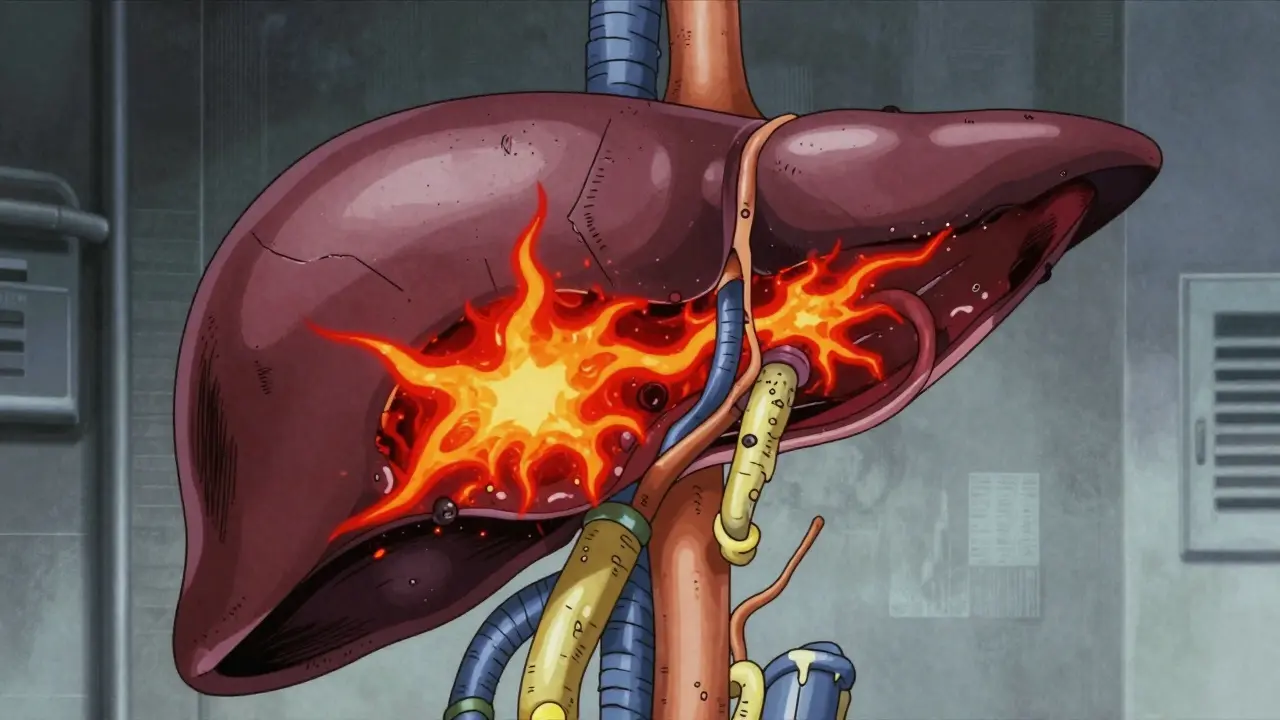
In a hepatocellular pattern, the damage is centered on the liver cells themselves. This looks like hepatitis, where ALT levels spike significantly. If the R-ratio is greater than 5, the injury is classified as hepatocellular. You'll typically see ALT levels exceeding five times the upper limit of normal (ULN). This is essentially a "fire" in the liver cells.
On the other hand, cholestasis happens when the flow of bile from the liver to the gallbladder or small intestine is blocked. In this case, the ALP enzyme is the main marker. When the R-ratio is less than 2, and ALP is more than twice the ULN, it's a cholestatic injury. Think of this as a "plumbing issue" where the liver's drainage system is backed up.
Some patients experience a "mixed" injury (where the R-ratio is between 2 and 5). This means both the cells are damaged and the bile flow is impaired. Recognizing these patterns is the first step in deciding whether to stop the medication or switch to an alternative.
Which Antibiotics Pose the Highest Risk?
All antibiotics are not created equal when it comes to the liver. Some are generally safe, while others have a well-documented history of causing issues. The LiverTox Knowledge Base is a comprehensive resource maintained by the NIDDK that categorizes drugs by their hepatotoxicity risk. It helps clinicians identify which drugs are "high-risk" versus "moderate-risk."
One of the biggest culprits is Amoxicillin-clavulanate is a combination antibiotic frequently used for respiratory and skin infections. It has one of the highest population-attributable risks for DILI, with an estimated 15 to 20 cases per 100,000 prescriptions. Interestingly, it most often causes cholestatic injury (the "plumbing" issue) in about 70-80% of cases, and symptoms often appear 1 to 6 weeks after starting the drug.
| Antibiotic | Risk Level | Typical Pattern | Onset Time |
|---|---|---|---|
| Amoxicillin-clavulanate | High | Cholestatic (R < 2) | 1-6 Weeks |
| Ciprofloxacin | Low/Moderate | Mixed (R 2-5) | 1-2 Weeks |
| Azithromycin | Low/Moderate | Mixed (R 2-5) | Variable |
| Tazobactam/Piperacillin | Moderate (ICU context) | Hepatocellular/Mixed | Rapid (>7 days) |
In the ICU, the risks shift. For example, Tazobactam/piperacillin (TZP) has a concerning profile. Research shows that patients receiving TZP for seven days or longer have a nearly 29% incidence of liver injury. In contrast, Meropenem shows a lower incidence (12.3%) but appears to hit men harder, affecting them 2.4 times more frequently than women.
Why Does This Happen? The Science of the Injury
The liver is the body's primary chemical processing plant, which makes it the first line of defense-and the first victim-when a drug is toxic. There isn't just one reason why an antibiotic causes liver injury; it's usually a combination of biological failures.
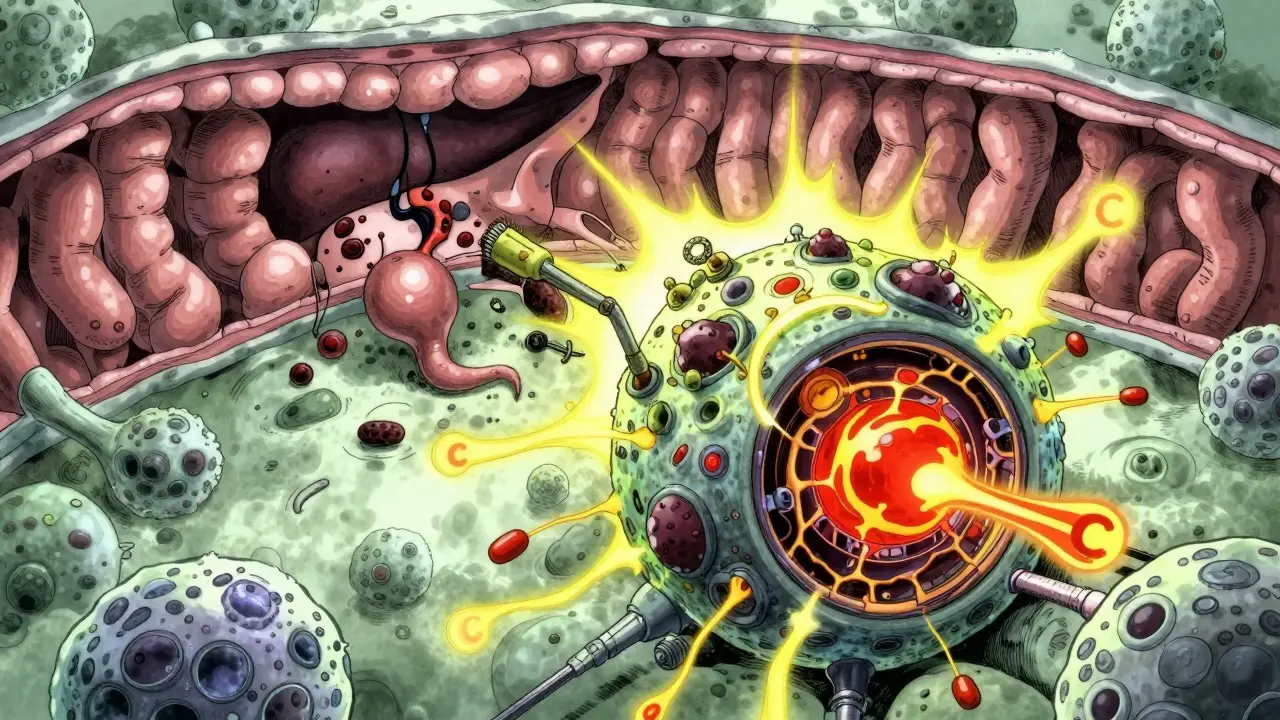
One major driver is mitochondrial dysfunction. The Mitochondria are the energy-producing organelles within cells. When antibiotics inhibit mitochondrial fatty acid oxidation, the cell can't produce energy and starts to leak proteins like cytochrome C. This triggers a cascade that leads to cell death, either through apoptosis (programmed cell death) or necrosis (uncontrolled cell death).
Another fascinating and emerging area of research is the role of the gut. You might have heard that antibiotics "kill the good bacteria." This isn't just a side effect; it's a potential trigger for liver damage. When the Gut Microbiome is the complex community of microorganisms living in the digestive tract, a loss of diversity-specifically a decrease in bacteria like Faecalibacterium prausnitzii-can lead to a leaky intestinal barrier. This allows toxins to flood the liver, increasing the risk of injury by up to 3.7 times.
Finally, there is a genetic component. Some people simply have a genetic makeup that makes them more susceptible. Research into Human Leukocyte Antigen (HLA) associations suggests that certain genetic markers determine if a person will have an idiosyncratic reaction to a drug, meaning the reaction is unpredictable and not necessarily related to the dose.
Spotting the Warning Signs
The tragedy of antibiotic-induced liver injury is that it is often "silent" in the beginning. Many patients have elevated liver enzymes in their blood tests without feeling a thing. However, when symptoms do appear, they can be severe. Common red flags include:
- Jaundice: A yellowing of the skin or the whites of the eyes, usually indicating cholestasis.
- Dark Urine: Often described as looking like tea or cola.
- Systemic Fatigue: Unusual weakness or a profound loss of appetite.
- Digestive Distress: Nausea and vomiting that doesn't resolve.
For those in a hospital setting, especially those dealing with sepsis, the risk is higher. Sepsis increases the likelihood of liver injury by 1.8 times. This creates a clinical paradox: the patient needs the antibiotic to survive the sepsis, but the combination of the infection and the drug may destroy the liver.

Managing the Risk: Protocols and Precautions
Preventing permanent liver failure requires a proactive approach. The gold standard is a combination of baseline testing and strategic monitoring. Doctors typically order liver function tests (LFTs) before the first dose of a high-risk antibiotic.
If you are on a prolonged course of broad-spectrum antibiotics-specifically seven days or more-weekly monitoring is often recommended. Why seven days? Because data shows that courses lasting a week or longer increase the incidence of liver injury by 3.2 times compared to shorter bursts of treatment.
When does a doctor pull the plug on a medication? Most follow the "rule of 5." According to AASLD is the American Association for the Study of Liver Diseases, which sets clinical guidelines for liver care, the recommended action is to discontinue the offending drug if ALT exceeds 5× the ULN or if ALP exceeds 2× the ULN and the patient is showing symptoms like jaundice.
Can I tell if an antibiotic is hurting my liver without a blood test?
It is very difficult. Many cases of antibiotic-related liver injury are asymptomatic in the early stages, meaning the liver is being damaged but you don't feel it. Yellowing of the eyes (jaundice) or very dark urine are late-stage signs. The only reliable way to detect early injury is through liver function tests (ALT and ALP levels).
Are all "high-risk" antibiotics dangerous for everyone?
No. "High-risk" refers to the statistical likelihood across a large population. Many people take amoxicillin-clavulanate for years without any issues. The risk is influenced by your genetics (HLA markers), your existing gut health, and other medications you might be taking.
What happens if I stop the antibiotic too early to save my liver?
This is the primary challenge for doctors. Stopping an antibiotic prematurely can lead to a relapse of the infection or the development of antibiotic-resistant bacteria. This is why the "rule of 5" is used-to balance the risk of liver failure against the risk of an uncontrolled infection.
Does the dose of the antibiotic change the risk of liver injury?
It depends on the drug. Some antibiotics, like Rifampin, show dose-related toxicity where higher amounts lead to more toxic intermediate accumulation in the liver. Others cause "idiosyncratic" injury, which means the reaction happens regardless of the dose and depends more on the individual's immune response.
Can probiotics prevent antibiotic-induced liver damage?
Current research is exploring this. Since gut dysbiosis (the loss of good bacteria) is linked to liver injury, clinical trials are investigating whether probiotics can protect the intestinal barrier and reduce the risk of DILI. While promising, this is not yet a standard medical guideline.
Looking Ahead: The Future of Liver Safety
We are moving toward a world of personalized medicine. Within the next five to seven years, we may see the rise of pharmacogenomics, where a quick genetic test reveals your HLA markers before a doctor writes a prescription. This could allow clinicians to avoid high-risk antibiotics for susceptible individuals, potentially cutting the incidence of liver injury by 30-40%.
In the meantime, the focus remains on smarter monitoring. The shift toward analyzing the gut microbiome as a predictor of risk is gaining momentum. By identifying a lack of beneficial bacteria before treatment begins, doctors might be able to implement more aggressive monitoring or choose a different class of antibiotic altogether.

David Snyder
April 12, 2026 AT 21:23It is really heartening to see a breakdown like this. Knowing that pharmacogenomics might be available in a few years gives so much hope for safer treatments!
S.A. Reid
April 13, 2026 AT 10:56One must ponder if these so-called clinical guidelines are merely a facade to obscure the systematic failure of the pharmaceutical industrial complex. It is quite probable that the R-ratio is an oversimplification designed to pacify the masses while the true nature of these hepatotoxins remains classified by those in power. The notion that a simple genetic test will solve this is remarkably naive, as the controllers of medicine rarely provide the actual cure when profit margins are at stake.
Scott Lofquist
April 14, 2026 AT 17:21Actually, the R-ratio is basic stuff and anyone who doesn't get it is just lagging behind 🙄. Also, relying on a "rule of 5" is practically medieval medicine in the modern era 🤡. People need to stop blindly trusting these broad guidelines and start doing their own research into specific drug metabolites! 🧬
Kenzie Evans
April 15, 2026 AT 20:10This is such a basic overview. You completely glossed over the specific metabolic pathways of the CYP450 enzymes which is where the real damage happens. I've seen patients with way lower ALT levels still crashing because the author forgot to mention the importance of bilirubin levels in the early phase. Just typical surface-level content.
Brooke Mowat
April 16, 2026 AT 13:54The way our bodies dance with these chemicals is just wild... like a cosmic struggle between healing and harming!! I love how the gut is like a secret garden that can either protect our liver or let the wolves in. It's all about the vibez and that inner balance, even if the science is a bit scarry looking at first glance. We are all just stardust trying to survive a round of Amoxicillin lol.
Milo Tolley
April 16, 2026 AT 21:32Absolute catastrophe!!! The synergistic toxicity of TZP in a septic environment is an utter nightmare for the hepatocytes!!! Total mitochondrial meltdown!!!!
Jasmin Stowers
April 18, 2026 AT 05:17sounds like a good way to stay safe
Olivia Lo
April 19, 2026 AT 16:24The intersection of the microbiome and hepatic inflammation is a truly fascinating paradigm. By acknowledging the bidirectional communication between the gut-liver axis, we can move toward a more holistic understanding of idiosyncratic drug reactions. It is imperative that we maintain a balanced approach to antimicrobial stewardship to preserve the ecological integrity of the intestinal flora while treating the acute infection.
Princess Busaco
April 20, 2026 AT 17:35I find it absolutely laughable that anyone believes a probiotic pill can magically fix a leaky gut once the pharmaceutical damage has been done, as if the liver is just some sponge that can be cleansed with a little yogurt and a prayer. The sheer arrogance of the medical community in suggesting that a "rule of 5" is a sufficient safeguard is practically a crime against humanity, considering the myriad of ways a body can react to these toxins regardless of what a chart says, and frankly, the fact that people still trust these guidelines without questioning the systemic corruption behind them is just a tragedy of epic proportions that leaves me utterly exhausted by the collective ignorance of the general public who just want a quick fix without understanding the spiritual toll of chemical intervention.
Billy Wood
April 22, 2026 AT 04:18Keep fighting!!! Knowledge is power!!! Stay healthy!!!!