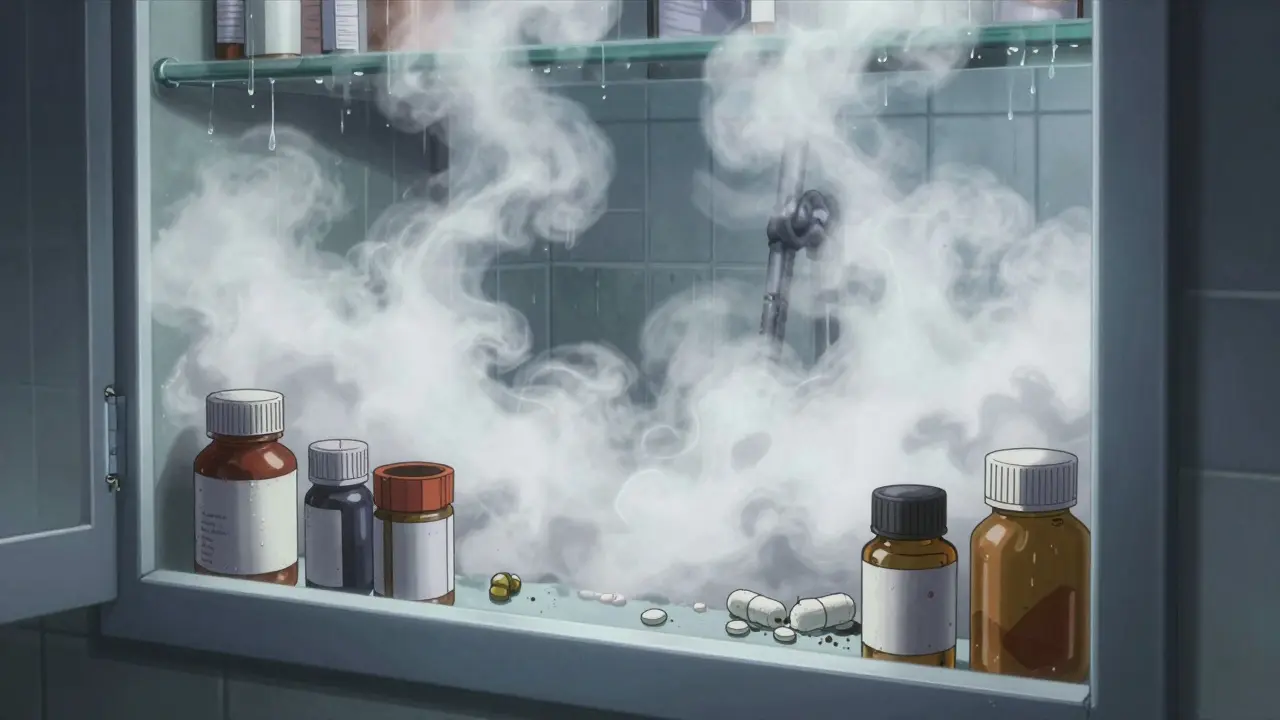
Your bathroom cabinet might be the worst place in your house for your heart medication. It sounds counterintuitive, right? We keep our toiletries there, so why not our prescriptions? The problem is that showers create a sauna-like environment with humidity spikes reaching 90%. That moisture, combined with the residual heat from hot water, breaks down chemical bonds in drugs long before the date printed on the bottle.
Medications are complex chemical compounds designed to remain stable under specific conditions. When you expose them to extreme heat or damp air, they don't just sit there waiting to expire. They actively degrade. This means the drug loses its potency, changes its chemical structure, or even becomes toxic. You might take a pill thinking it will stop your chest pain or lower your blood sugar, but if it has been sitting in a hot car or a humid bathroom, it could do nothing-or worse.
The Science Behind Drug Degradation
To understand why your meds go bad, you have to look at how expiration dates are actually determined. Pharmaceutical companies don't guess these dates. They run rigorous stability tests. According to standards set by the United States Pharmacopeia (USP), most drugs are tested under controlled room temperature conditions, typically between 20-25°C (68-77°F) with relative humidity kept between 35-65%.
When you store your medicine outside these parameters, you are essentially running an uncontrolled experiment on your health. Dr. Hani Jneid, a cardiologist at Baylor College of Medicine, explains that extreme heat and moisture alter medications, causing them to become less potent. For example, aspirin decomposes into salicylic acid and acetic acid (which smells like vinegar) when exposed to moisture. If you’ve ever opened an old bottle of aspirin and smelled something sour, that’s the drug breaking down. Not only is it less effective at stopping pain, but the breakdown products can irritate your stomach lining more than the original compound.
| Factor | Effect on Medication | Risk Level |
|---|---|---|
| High Humidity (>60%) | Causes tablets to crumble, capsules to stick together, and promotes hydrolysis (chemical breakdown via water). | High |
| Heat (>25°C / 77°F) | Accelerates chemical reactions, leading to faster loss of potency. Can melt coatings on extended-release pills. | High |
| Direct Sunlight | UV rays break down photosensitive chemicals, changing color and efficacy. | Medium-High |
| Cold Temperatures | Can freeze liquid suspensions, separating ingredients and altering dosage accuracy. | Medium |
Which Medications Are Most Vulnerable?
Not all pills are created equal. Some are tough as nails; others are delicate. Solid dosage forms like hard-shell capsules and standard tablets are generally more resilient. Research published in the NIH's PMC journal found that solid oral drugs can maintain about 85-90% of their potency even when exposed to temperatures up to 40°C (104°F) for 30 days. However, "generally" doesn't mean "always," and certain classes of drugs are incredibly fragile.
Insulin is one of the most sensitive medications available. Unopened vials must be refrigerated between 2-8°C (35.6-46.4°F). Once you start using a vial, it can stay at room temperature, but it must be below 25°C (77°F). If insulin sits at body temperature (37°C or 98.6°F) for just 24 hours, it can lose up to 20% of its potency. For a diabetic patient, that drop in effectiveness can lead to dangerously high blood sugar levels without any obvious warning signs.
Nitroglycerin, used for angina (chest pain), is another critical example. It decomposes rapidly above 25°C. If you leave your nitroglycerin bottles in a warm pocket or a sunny dashboard, the glycerol trinitrate breaks down into inactive compounds. During a heart attack, this medication needs to work instantly. If it has degraded, it won't dilate your blood vessels, putting your life at risk.
Biologics, such as monoclonal antibodies used for autoimmune diseases or cancer, are proteins. Proteins denature-unravel and lose their shape-when exposed to heat. Unlike small-molecule drugs, once a biologic protein unfolds, it cannot fold back correctly. This damage is irreversible. Even a short excursion out of the refrigerator range can render the entire dose useless.
Even devices like EpiPens and inhalers suffer. EpiPens have a mechanical failure rate of 15-20% when exposed to temperatures above 30°C (86°F) for extended periods. Inhalers contain propellants that expand with heat; if the temperature exceeds 49°C (120°F)-easily reached in a parked car-the canister can explode.

The Hidden Dangers of Common Storage Spots
We often choose convenience over chemistry. Let's look at where we usually stash our meds and why those spots are problematic.
- The Bathroom Cabinet: As mentioned, the steam from showers creates high humidity. Abby Case, a clinical pharmacy specialist at St. Joseph's/Candler, notes that moisture damages the exterior coating of capsules. This is crucial for extended-release medications. If the coating fails, the drug dumps all its active ingredient into your system at once instead of releasing it slowly. This can cause overdose symptoms or severe side effects.
- The Kitchen Counter: Kitchens are hot and humid. Ovens, dishwashers, and boiling pots raise ambient temperatures well above 32°C (90°F) near counters. Plus, cleaning sprays and food odors can contaminate open bottles.
- The Car Glove Box: This is perhaps the most dangerous spot. On a sunny day, the interior of a car can exceed 60°C (140°F). Leaving any medication here for even a few hours can destroy it. The NIH explicitly warns against this practice.
- The Garage: Unless your garage is climate-controlled, it experiences extreme temperature swings. Freezing winters and scorching summers make it unsuitable for almost any prescription drug.
Signs Your Medication Has Gone Bad
You can't always tell if a drug has lost potency just by looking at it. Patricia Vandercruys, Site Coordinator of the Pharmacy Department at The Montreal Children's Hospital, warns that "you can't necessarily tell if the medication has been altered." However, there are visual and sensory clues that indicate degradation.
Check for these red flags:
- Color Changes: Tablets that have turned darker, lighter, or developed spots may have oxidized or absorbed moisture.
- Unusual Odors: If your pills smell different than usual-especially if they smell like vinegar, ammonia, or rot-they are likely decomposing.
- Texture Issues: Tablets should be hard and dry. If they feel soft, sticky, or crumble easily, humidity has compromised their structure. Capsules that are cracked, chipped, or stuck together are also suspect.
- Liquid Separation: In liquid antibiotics or suspensions, if the particles settle and don't remix after shaking, or if the liquid looks cloudy or discolored, discard it.
If you see any of these signs, do not take the medication. Dispose of it properly and get a new prescription.
Best Practices for Storing Medications
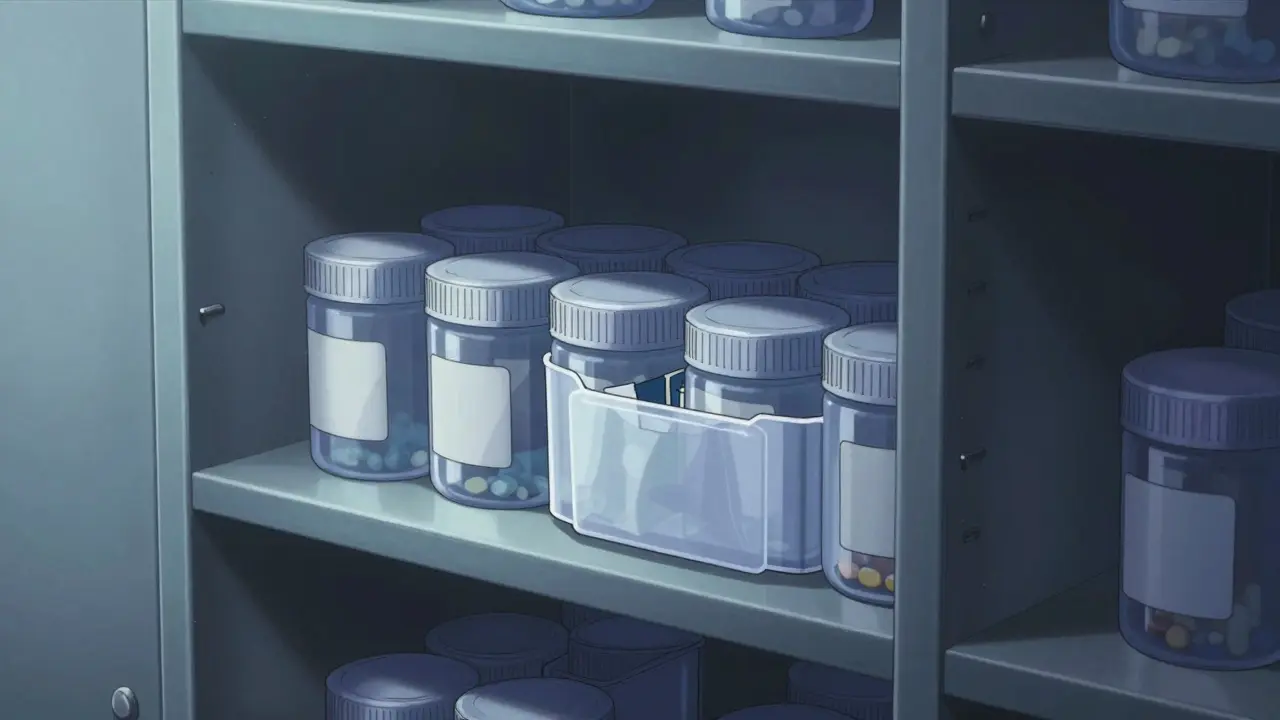
So, where should you put your meds? The goal is a cool, dry, dark place. Here is a practical checklist based on guidelines from the FDA and pharmaceutical experts.
- Choose the Right Room: A bedroom closet or a drawer in a hallway away from windows is ideal. These areas tend to have stable temperatures and low humidity.
- Keep Original Containers: Never transfer pills to generic jars or daily planners unless instructed by your pharmacist. Original containers are opaque (blocking light) and have tight seals to keep moisture out. They also contain desiccants (little silica gel packets) in some cases to absorb humidity.
- Close Tightly: Every time you open a bottle, you let fresh air-and moisture-in. Snap the cap shut immediately.
- Avoid Refrigeration Unless Necessary: Most pills do not need refrigeration. In fact, the condensation that forms when you take a cold bottle out of the fridge can introduce moisture. Only refrigerate if the label says "Store in Refrigerator" or if your pharmacist specifically instructs you to do so (like with insulin or certain eye drops).
- Travel Smart: If you're going on a trip, take only what you need for the duration. Use specialized cool packs for sensitive meds like insulin. Never check your medications in luggage; carry them with you in a climate-controlled cabin.
What About Expired Medications?
The FDA states that expiration dates represent the last date a manufacturer guarantees full potency and safety. Using expired medicines is risky. While some studies suggest certain solid drugs remain potent for years past their date, this is not true for all medications. Liquid antibiotics, nitroglycerin, and insulin lose potency quickly. Taking sub-potent antibiotics can fail to cure an infection, potentially leading to antibiotic resistance. Taking degraded heart medication can fail to prevent a stroke or heart attack.
Do not flush medications down the toilet unless the label specifically instructs you to do so (this is rare and usually for highly addictive opioids to prevent misuse). Instead, use a drug take-back program. Many pharmacies and police stations host collection bins. If no program is available, mix the pills with an unappealing substance like dirt, cat litter, or used coffee grounds in a sealed plastic bag and throw them in the trash. Remove or scratch out personal information on the bottle label first.
Is it safe to store medicine in the bathroom?
No, it is not recommended. The bathroom experiences significant fluctuations in temperature and humidity due to hot showers and baths. High humidity can cause tablets to crumble and capsules to degrade, while heat can accelerate chemical breakdown. Store medications in a cool, dry place like a bedroom closet instead.
How does heat affect insulin?
Insulin is highly sensitive to heat. Unopened vials must be refrigerated. Once in use, insulin should be stored at room temperature below 25°C (77°F). Exposure to temperatures above 30°C (86°F) can cause insulin to lose potency rapidly. After 24 hours at body temperature (37°C), insulin can lose up to 20% of its effectiveness, which can lead to poor blood sugar control.
Can I tell if my medication has gone bad?
Sometimes, but not always. Look for changes in color, texture, or odor. Tablets that are soft, crumbly, or discolored, or liquids that are cloudy or separated, may be degraded. However, many medications lose potency without visible signs. If you suspect exposure to extreme heat or humidity, it is safer to replace the medication.
What happens if I take expired medication?
The primary risk is reduced potency, meaning the drug may not work effectively. For life-saving medications like nitroglycerin or insulin, this can be dangerous. In some cases, degraded medications can produce harmful byproducts. The FDA advises against using expired medicines because you cannot guarantee their safety or efficacy.
Where is the best place to store medications at home?
The best place is a cool, dry, dark location away from direct sunlight and sources of heat or moisture. A bedroom closet or a drawer in a hallway is ideal. Avoid bathrooms, kitchens, cars, and garages. Keep medications in their original containers with tightly closed lids to protect them from environmental factors.
