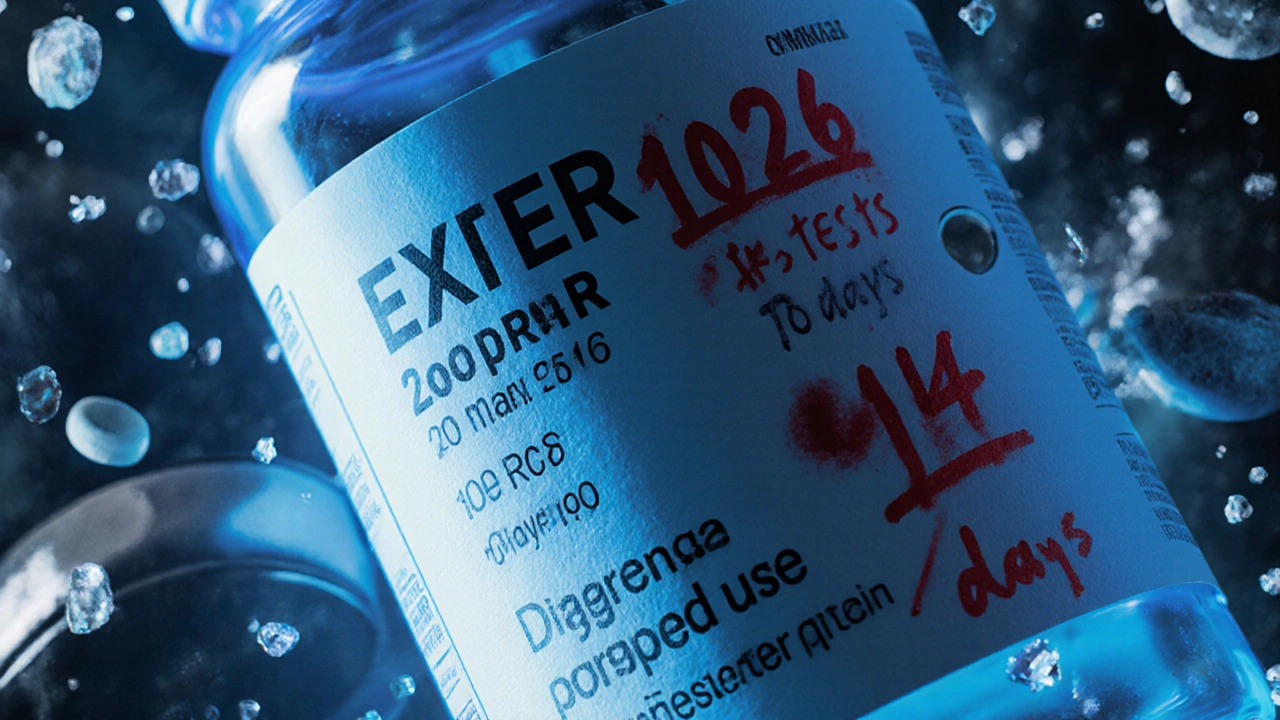
When you pick up a prescription, you might see two different dates on the bottle: one printed by the manufacturer, and another written by the pharmacy. One says expiration date. The other says beyond-use date. They look similar, but they’re not the same. Using the wrong one could mean taking a pill that doesn’t work-or worse, one that’s unsafe.
What’s the Difference Between Expiration Dates and Beyond-Use Dates?
An expiration date comes from the drug maker. It’s the last day the manufacturer guarantees the medication will work as intended, based on strict lab testing. These tests run for months or years under controlled heat, light, and humidity to see how the chemical breaks down over time. The FDA requires this for every commercial drug sold in the U.S. That’s why you see dates like "March 2026" on a bottle of amoxicillin or lisinopril.
A beyond-use date (BUD) is set by the pharmacy. It applies only when a medication has been changed after leaving the factory. That includes things like:
- Turning a pill into liquid for a child who can’t swallow tablets
- Combining two drugs into one capsule
- Repackaging bulk pills into daily blister packs
- Mixing IV solutions in the hospital pharmacy
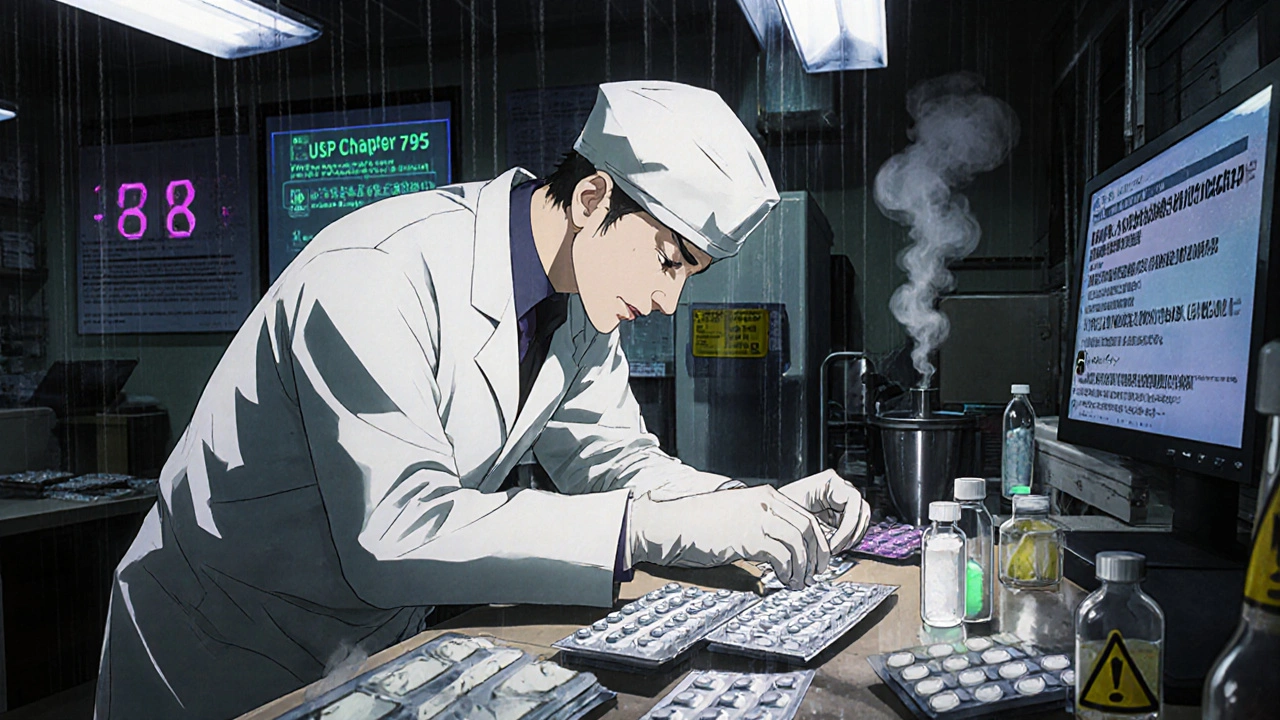
Pharmacists use USP Chapter <795> guidelines to figure out how long these altered meds stay safe. Unlike manufacturers, they don’t run stability tests on every batch. Instead, they rely on established rules based on the type of mix, storage conditions, and ingredients used.
Why Can’t You Just Use the Manufacturer’s Expiration Date?
Think of it like a sealed can of soup. The expiration date on the can is based on how long it lasts in a warehouse-cold, dry, untouched. But once you open it, refrigerate it, and spoon out portions over days, the clock changes. The same logic applies to meds.
When a pharmacy crushes a tablet, adds flavoring, or dilutes a solution, they’re introducing new variables: water, alcohol, preservatives, or even tiny particles from the grinding machine. These can speed up degradation. Some compounded liquids lose potency in just days. Others can grow bacteria if left at room temperature too long.
The manufacturer’s date doesn’t account for any of that. It only applies to the drug as it came out of the factory. Once the pharmacy touches it, the original expiration date is no longer valid. That’s why pharmacists must assign a BUD-and why you need to pay attention to it.
How Long Do These Dates Last?
Expiration dates for commercial drugs usually last 1 to 5 years. Some can be longer-up to 10 years for certain antibiotics or heart meds. The FDA has found that many drugs remain effective years past their expiration date if stored perfectly. But that’s not the point. Real homes aren’t labs. Your medicine cabinet might be hot, humid, or exposed to sunlight. So the date on the bottle is a conservative, legally protected safety mark.
Beyond-use dates are much shorter:
- Non-sterile liquid meds (like flavored antibiotics or hormone creams): 14 days refrigerated
- Oral solids (capsules or tablets made from powder): up to 180 days at room temperature
- Repackaged pills (in blister packs): earlier of original expiration date or 1 year from repackaging
- Sterile IV bags: 24 to 72 hours, depending on storage
These limits come from USP standards. They’re not guesses. They’re based on decades of research into how different formulations break down. A water-based suspension without preservatives? It’s a breeding ground for mold in a week. A dry capsule made from stable powders? It can last six months.
What Happens If You Use a Drug Past Its Date?
There’s a big difference between "it might not work" and "it’s dangerous."
For expired commercial pills: The biggest risk is reduced effectiveness. A 10-year-old antibiotic might only be 70% potent. That could mean your infection doesn’t clear, leading to worse illness or antibiotic resistance. But it’s rarely toxic.
For beyond-use dates: The risks are higher. Compounded meds often lack preservatives. A liquid that’s been sitting for 3 weeks might have bacteria or fungi growing in it. If you swallow it, you could get an infection. If it’s an eye drop or nasal spray, you could cause serious damage.
A 2022 survey of patients using compounded medications found that 68% had thrown away unused medicine because the BUD had passed-even if the original bottle said it was good for another year. That’s not just waste. It’s expensive. Compounded meds can cost 2 to 5 times more than regular ones. Losing a $120 bottle because you didn’t know the BUD was only 6 months? That’s common.
How to Know Which Date to Trust
Here’s a simple rule: Use the earlier date.
- If you got a commercial pill in its original bottle, use the expiration date.
- If the pharmacy put it in a different bottle, repackaged it, or made it into liquid, use the BUD.
- If the BUD is earlier than the manufacturer’s date, the BUD wins.
- If the BUD is later than the manufacturer’s date, ignore the BUD-it’s invalid.
Pharmacists are required to label the BUD clearly. Look for phrases like:
- "Use by: [date]"
- "Beyond-use date: [date]"
- "Do not use after: [date]"
And always check the storage instructions. A compounded thyroid medication might say "store in fridge"-even if the original pill didn’t need it. That’s because the liquid form degrades faster at room temperature.
What Should You Do With Expired or Out-of-Date Meds?
Don’t toss them in the trash. Don’t flush them. Don’t give them to someone else.
Over 90% of U.S. pharmacies offer free take-back programs. Bring your old meds to the counter. They’ll dispose of them safely through incineration or other regulated methods. Some cities also have drop boxes at police stations or community centers.
And if you’re unsure? Call your pharmacy. Ask: "Is this a commercial product, or was it compounded?" They’ll tell you which date matters. No shame in asking. It’s your health.
Why This Matters More Than You Think
More than 8 million Americans rely on compounded medications. Kids with allergies to dyes, cancer patients needing custom doses, people with hormone imbalances-all depend on these custom mixes. But without clear understanding of BUDs, patients waste money, risk their health, or skip doses because they’re afraid their med is "expired."
Regulators are taking notice. The FDA issued 27 warning letters to compounding pharmacies in 2022 for incorrect BUDs. USP is tightening the rules again in 2025, likely cutting maximum BUDs for some high-risk mixes by 30%. This isn’t bureaucracy-it’s safety.
Knowing the difference between these dates isn’t just technical. It’s practical. It saves money. It prevents illness. It keeps you in control of your treatment.
Final Tip: Always Ask
If you get a new prescription and see a second date on the label-don’t assume. Don’t guess. Ask your pharmacist: "Is this date the manufacturer’s expiration or your beyond-use date?"
They’re trained to explain it. And if they can’t? That’s a red flag. A good pharmacy doesn’t just fill scripts-they educate you.
Your meds aren’t just chemicals. They’re your health on a timer. Know the timer.

Evelyn Salazar Garcia
November 29, 2025 AT 10:10Why do pharmacies even bother with these BUDs? Seems like a money grab to me.
Justina Maynard
November 29, 2025 AT 10:31I used to ignore BUDs until my kid got sick from a compounded antibiotic that sat on the counter for three weeks. Turns out, mold doesn’t care if the original bottle says 2027. Now I treat every pharmacy-labeled date like a ticking bomb. Don’t be that person.
Clay Johnson
November 29, 2025 AT 18:16The expiration date is a social contract between industry and consumer. The beyond-use date is a legal fiction enforced by liability aversion. Both are illusions of control in a world governed by entropy.
Jermaine Jordan
November 30, 2025 AT 09:36This is one of those topics that should be taught in high school biology. Imagine if we treated car maintenance like we treat meds-ignoring service intervals because the ‘original warranty’ said 10 years. People would die. And they do. Every day. Knowledge isn’t optional. It’s survival.
Chetan Chauhan
December 1, 2025 AT 21:29USP rules? More like Big Pharma puppet masters. My cousin in Mumbai gets compounded meds that last 6 months no problem. Why can't we here? Capitalism is killing our health.
Phil Thornton
December 2, 2025 AT 10:53Just ask your pharmacist. Seriously. That’s it. No drama.
Pranab Daulagupu
December 2, 2025 AT 19:31Compounded formulations require rigorous stability profiles. BUDs are derived from pharmacokinetic degradation models under USP <61>/<62> guidelines. Ignoring them risks microbial proliferation and subtherapeutic dosing.
Barbara McClelland
December 3, 2025 AT 05:50Love this breakdown! I always tell my clients: when in doubt, call your pharmacy. They’re not just dispensing pills-they’re your medication detectives. And yes, that $120 bottle? Worth saving your health over.
Alexander Levin
December 3, 2025 AT 05:58They’re watching you. The FDA. The pharmacies. The “expiration dates.” They want you scared. They want you buying new pills every month. The real truth? Most meds last forever. They just don’t want you to know.
Ady Young
December 4, 2025 AT 08:39Justina’s story hit hard. I used to toss out anything past the date, but now I double-check if it’s compounded. Saved myself $300 last month. Small wins matter.
Travis Freeman
December 6, 2025 AT 07:38As someone from a country where pharmacies don’t even label BUDs clearly, I’m so glad this exists. Education like this bridges gaps. Thanks for making it plain.
Sean Slevin
December 8, 2025 AT 01:47Wait-so if I crush my pill and mix it with syrup… the original expiration date? Gone? But what if I use a sterile syringe? And refrigerate it? And test it with a spectrometer? Do I still need a BUD? Or am I just… overthinking?!
Chris Taylor
December 8, 2025 AT 11:38My grandma used to say, ‘If it looks weird, smells weird, or tastes weird-don’t take it.’ Still the best advice.
Melissa Michaels
December 8, 2025 AT 14:42Pharmacists are legally required to provide BUD labeling per USP <795> and <797>. Failure to do so constitutes a violation of compounding standards. Patients should always request documentation. Your health deserves nothing less.