
Most people don’t realize how much sodium is hiding in their food. You might think cutting back on the salt shaker is enough, but that’s only a small part of the story. Around 75% of the sodium we eat comes from packaged, processed, and restaurant meals - not from what we add at the table. And for people with high blood pressure, that hidden sodium can be a silent problem, pushing blood pressure higher and making medications less effective.
Why Sodium Raises Blood Pressure
When you eat too much sodium, your body holds onto water to dilute it. That extra fluid increases the volume of blood in your vessels. Your heart has to pump harder to move that larger volume, and your blood pressure rises. It’s not just about the heart working overtime - high sodium also damages the lining of your arteries, reduces nitric oxide (which helps them relax), and makes blood vessels stiffer over time.Not everyone reacts the same way. About half of people with hypertension are "salt-sensitive," meaning their blood pressure drops noticeably when they cut back on sodium. Even some people with normal blood pressure show this sensitivity. The good news? You don’t need to be diagnosed as salt-sensitive to benefit from lowering your intake. Studies show that even modest reductions lead to measurable drops in blood pressure across the board.
One 2023 study published in JAMA found that just one week of eating a low-sodium diet lowered systolic blood pressure by an average of 8 mm Hg in middle-aged and older adults. That’s about the same drop you’d expect from starting a first-line blood pressure medication. And 73% of participants saw a drop in their mean arterial pressure - the average pressure driving blood flow through your body.
The Ideal Target: 1,500 mg or Less
The American Heart Association says the ideal daily sodium limit is 1,500 milligrams. That’s less than a teaspoon of salt. The World Health Organization recommends no more than 2,000 mg, and even that’s too high for many people with hypertension.Here’s what that looks like in real food:
- One slice of packaged bread: 150-230 mg
- A can of soup: 700-1,200 mg
- A fast-food burger and fries: 1,500-2,500 mg
- Two tablespoons of soy sauce: 1,200 mg
- A single serving of canned chili: 900 mg
That means you can hit your daily limit before lunch if you’re not careful. Most people eat 3,000-4,000 mg a day - way above the recommended range. The goal isn’t to eliminate sodium entirely (your body needs a little), but to bring it down to a level that supports healthy blood pressure.
Where the Sodium Really Hides
The biggest mistake people make is blaming the salt shaker. You might skip adding salt to your eggs, but if you’re eating canned beans, frozen meals, deli meats, or even "healthy" granola bars, you’re still getting a ton of sodium.Here are the top hidden sources:
- Processed meats: Bacon, ham, sausage, hot dogs, and deli slices are loaded with sodium for preservation and flavor.
- Condiments: Soy sauce, ketchup, mustard, salad dressings, and barbecue sauce pack in sodium like candy.
- Snack foods: Chips, pretzels, crackers, and popcorn are often salted to the point of being addictive.
- Restaurant meals: Even "light" or "healthy" options like grilled chicken salads can have over 1,200 mg from croutons, cheese, and bottled dressings.
- Bread and baked goods: It’s not just the salt - many breads use sodium-based leavening agents and preservatives.
That’s why reading labels matters. The FDA now requires sodium content to be clearly labeled in bold on nutrition facts panels. Look for "low sodium" (140 mg or less per serving) or "no salt added." And always check the serving size - a package might say "120 mg per serving," but contain two or three servings.
How to Cut Back - Step by Step
Reducing sodium doesn’t mean eating bland food. It means learning new ways to flavor your meals. Here’s how to do it without feeling deprived.- Start slow. Reduce salt in cooking by 10% each week. Your taste buds adapt faster than you think. After 2-4 weeks, foods you used to enjoy will taste overly salty.
- Swap salt for flavor. Use fresh herbs (basil, rosemary, cilantro), citrus zest, garlic, onion, black pepper, vinegar, and spices like cumin, paprika, or chili powder. Try potassium-based salt substitutes like Mrs. Dash - they can cut sodium by 300-500 mg per meal.
- Choose fresh over packaged. A home-cooked chicken stir-fry with brown rice and veggies might have 400-600 mg of sodium. The same meal from a takeout place? 1,800 mg or more.
- Use the DASH diet. The Dietary Approaches to Stop Hypertension plan isn’t just about sodium - it’s about eating more fruits, vegetables, whole grains, lean proteins, and low-fat dairy. Studies show it can drop systolic blood pressure by 8-14 mm Hg when combined with sodium reduction.
- Batch cook on weekends. Prepare low-sodium meals in advance. Cook beans from scratch, roast veggies, grill chicken. Store portions in the fridge or freezer. You’ll save time during the week and avoid the temptation of processed meals.
- Be smart at restaurants. Ask for sauces and dressings on the side. Choose grilled, steamed, or baked over fried. Skip the bread basket. Order a plain salad with olive oil and vinegar instead of bottled dressing. Avoid anything labeled "crispy," "breaded," or "smothered."

Don’t Forget Potassium
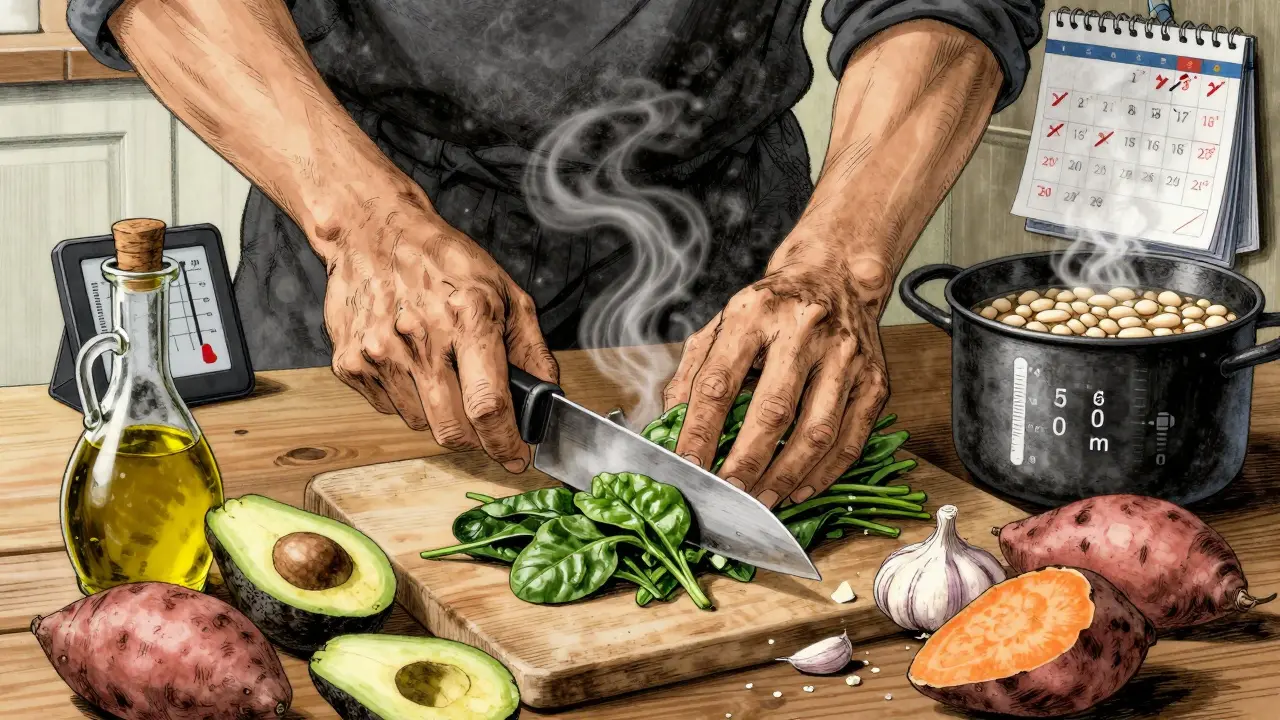
Sodium isn’t the only player here. Potassium helps your body flush out excess sodium and eases tension in your blood vessel walls. The ideal daily intake is 3,500-5,000 mg.Good sources:
- Bananas (420 mg each)
- Spinach (840 mg per cooked cup)
- White beans (1,200 mg per cup)
- Avocados (700 mg each)
- Sweet potatoes (700 mg each)
- Yogurt (570 mg per cup)
Many people with high blood pressure don’t get enough potassium. Eating more of these foods naturally helps balance out sodium - without needing supplements. Just make sure you’re not on medications that limit potassium (like certain diuretics or ACE inhibitors) - talk to your doctor before making big changes.
What About Salt Substitutes?
Potassium chloride-based salt substitutes (like NoSalt or Nu-Salt) can be helpful - they taste similar to salt but have no sodium. But they’re not for everyone.If you have kidney disease, heart failure, or are on certain blood pressure meds, too much potassium can be dangerous. Always check with your doctor before switching. For most healthy people, though, they’re a safe and effective tool to reduce sodium without losing flavor.
Real Results - What People Experience
People who track their sodium intake for 30 days using apps like the American Heart Association’s "Sodium Swap" report average systolic blood pressure drops of 6.3 mm Hg. That’s not just a number - it means a lower risk of stroke, heart attack, and kidney damage.One user on Reddit shared: "It took me three weeks to get used to food tasting normal again. Now I can’t eat my old favorite pizza - it’s way too salty. I feel better, sleep better, and my BP is down 10 points."
Cost is a common concern. Fresh food can cost $1.25 more per meal than processed options. But batch cooking and buying in bulk (like frozen veggies, dried beans, or bulk grains) cuts that gap. And when you consider the long-term cost of heart disease, diabetes, or kidney problems, the upfront investment pays off.
When Less Sodium Isn’t Better
There’s a myth that "the lower, the better." But research shows that’s not true for everyone. Some people - especially those with advanced heart failure or kidney disease - may experience negative effects if sodium drops too low. A 2024 review in Nature Reviews Cardiology found the relationship between sodium and heart health follows a J-curve: too much is bad, too little might be risky for some.That’s why the goal isn’t to go ultra-low unless your doctor says so. Stick to the 1,500-2,300 mg range. For most people, that’s the sweet spot for lowering blood pressure without triggering other problems.
Quick Wins You Can Start Today
You don’t need to overhaul your whole diet overnight. Try these five simple steps:- Replace your morning cereal with oatmeal made with water or unsweetened almond milk - most boxed cereals have 200-400 mg per serving.
- Use lemon juice and black pepper instead of salt on eggs or fish.
- Choose fresh chicken or turkey instead of deli meats for sandwiches.
- Make your own salad dressing: olive oil, vinegar, garlic, and herbs - zero sodium.
- Check the sodium content of your favorite snack. If it’s over 200 mg per serving, find a lower-sodium alternative or eat half.
Even small changes add up. Cutting just 1,000 mg a day - about half a teaspoon of salt - can lower your systolic blood pressure by 5-6 mm Hg over time. That’s enough to reduce your stroke risk by 8% and heart disease risk by 6% over 10 years, according to the American Heart Association.
Final Thought: It’s a Habit, Not a Diet
Lowering sodium isn’t a short-term fix. It’s about retraining your palate and making smarter choices every day. You’ll notice food tastes better, you’ll feel less bloated, and your blood pressure will start to improve - often within weeks.And you don’t have to do it alone. Track your intake for a week using a free app. Cook one low-sodium meal a day. Swap one processed item for a whole-food alternative. These small steps create lasting change.
High blood pressure doesn’t have to be a life sentence. With the right choices, you can take control - one meal at a time.
How much sodium is too much for someone with high blood pressure?
For most people with hypertension, the ideal daily sodium limit is 1,500 milligrams. Even reducing intake to 2,300 mg per day - the upper limit recommended by health agencies - can lower blood pressure. But staying under 1,500 mg offers the greatest benefit, especially if you’re salt-sensitive. Anything over 3,000 mg daily significantly increases risk.
Can I still eat out if I’m trying to lower my sodium?
Yes, but you need to be strategic. Ask for sauces and dressings on the side, choose grilled or steamed options over fried, skip the bread basket, and avoid dishes with words like "crispy," "smothered," or "in a sauce." Salads can be high in sodium too - watch out for croutons, bacon bits, and bottled dressings. A plain grilled chicken salad with olive oil and vinegar can be a low-sodium option if you control the toppings.
Do salt substitutes work, and are they safe?
Potassium chloride salt substitutes can help reduce sodium intake by 300-500 mg per meal and taste similar to regular salt. They’re safe for most people, but not for those with kidney disease, heart failure, or on certain medications like ACE inhibitors or potassium-sparing diuretics. Always check with your doctor before switching, especially if you have other health conditions.
How long does it take to notice a difference in blood pressure after cutting sodium?
Some people see a drop in blood pressure within days. The 2023 CARDIA-SSBP study showed measurable changes in just one week. For most, noticeable improvements occur within 2-4 weeks as the body adjusts and blood volume normalizes. Consistency matters - the longer you stick with lower sodium, the more stable your blood pressure becomes.
Is it true that some people don’t need to cut sodium?
Everyone benefits from reducing excess sodium, but the degree of benefit varies. About half of people with hypertension are "salt-sensitive," meaning their blood pressure responds strongly to sodium changes. Even those without hypertension can reduce their future risk by lowering intake. The key is avoiding the high-sodium processed foods that most people eat daily - not necessarily eliminating all salt from home cooking.
Can I get enough potassium from food alone?
Yes, absolutely. You don’t need supplements. Focus on eating more fruits, vegetables, beans, potatoes, yogurt, and fish. A single banana has 420 mg, a cup of cooked spinach has 840 mg, and a sweet potato has 700 mg. If you’re eating at least five servings of produce daily, you’re likely hitting the 3,500-5,000 mg target. Potassium helps your body naturally balance sodium - making it a powerful ally in lowering blood pressure.

Andrew Gurung
December 27, 2025 AT 21:44Paula Alencar
December 28, 2025 AT 05:01Nikki Thames
December 29, 2025 AT 02:08Chris Garcia
December 29, 2025 AT 16:34James Bowers
December 31, 2025 AT 09:49Janice Holmes
December 31, 2025 AT 11:33Alex Lopez
December 31, 2025 AT 13:58Gerald Tardif
January 1, 2026 AT 03:10Monika Naumann
January 2, 2026 AT 08:31Elizabeth Ganak
January 3, 2026 AT 01:06