
When your hand starts shaking for no reason-especially when you’re sitting still-it’s easy to brush it off as nerves or fatigue. But if that tremor won’t go away, and your muscles feel stiff like they’re wrapped in rubber bands, it might be something deeper. Parkinson’s disease isn’t just about shaking hands. It’s a slow, silent breakdown in the brain’s ability to control movement, and at its core is a simple, devastating shortage: dopamine.
What’s Really Happening in the Brain?
Parkinson’s doesn’t attack your muscles. It attacks the neurons in a tiny area of the brain called the substantia nigra. These neurons make dopamine, the chemical messenger that tells your body how and when to move. By the time someone notices tremors or stiffness, they’ve already lost 60 to 80% of those dopamine-producing cells. That’s not a small drop-it’s a collapse. Without enough dopamine, the brain’s movement control system gets stuck in a loop. Signals don’t flow right. Muscles don’t relax. Movements become slow, stiff, and unpredictable.The Three Big Signs: Tremor, Stiffness, and Slowness
There are four main motor symptoms of Parkinson’s, but three stand out early on. The first is the resting tremor. It’s not the kind you get when you’re cold or anxious. This tremor happens when your hand is resting in your lap or on a table. It often starts on one side only-a subtle, rhythmic rubbing of the thumb and forefinger, like you’re rolling a pill. It’s called a "pill-rolling tremor" for a reason. About 80% of people with Parkinson’s have this symptom, and it fades when you move your hand or fall asleep. Then there’s rigidity, or muscle stiffness. It’s not just tightness. It’s resistance. When a doctor moves your arm or leg during an exam, it doesn’t feel smooth. It feels like a gear grinding-"cogwheel" rigidity-or like bending a lead pipe-"lead-pipe" rigidity. This stiffness doesn’t just make you feel sore. It makes everyday things hard. Buttoning a shirt, writing your name, tying shoelaces-these tasks become slow, frustrating, sometimes impossible. A study from Parkinson’s UK found that 73% of people struggle with these small movements within three years of diagnosis. The third key symptom is bradykinesia, or slowness of movement. It’s not laziness. It’s the brain’s inability to initiate motion. Getting out of a chair takes effort. Walking feels heavy. Your steps get smaller. You might shuffle. Your face loses expression. This isn’t just physical-it’s emotional. People often say they feel "trapped" inside their own body.Dopamine Replacement: The Lifeline, Not the Cure
There’s no cure for Parkinson’s. But there is a treatment that changes lives: dopamine replacement. The gold standard is levodopa, often combined with carbidopa. Levodopa is a chemical your body can turn into dopamine. Carbidopa stops it from breaking down before it reaches the brain. Together, they cross the blood-brain barrier and help restore movement. When people start levodopa, the difference can be dramatic. Many report feeling like themselves again-within 30 to 60 minutes. Studies show up to 70% improvement in motor symptoms during the first few years. This is called the "honeymoon period." For some, it lasts five years. For others, it’s longer. But it doesn’t last forever.Why Dopamine Replacement Gets Harder Over Time
As Parkinson’s progresses, the brain loses more dopamine neurons. That means less ability to store and use levodopa properly. The result? Medication effects start to wear off faster. You might have good days-"on" time-when you move freely. But then come the "off" periods: sudden, unpredictable returns of stiffness, tremor, and slowness. Some people describe it like a light switch flipping on and off. Another problem: dyskinesias. These are involuntary, dance-like movements-twisting, writhing, or jerking-that happen when levodopa levels peak. They’re not dangerous, but they’re embarrassing and exhausting. About 40 to 50% of people on long-term levodopa develop them. One Reddit user, "ParkinDad," wrote: "After 8 years, my 'on' time dropped from six hours to two or three per dose. The dyskinesias are worse than the tremors now."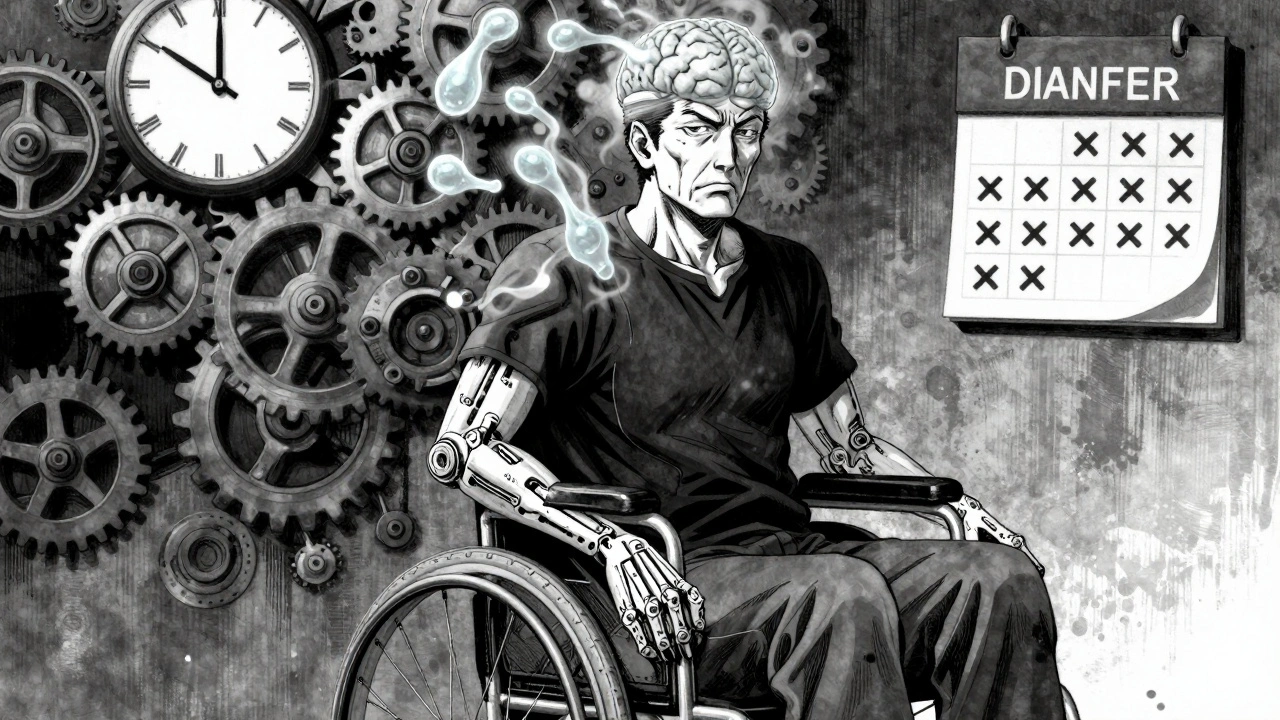
Alternatives to Levodopa: What Else Works?
Not everyone starts with levodopa. For younger patients, doctors often begin with dopamine agonists like pramipexole or ropinirole. These drugs mimic dopamine directly, without needing to be converted. They’re about 30 to 50% as effective as levodopa for movement symptoms-but they carry a lower risk of early dyskinesias. That’s why some people, like "SilverLining2022" on the Parkinson’s Foundation forum, say starting with a dopamine agonist kept them stable for five years with few side effects. But dopamine agonists come with their own problems: dizziness, nausea, sleepiness, and sometimes compulsive behaviors like gambling or overeating. About 60% of people eventually need both levodopa and a dopamine agonist as the disease advances.Timing, Food, and the Hidden Battle
Taking levodopa isn’t just popping a pill. It’s a daily science project. Protein interferes with absorption. A steak, a glass of milk, or even a protein shake can block the drug from reaching the brain. Many people learn to take their medication 30 to 60 minutes before meals-or wait an hour after eating. It’s exhausting to plan your life around your pills. Dosing matters too. The American Parkinson Disease Association recommends starting low: 25/100 mg once or twice a day, then slowly increasing. But many doctors still start too high, leading to side effects. A 2022 study found only 35% of community neurologists follow the recommended guidelines. Newer forms of levodopa help. Rytary, an extended-release version, cuts daily doses from four to two. But it costs $5,800 a year-almost ten times more than the generic version. Inbrija, an inhaled powder, gives fast relief during "off" episodes, kicking in within 10 minutes. But at $3,700 a month, it’s not affordable for most.What’s Next? The Future of Treatment
Researchers are working on better ways to deliver dopamine. One promising approach is continuous infusion-using a small pump under the skin to drip a dopamine-like drug (foslevodopa/foscarbidopa) steadily into the body. A 2022 trial showed this added 2.5 more "on" hours per day compared to oral pills. Gene therapy is also being tested. The goal? To give brain cells the tools to make dopamine again. It’s still experimental, but early results are hopeful. And then there’s personalization. Scientists are studying genes like COMT and MAO-B to predict who will respond best to which drug. Imagine a blood test that tells you: "You’ll do better on pramipexole than levodopa." That’s not science fiction-it’s coming.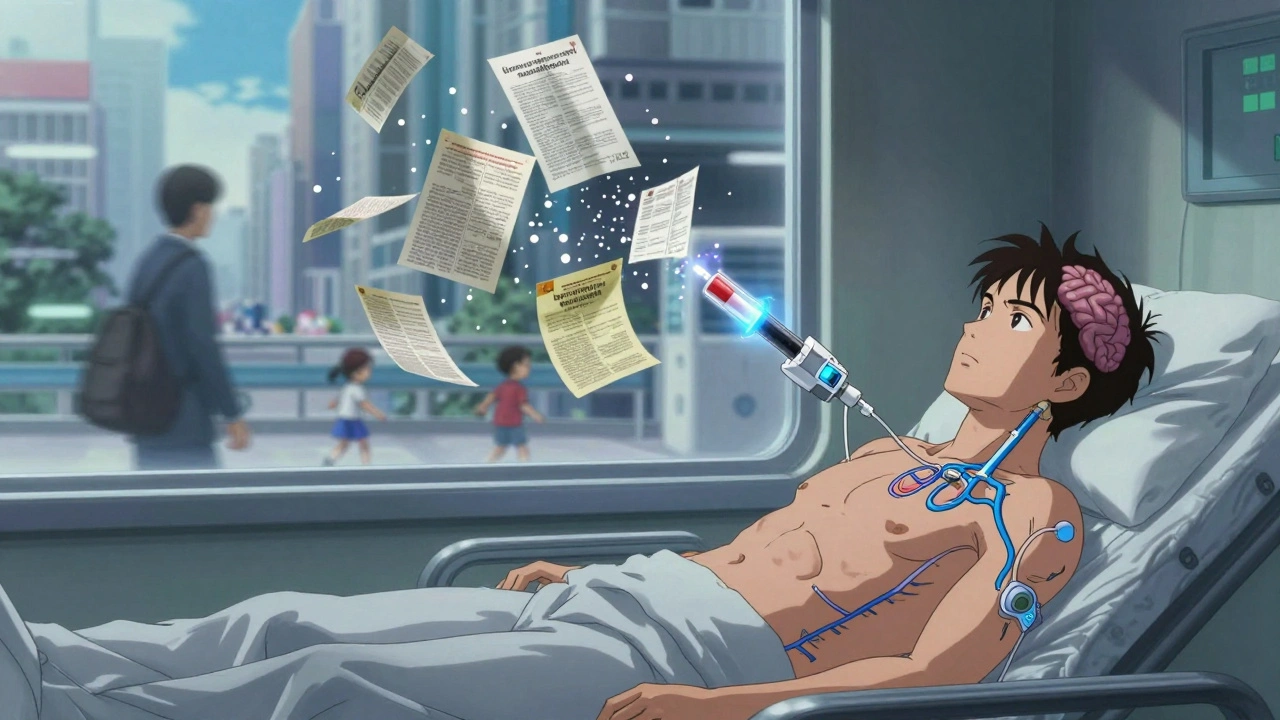
The Real Cost: More Than Money
Parkinson’s doesn’t just cost money. It costs time. On average, people spend 15 minutes a day managing meds early on. By the moderate stage, that jumps to 45 minutes. Nearly 80% need help from caregivers to keep track of doses, meals, and side effects. The economic burden in the U.S. averages $22,800 per person each year-$11,900 of that is lost income, missed work, or unpaid caregiving. Globally, cases are expected to double by 2040.What You Can Do Right Now
If you or someone you love is showing signs of Parkinson’s, don’t wait. See a neurologist-preferably a movement disorder specialist. Early diagnosis doesn’t change the disease, but it changes how you manage it. Keep a symptom journal. Note when tremors happen, when meds kick in, when meals interfere. Bring it to your appointment. It helps your doctor adjust your plan. Don’t ignore non-motor symptoms either. Depression, sleep problems, constipation, and loss of smell often come before the tremor. They’re part of the disease too. And remember: dopamine replacement isn’t perfect. But for millions, it’s the difference between staying in bed and getting dressed. Between silence and speech. Between isolation and connection.Is Parkinson’s disease caused by low dopamine?
Yes. Parkinson’s disease is caused by the gradual death of dopamine-producing neurons in a part of the brain called the substantia nigra. By the time motor symptoms like tremor and stiffness appear, people have already lost 60% to 80% of these cells. Dopamine replacement therapy, like levodopa, helps replace what’s been lost to improve movement.
Can dopamine replacement cure Parkinson’s?
No. Dopamine replacement treats symptoms but doesn’t stop the disease from progressing. The brain continues to lose dopamine neurons over time. Medications like levodopa become less effective after several years, and side effects like dyskinesias may develop. There is currently no cure for Parkinson’s.
Why does levodopa stop working well after a few years?
As Parkinson’s progresses, the brain loses more dopamine neurons that normally store and release dopamine. Without enough of these cells, levodopa can’t be properly converted or stored. This leads to "wearing-off" effects-where the medicine’s benefit fades before the next dose-and unpredictable "on-off" fluctuations. The brain also becomes more sensitive to dopamine levels, which can trigger involuntary movements called dyskinesias.
Do protein-rich meals affect Parkinson’s medication?
Yes. Protein competes with levodopa for absorption in the gut and transport across the blood-brain barrier. Eating a high-protein meal-like meat, eggs, or dairy-around the same time as taking levodopa can reduce its effectiveness. Many people learn to take their medication 30 to 60 minutes before meals or wait an hour after eating to avoid this "protein effect."
What are the side effects of dopamine replacement drugs?
Common side effects of levodopa include nausea, dizziness, low blood pressure, and sleepiness. Long-term use can cause dyskinesias-uncontrolled, jerky movements. Dopamine agonists like pramipexole can cause drowsiness, hallucinations, and compulsive behaviors such as gambling, shopping, or overeating. These side effects vary from person to person, and dosing is often adjusted to balance benefit and risk.
Should you start levodopa as soon as you’re diagnosed?
Not always. While levodopa is the most effective treatment, doctors often delay starting it in younger patients (under 60) to postpone long-term side effects like dyskinesias. Instead, they may begin with dopamine agonists or other therapies. The decision is personal and depends on symptom severity, age, lifestyle, and goals. The current standard is a "start low, go slow" approach to minimize side effects while still improving quality of life.

wendy b
December 11, 2025 AT 15:43okay so let me just say this-dopamine isn’t even the real issue, it’s the *neuroinflammation* driving the whole cascade. like, sure, levodopa helps, but we’re treating the symptom like it’s the cause. the substantia nigra doesn’t just die from nothing-glial cells are screaming for help and no one’s listening. also, protein interference? please. it’s not just meals, it’s your gut microbiome being wrecked by gluten and soy. fix that first. #neurobiohacking
Laura Weemering
December 12, 2025 AT 13:08It’s not just about dopamine... it’s about the metaphysical weight of embodiment. The tremor? It’s the soul’s resistance to a body that no longer obeys. We’ve reduced human suffering to pharmacokinetics... and in doing so, we’ve erased the poetry of decay. Levodopa doesn’t restore movement-it delays the inevitable silence. And isn’t that... tragic?
Levi Cooper
December 13, 2025 AT 09:22Look, I get it. But in America, we don’t let people sit around waiting for fancy infusions. You want relief? Take your meds on time. Stop eating steak at dinner. Get a pump if you can afford it. No one’s stopping you. If you’re still struggling after all this science, maybe you’re just not trying hard enough. We’ve got the tools. Use them.
Ashley Skipp
December 15, 2025 AT 03:38My dad had PD and he took levodopa for 12 years. The dyskinesias got so bad he couldn’t hold a cup. He said it felt like his body was possessed. He stopped taking it for two weeks once just to feel what normal felt like. He cried for an hour. That’s not treatment. That’s torture with a prescription.
Nathan Fatal
December 15, 2025 AT 15:12There’s a lot of nuance here that’s being lost. Levodopa isn’t a cure, but it’s the most effective tool we have. The real issue is access-generic levodopa costs pennies, but many patients are pushed toward expensive branded versions because of insurance loopholes. Also, protein interference isn’t just about meals-it’s about timing across the day. A structured low-protein breakfast and dinner can extend on-time by 40%. This isn’t speculation. It’s clinical protocol. We just need better patient education.
Audrey Crothers
December 17, 2025 AT 08:43OMG I just read this and I’m crying. My mom’s been on levodopa for 7 years and yesterday she held my baby’s hand for the first time in months without shaking. It’s not perfect. It’s messy. But it’s *something*. Please don’t let anyone tell you this isn’t a miracle. It is. Every single day she gets up and puts on her clothes? That’s victory.
Reshma Sinha
December 17, 2025 AT 16:09As a neuroscientist in Mumbai, I see this daily. In India, most patients can’t afford even generic levodopa. We use it sparingly, but we’ve seen dramatic results with timed dosing + physiotherapy. Also, dopamine agonists? Too many side effects here-patients get hallucinations from low-dose pramipexole. We focus on rhythm: daily walks, drumming therapy, yoga. The brain responds to pattern. Dopamine isn’t the only conductor.
Lawrence Armstrong
December 19, 2025 AT 09:09Just wanted to add-Inbrija is a game-changer for sudden off episodes. I use it like a fire extinguisher. 10 minutes, boom, back in control. But yeah, $3,700/month? No way. My insurance covers it, but my friend in Texas got denied twice. We need better access. Also, don’t forget sleep hygiene. Poor sleep = worse on-off cycles. Sleep > meds sometimes.
Donna Anderson
December 20, 2025 AT 18:26my cousin got diagnosed last year and she started levodopa and now she’s baking again?? like she made cookies yesterday and didn’t drop the bowl once. it’s not a cure but it’s like someone turned the volume back up on her life. also i learned to give her protein snacks at night only. it’s wild how small changes make huge differences
Robert Webb
December 22, 2025 AT 13:31I’ve spent 15 years working with Parkinson’s patients, and what I’ve learned is this: the disease doesn’t care about your income, your country, or your medication brand. It only cares about consistency. The real tragedy isn’t the tremor or the dyskinesia-it’s the isolation that comes when you can’t explain to your family why you can’t button your shirt, even though you took your pill. We need to treat the person, not just the dopamine deficit. That means listening. That means patience. That means showing up-even when the person can’t say thank you. And yes, the science is evolving, but compassion? That’s timeless.
nikki yamashita
December 23, 2025 AT 16:49Just take your meds before breakfast. And walk every day. That’s it. You got this.
sandeep sanigarapu
December 24, 2025 AT 11:09From my experience in rural India, where levodopa is rationed, the most effective intervention is not pharmaceutical-it is community. Neighbors help with meals. Family members remind about timing. Children hold hands during walks. The body remembers rhythm. The mind remembers love. Dopamine may be the chemical, but connection is the cure.