
Penicillin Desensitization Protocol Simulator
Current Status
Protocol Steps
Imagine a patient with a life-threatening infection like neurosyphilis or severe bacterial endocarditis. The best treatment is clear: Penicillin, specifically a beta-lactam antibiotic that remains the gold standard for many serious infections. But there’s a catch-the patient has a documented penicillin allergy. For decades, doctors would simply switch to broader-spectrum alternatives, often at higher cost and with greater risk of side effects. Today, we have a more precise solution: Penicillin Desensitization, defined as a medically supervised procedure that temporarily induces tolerance to penicillin in allergic patients when beta-lactam therapy is essential. This isn’t just a theoretical concept; it’s a critical tool in modern infectious disease management.
The core problem? Approximately 10% of the U.S. population carries a penicillin allergy label, yet research published in the *Journal of Allergy and Clinical Immunology* (2017) shows that up to 90% of these individuals can safely tolerate penicillin after proper evaluation. When desensitization is required, it allows clinicians to use the most effective antibiotic rather than settling for inferior alternatives. This approach reduces healthcare costs by $3,000-$5,000 per admission and helps combat antimicrobial resistance-a growing global crisis.
Why Penicillin Desensitization Matters Now More Than Ever
Antimicrobial resistance is accelerating. According to CDC data, carbapenem-resistant Enterobacteriaceae infections increased by 71% between 2017 and 2021. In this context, preserving the efficacy of beta-lactam antibiotics like penicillin is no longer optional-it’s urgent. The IDSA’s 2022 antimicrobial stewardship roadmap identifies penicillin allergy clarification programs as a "high-impact intervention," projecting expansion to 50% of U.S. hospitals by 2027.
But why not just test everyone first? Because time matters. In cases like group B streptococcal infections during pregnancy or severe endocarditis, waiting weeks for skin testing results could be fatal. Desensitization offers a bridge: it enables immediate, targeted therapy while maintaining safety through rigorous protocols.
| Feature | Oral Protocol | Intravenous (IV) Protocol |
|---|---|---|
| Starting Dose | 10-5 to 10-4 dilution of therapeutic concentration | 100 units/mL at 0.2 mL (20 units) |
| Dosing Interval | 45-60 minutes between doses | 15-20 minutes between doses |
| Total Duration | Approximately 6-8 hours | Approximately 4 hours |
| Safety Profile | Easier and likely safer; minor reactions manageable with antihistamines | More precise dosing control but requires intensive monitoring |
| Setting Requirement | Hospital-based, monitored environment | Hospital-based, continuous vital sign monitoring |
No large comparative studies exist between oral and IV routes, according to the 2019 NIH review (PMC6789802). However, institutional experience-such as Brigham and Women’s Hospital reporting 176 successful desensitizations using their standardized protocol-suggests both methods are viable when executed correctly. The choice often depends on patient stability, available resources, and clinical urgency.
Step-by-Step: How Penicillin Desensitization Works
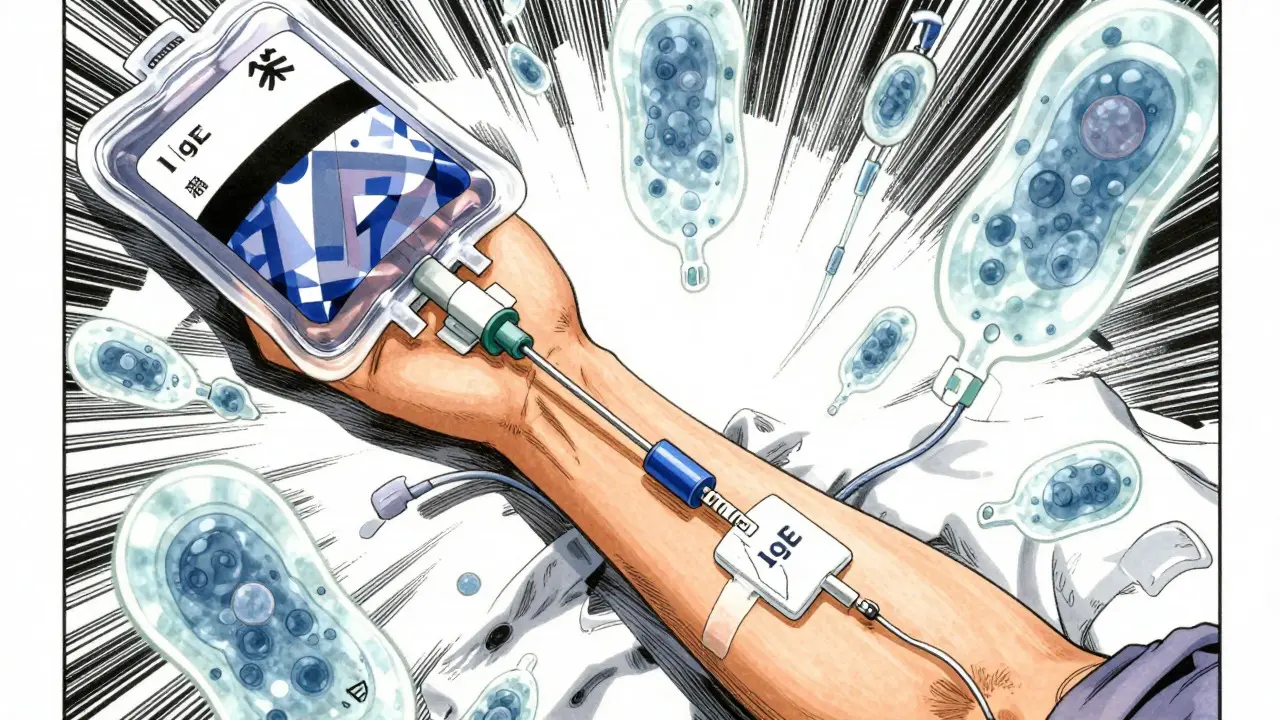
Desensitization isn’t magic-it’s physiology. By introducing tiny, gradually increasing amounts of penicillin, you train the immune system to tolerate the drug without triggering an IgE-mediated allergic response. Here’s how it unfolds in practice:
- Premedication: One hour before starting, administer ranitidine (50 mg IV or 150 mg oral), diphenhydramine (25 mg oral or IV), montelukast (10 mg oral), and cetirizine or loratadine (10 mg oral). These agents block histamine and leukotriene pathways, reducing reaction severity.
- Initial Dose: Begin with a highly diluted dose-typically 10-5 to 10-4 of the final therapeutic concentration for oral protocols, or 20 units via IV for parenteral routes.
- Gradual Escalation: Double the dose every 15-60 minutes, depending on the route. For IV protocols, intervals should never be less than 20 minutes. Monitor vital signs continuously.
- Maintenance Phase: Once the full therapeutic dose is reached, continue regular dosing. Tolerance lasts only 3-4 weeks-if administration stops, sensitivity returns.
Critical safety parameters include discontinuing the protocol immediately if angioedema, respiratory changes, or hypotension occur. As noted in the Elsevier-published 2012 protocol, "if flushing, a rash, or urticaria developed, a slower protocol of desensitization was to be used." Minor systemic reactions affect about one-third of patients but are usually manageable with additional antihistamines.
Who Should Undergo Desensitization?
Not every patient labeled "allergic" needs desensitization. First, confirm whether the allergy is real. Dr. Eric Macy of Kaiser Permanente found that approximately 90% of patients with penicillin allergy labels can safely receive penicillin after proper evaluation. Skin testing and graded challenges can clarify true allergies.
True desensitization is reserved for specific scenarios:
- Neurosyphilis treatment in pregnant patients
- Severe bacterial endocarditis requiring prolonged beta-lactam therapy
- Group B streptococcal infections during pregnancy when no suitable alternative exists
- Cases where alternative antibiotics have failed or carry unacceptable risks
Contraindications are strict. Per the NIH review (PMC6789802), desensitization must not be attempted in patients with history of Stevens-Johnson Syndrome (SJS), Toxic Epidermal Necrolysis (TEN), or Drug Reaction with Eosinophilia and Systemic Symptoms (DRESS). These severe cutaneous reactions involve systemic features and pose unacceptable risks.
Common Pitfalls and How to Avoid Them
One major error? Confusing graded challenges with desensitization. Graded challenges are for low-risk allergy histories and do not induce tolerance. Misclassifying them as desensitization has led to preventable anaphylactic events in 2-3% of cases, according to retrospective analyses cited by Dr. David Khan in a 2020 presentation.
Another pitfall: inadequate monitoring. The CDC’s 2021 STI Treatment Guidelines mandate that desensitization protocols be performed by allergists in monitored inpatient environments. Vital signs must be checked every 15 minutes. Anaphylaxis treatment-including epinephrine, airway management tools, and resuscitation equipment-must be immediately available at bedside.
Pharmacy preparation also demands precision. Prisma Health’s 2024 guidelines specify profiling one order for "IP Penicillin Intravenous Desensitization" with 48-hour stop orders and 19 distinct labels. Nursing documentation requires signing off on each dose on signature lines and updating the Electronic Medication Administration Record (EMAR) upon completion or abortion of the protocol.

Future Directions and Standardization Efforts
Despite its proven value, adoption remains uneven. A 2021 JACI Practice article reported that only 17% of community hospitals have formal desensitization protocols, compared to 89% of academic medical centers. Part of the challenge lies in variability: a 2022 study in *Allergy* identified 47 different penicillin desensitization protocols across 50 surveyed U.S. hospitals.
Efforts to standardize are underway. The AAAAI’s 2023 research agenda calls for national protocol harmonization, integration with electronic health records for automatic allergy flagging, and investigation into molecular mechanisms that might extend the duration of desensitization beyond the current 3-4 week window.
The CDC’s 2023 draft update to STI Treatment Guidelines proposes expanded indications for desensitization in resource-limited settings, recognizing its role in equitable care delivery. Meanwhile, industry trends show adaptation beyond traditional penicillin applications-with protocols now used for other beta-lactams and even non-antibiotic medications like taxanes.
Practical Tips for Clinicians
- Train your team: The AAAAI recommends minimum requirements of 5 supervised desensitizations before independent practice. Ensure staff are proficient in advanced airway management and anaphylaxis treatment.
- Document meticulously: Use EMAR-integrated systems to track each dose, interval, and patient response. Clear documentation prevents errors during handoffs.
- Communicate clearly: Inform patients that tolerance is temporary. Emphasize the need for continuous penicillin administration throughout treatment.
- Follow up: After desensitization, refer patients for specialized allergy testing unless prior positive skin testing already occurred, per Dr. John M. Kelso of the AAAAI.
How long does penicillin desensitization last?
Penicillin desensitization induces temporary tolerance lasting only 3-4 weeks. If penicillin administration stops, the patient becomes sensitive again. Continuous dosing is required to maintain the tolerant state.
Can penicillin desensitization be done outpatient?
No. Current guidelines from the CDC and AAAAI require desensitization to be performed in a monitored inpatient environment due to the risk of anaphylaxis. Outpatient settings lack the necessary infrastructure for immediate emergency response.
What are the contraindications for penicillin desensitization?
Absolute contraindications include history of Stevens-Johnson Syndrome (SJS), Toxic Epidermal Necrolysis (TEN), or Drug Reaction with Eosinophilia and Systemic Symptoms (DRESS). These severe cutaneous reactions carry high mortality rates and are not mitigated by desensitization.
Is oral desensitization safer than IV?
While no large comparative studies exist, institutional experience suggests oral desensitization may be easier and likely safer, with minor reactions manageable using antihistamines. IV protocols offer more precise dosing control but require more intensive monitoring.
Who should perform penicillin desensitization?
The CDC mandates that desensitization protocols be performed by allergists in monitored inpatient environments. The AAAAI further specifies that only providers with specific training and at least five supervised desensitizations should administer these protocols independently.
