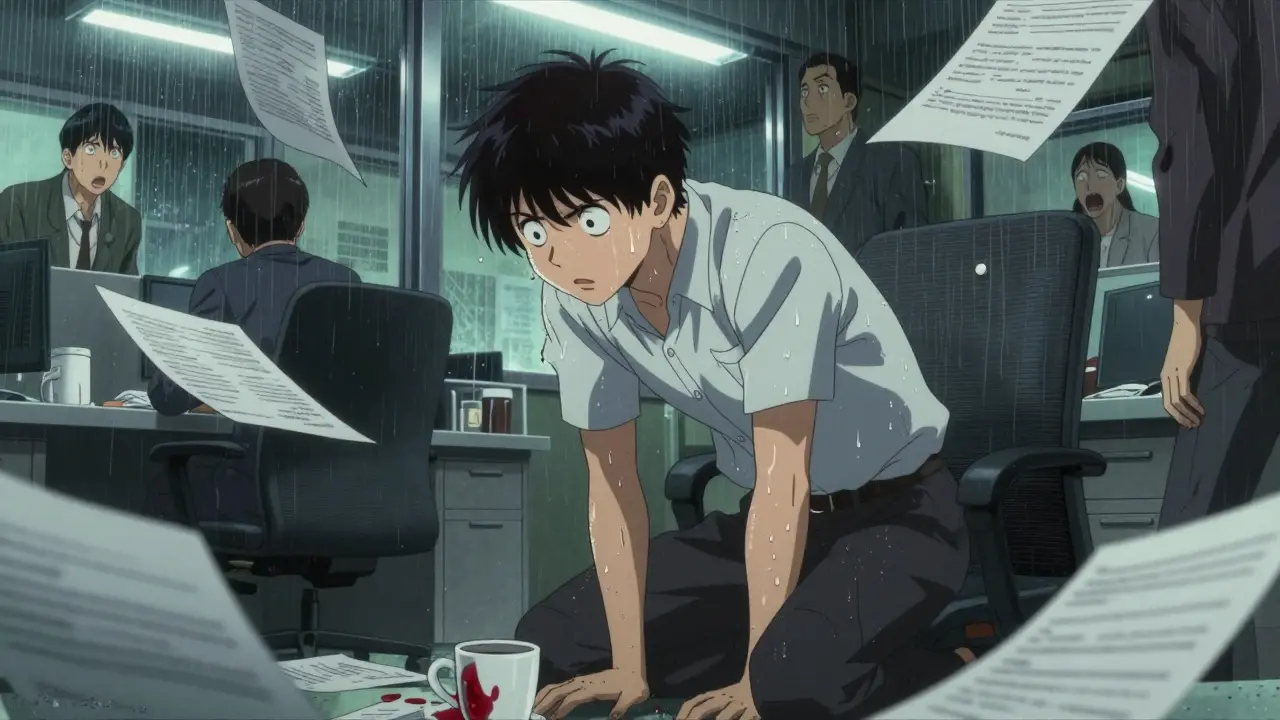
Imagine waking up in the middle of a conversation and suddenly your knees give out. You don’t fall - you just collapse, like a puppet with its strings cut. Your eyes stay open. You hear everything. But you can’t move. That’s cataplexy. And if you’re experiencing it regularly, you’re likely dealing with narcolepsy with cataplexy, also known as narcolepsy type 1. It’s not just being tired. It’s your brain losing control over sleep-wake boundaries - and the emotional triggers that hijack your muscles.
What Narcolepsy with Cataplexy Really Feels Like
People often mistake narcolepsy with cataplexy for laziness, depression, or even epilepsy. But it’s a neurological disorder rooted in the loss of hypocretin (also called orexin) neurons in the hypothalamus. These neurons are the body’s natural alarm clock for staying awake. When they’re gone - and they’re gone in nearly all cases of narcolepsy type 1 - your brain can’t maintain stable wakefulness. The symptoms don’t show up all at once. Excessive daytime sleepiness comes first. You might nod off during meetings, while driving, or even while eating. Then, out of nowhere, cataplexy hits. A laugh, a shout, surprise, or even intense joy can trigger a sudden loss of muscle tone. It might be just your eyelids drooping, your jaw going slack, or your whole body collapsing. Episodes last seconds to a few minutes. You’re conscious the whole time. Sleep paralysis and vivid hallucinations - often terrifying - happen when you’re falling asleep or waking up. You feel trapped, unable to move or speak, sometimes seeing shadowy figures or hearing voices. Nighttime sleep is fragmented, too. You wake up dozens of times without realizing it. These symptoms don’t appear overnight. They creep in over months or years. Most people are diagnosed between ages 10 and 30, but it takes an average of 8 to 10 years to get the right answer. By then, many have been told they’re anxious, depressed, or just not sleeping well enough.How Doctors Diagnose Narcolepsy with Cataplexy
There’s no single blood test. No MRI scan that shows it. Diagnosis relies on a mix of clinical history and objective testing. First, your doctor will ask about your sleep patterns. They’ll use tools like the Epworth Sleepiness Scale - a simple questionnaire that rates how likely you are to doze off in different situations. A score above 10 raises a red flag. Then comes the sleep study. Overnight polysomnography (PSG) records your brain waves, eye movements, muscle activity, and breathing. It rules out sleep apnea, restless legs, or other disorders that mimic narcolepsy. The next day, you take the Multiple Sleep Latency Test (MSLT). You’re given four or five 20-minute naps every two hours. The test measures how fast you fall asleep and whether you enter REM sleep right away. In narcolepsy type 1, you’ll fall asleep in under 8 minutes on average - and have at least two sleep-onset REM periods (SOREMPs). That’s rare in healthy people. But here’s the catch: MSLT isn’t perfect. Sleep deprivation, certain medications, or even caffeine can throw off results. About 5-10% of people without narcolepsy get false positives. That’s where the cerebrospinal fluid (CSF) test comes in. A lumbar puncture (spinal tap) collects fluid from around your spine. If your hypocretin-1 level is 110 pg/mL or lower, you have narcolepsy type 1. This test is 98% sensitive and 99% specific. It’s definitive. But it’s invasive. About 1 in 3 people get a headache afterward. Not everyone gets it. Many doctors still rely on MSLT and clinical history. There’s also genetic testing. Over 90% of people with narcolepsy type 1 carry the HLA-DQB1*06:02 gene. But so do 25% of people without the disorder. So it’s not diagnostic on its own - but it supports the picture. The real challenge? Cataplexy is often misidentified. Patients describe it as “dizziness,” “weakness,” or “a funny feeling.” Some don’t realize it’s abnormal. A 2022 survey found that 42% of people with cataplexy initially thought their episodes were just normal fatigue.Why Sodium Oxybate Is the Only Treatment That Targets Both Core Symptoms
There are other medications for narcolepsy. Modafinil and armodafinil help with daytime sleepiness. Pitolisant and solriamfetol are newer stimulant-like drugs. But none of them reliably stop cataplexy. Sodium oxybate - sold as Xyrem and Xywav - is the only drug approved in the U.S. for both excessive daytime sleepiness and cataplexy. It’s a form of gamma-hydroxybutyrate (GHB), a substance once used as a recreational drug. But in controlled, medical doses, it works like magic for narcolepsy. It doesn’t just mask symptoms. It resets sleep architecture. It increases deep sleep, reduces nighttime awakenings, and suppresses REM sleep intrusion - the root cause of cataplexy and hallucinations. A 2023 analysis of over 1,000 patients on PatientsLikeMe showed that 85% saw a dramatic drop in cataplexy episodes - from an average of seven per week to fewer than two. Many reported being able to drive again, return to work, or hug their kids without fear of collapsing. But it’s not simple. Sodium oxybate requires two doses per night. The first is taken at bedtime. The second, 2.5 to 4 hours later, is taken while still in bed. That means getting up in the middle of the night - which sounds easy until you’re already exhausted. Sixty-five percent of patients say the midnight dose is the hardest part. It disrupts sleep, causes grogginess, and makes daily life harder. Some people forget. Others can’t get out of bed. That’s why adherence is a major problem. Side effects are common too. Nausea affects 38%. Dizziness hits 29%. About 12% have bedwetting. Most improve after a few weeks, but not everyone tolerates it.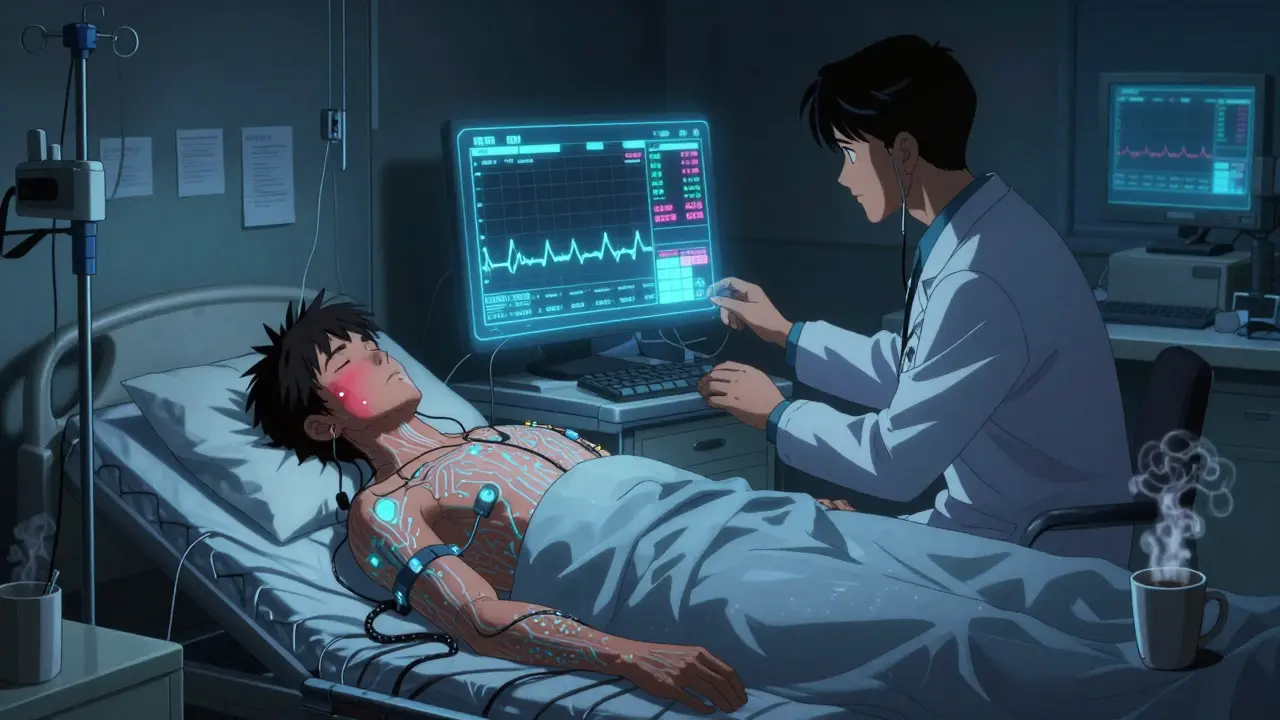
The Cost and Access Nightmare
Sodium oxybate isn’t just hard to take - it’s hard to get. Before you can fill a prescription, your doctor must be certified in the Xyrem/Xywav REMS program. Your pharmacy must be certified. And your insurance must approve it. In the U.S., the monthly cost ranges from $10,000 to $15,000 before insurance. Even with coverage, copays can be $1,000 or more. A 2022 survey by the Narcolepsy Foundation found that 28% of patients were denied prior authorization - sometimes multiple times. Xywav, the newer version with less sodium, was approved in 2020 to help people with high blood pressure or heart issues. But it’s still expensive. And it still requires the same midnight dosing. Only 45% of eligible patients actually get sodium oxybate. The rest are stuck with drugs that only treat one symptom - or nothing at all.What’s Coming Next
The future of narcolepsy treatment is promising - but still uncertain. In 2023, the FDA approved Xywav for children as young as 7. That’s huge. Kids with narcolepsy often struggle in school. Now, they have a real option. Jazz Pharmaceuticals is testing FT001, a once-nightly version of sodium oxybate. If it works, it could eliminate the midnight dose. Phase 3 trials showed it was just as effective as Xyrem - without the disruption. Even more exciting is TAK-994, an oral drug that mimics hypocretin. In Phase 2 trials, it cut cataplexy by 92%. But development was paused in late 2023 due to liver concerns. Researchers are still working on safer versions. The next version of the International Classification of Sleep Disorders (ICSD-4), expected in late 2024, may lower the CSF hypocretin threshold to 80 pg/mL. That could make diagnosis even more precise.
What Patients Say - The Real Story
Scroll through Reddit’s r/narcolepsy or Narcolepsy Network forums, and you’ll hear the same things over and over:- “I thought I was going crazy until I got diagnosed.”
- “I haven’t missed a day of work since starting Xyrem.”
- “My kids don’t have to worry about me collapsing anymore.”
- “The cost is crushing. I’ve had to choose between medicine and rent.”
- “I still wake up at 2 a.m. to take my second dose. I hate it.”

Alexandra Enns
January 23, 2026 AT 20:32Okay but let’s be real - this whole ‘gold standard’ thing is just Big Pharma whispering sweet nothings into doctors’ ears. Sodium oxybate? That’s GHB, the date-rape drug they banned in clubs! Now it’s a miracle cure? Please. I’ve seen people on it turn into zombies who forget how to blink. And don’t even get me started on the $15K/month price tag - this isn’t medicine, it’s a luxury subscription for the rich. Canada’s healthcare system would never allow this nonsense.
Marie-Pier D.
January 24, 2026 AT 03:05My sister was diagnosed with this 5 years ago 😭 She went from being this vibrant, hilarious person who danced at weddings to hiding in her room because she was scared to laugh. When she started Xywav… I cried. Not because it was perfect - she still wakes up at 2 a.m. like a zombie - but because she smiled again. Like, actually smiled without fear. I know the cost is insane. I know the dosing is brutal. But if this is the only thing that lets her hug her niece without collapsing? I’d sell my car. 💛
Josh McEvoy
January 24, 2026 AT 08:34bro i had this weird episode last year during a funeral lmao i just kinda… went limp. thought i was having a stroke or something. doc said ‘maybe narcolepsy’ and i was like ‘nah i just need more coffee’ 🤡 turned out i had 3 SOREMPs on the MSLT. now i take oxybate and honestly? i can watch a movie without falling asleep. but yeah the 2am dose? i set 3 alarms and still forget. also i wet the bed once. not proud. 🤷♂️
Heather McCubbin
January 25, 2026 AT 18:33They say hypocretin loss causes narcolepsy but nobody explains why it happens. Is it vaccines? Glyphosate? Electromagnetic pollution? You think they want you to know the truth? No. The system needs you dependent on $15k/month drugs so they can keep printing money. Wake up. Your brain isn’t broken - your environment is. Stop taking the pills. Go outside. Breathe. Sleep in the dark. The cure is simpler than they let on. You’ve been lied to.
Sawyer Vitela
January 26, 2026 AT 13:04MSLT false positive rate is 5-10%. CSF test is 99% specific. If you have cataplexy and two SOREMPs, you have narcolepsy type 1. End of story. Stop overcomplicating it. The rest is noise.
Shanta Blank
January 27, 2026 AT 09:50Let me tell you about the night I took my second dose of Xyrem while half-asleep and walked into the fridge naked. Then I tried to microwave a spoon. My cat stared at me like I was the villain in her animated series. And I thought - this is what freedom looks like? A 2 a.m. kitchen drama with a feline critic? The drug works. But god, the human cost? It’s not just money. It’s dignity. It’s your sleep. It’s your sanity. And yeah - I’d do it again. But I hate it. So much.
Tiffany Wagner
January 29, 2026 AT 09:44I’ve been waiting 7 years for a diagnosis. Doctors kept saying ‘stress’ or ‘anxiety’. I thought I was broken. When I finally got the CSF test and it came back low… I didn’t cry. I just sat there. Like… oh. So this wasn’t my fault. I’m not lazy. I’m not dramatic. I’m just neurologically different. And now I’m on Xywav. It’s not easy. But I can hold my baby without fear. That’s enough.
Chloe Hadland
January 31, 2026 AT 04:15Just wanted to say thank you for writing this. I’ve been lurking on r/narcolepsy for years. I never comment. But this post? It felt like someone finally put my whole life into words. The collapsing. The midnight dose. The cost. The loneliness. You didn’t just explain the science. You explained the soul of it. I’m not alone. And that means everything.