
Women with PCOS often feel like no matter how hard they try, the weight won’t come off. It’s not just about willpower. It’s biology. At the heart of this struggle is insulin resistance-a hidden driver that makes losing weight feel impossible, even when you’re eating right and working out. This isn’t about being lazy. It’s about how your body processes food differently because of PCOS.
Why Weight Comes So Easily With PCOS
Insulin is the hormone that tells your cells to take in sugar from your blood. In PCOS, your cells stop listening. They become resistant. So your pancreas pumps out more insulin to compensate. That extra insulin doesn’t just mess with blood sugar-it triggers fat storage, especially around your belly. That’s why many women with PCOS develop an ‘apple shape’ instead of the typical ‘pear shape’.
High insulin levels also push your ovaries to make more testosterone. That’s the male hormone that causes acne, facial hair, and irregular periods. But it also increases hunger and cravings-especially for sugary, starchy foods. You’re not weak. You’re responding to real hormonal signals.
Studies show that 70% to 95% of women with PCOS who are overweight have insulin resistance. But it’s not just those who are overweight-30% to 75% of women with PCOS who are lean still have it. That means even if you don’t look ‘obese,’ your body might still be stuck in fat-storage mode.
The cycle is brutal: insulin resistance → weight gain → more insulin resistance → worse PCOS symptoms. And the more weight you gain, the harder it becomes to lose it. This isn’t a personal failure. It’s a metabolic trap.
The Health Risks Beyond the Scale
Carrying extra weight with PCOS isn’t just about how you look. It’s about how long you’ll live. Women with PCOS are up to seven times more likely to develop type 2 diabetes than women without it. That risk jumps even higher if you’re overweight.
Abdominal fat is especially dangerous. Unlike fat stored on your hips or thighs, belly fat releases inflammatory chemicals that raise your risk of heart disease, high blood pressure, and stroke. Research confirms that women with PCOS have higher rates of all three.
And it doesn’t stop there. PCOS increases your risk of sleep apnea, infertility, and endometrial cancer. Why? Because without regular ovulation, the lining of your uterus builds up without being shed. Over time, that can turn into precancerous changes.
It’s not a coincidence that the rise in PCOS cases over the last decade matches the rise in obesity and type 2 diabetes. They’re two sides of the same metabolic coin.
Diet Changes That Actually Work for PCOS
You don’t need a fad diet. You need a plan that lowers insulin. That means focusing on how your body responds to food-not just how many calories you eat.
Reduce refined carbs. White bread, pasta, pastries, sugary drinks, and even fruit juices spike insulin fast. Swap them for whole grains like oats, quinoa, barley, and brown rice. They digest slower, so your blood sugar doesn’t crash and trigger cravings.
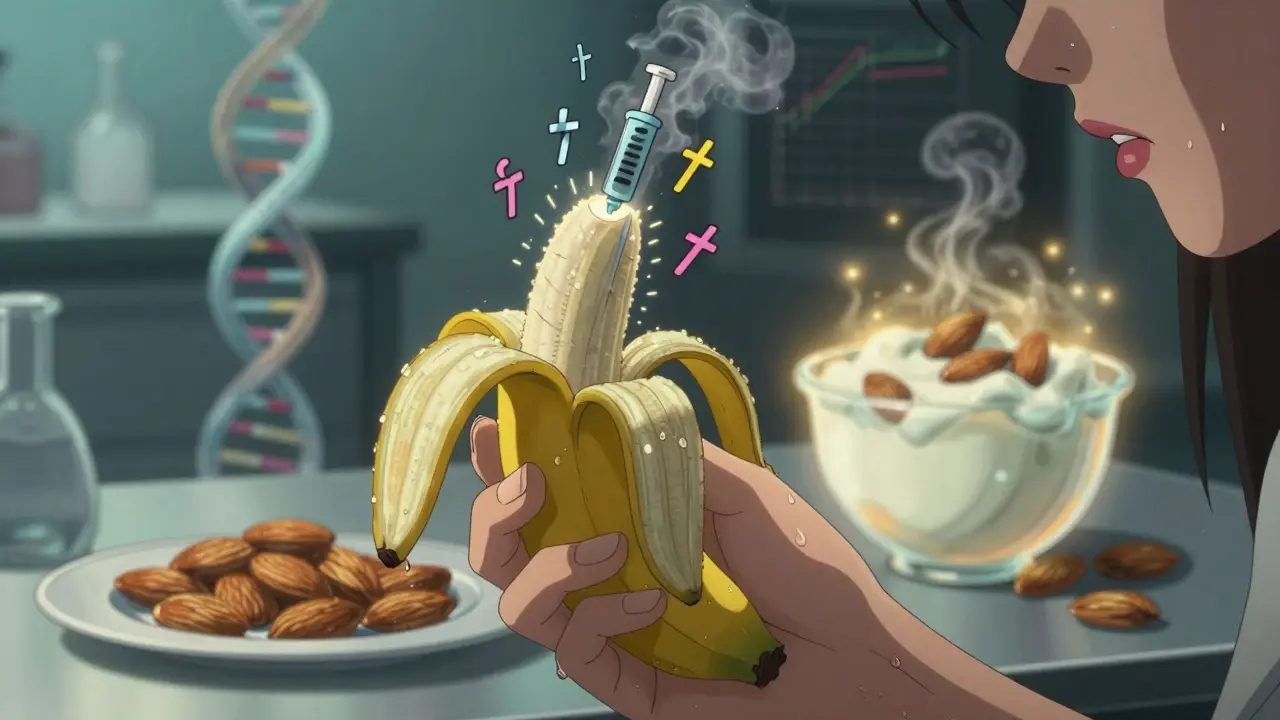
Pair carbs with protein and fat. Eating a banana alone? It’ll spike your insulin. Eating a banana with a tablespoon of almond butter and a handful of nuts? Your body handles it much better. Protein and fat slow down sugar absorption. That’s the secret to stable energy and fewer cravings.
Choose low-glycemic foods. These are foods that don’t spike your blood sugar. Think non-starchy vegetables (spinach, broccoli, zucchini), legumes (lentils, chickpeas), berries, nuts, seeds, and lean proteins like chicken, fish, tofu, and eggs. These should make up the bulk of your plate.
Don’t fear healthy fats. Avocados, olive oil, fatty fish like salmon, and nuts help reduce inflammation and improve insulin sensitivity. Fat doesn’t make you fat-it helps your body use sugar properly.
Watch portion sizes. Even healthy foods can raise insulin if you eat too much. Use your hand as a guide: a palm-sized portion of protein, a fist of veggies, a thumb of fat, and a cupped hand of carbs. It’s simple, no measuring needed.
What About Intermittent Fasting?
Some women with PCOS find success with time-restricted eating-like eating only between 10 a.m. and 6 p.m. This gives your body a longer break from insulin spikes. But it’s not for everyone. If you’re under stress, have a history of disordered eating, or are trying to get pregnant, skip it. Your body doesn’t need another demand.
If you try it, start slow. Eat dinner by 7 p.m. and skip breakfast. Give it a week. See how you feel. If your energy crashes or your periods get worse, stop. It’s a tool, not a rule.
Food Cravings? It’s Not Just Willpower
Why do you crave sugar so badly? Because high insulin lowers serotonin-the mood chemical that makes you feel calm and satisfied. Low serotonin = emotional eating. That’s biology, not weakness.
Instead of fighting cravings, manage them. Eat protein-rich breakfasts (eggs, Greek yogurt, cottage cheese). Keep nuts and hard-boiled eggs handy. Drink water first-sometimes thirst feels like hunger. And if you do eat something sweet, pair it with protein or fat to soften the insulin spike.
Weight Loss Doesn’t Mean Perfect Health-But It Helps
You don’t need to lose 50 pounds to see results. Losing just 5% of your body weight can restore ovulation, lower testosterone, and improve insulin sensitivity. For someone who weighs 200 pounds, that’s 10 pounds. That’s it.
And when insulin drops, so do cravings. Your energy improves. Your skin clears. Your period comes back. You start feeling like yourself again.
It’s not about being thin. It’s about breaking the cycle. Every small change adds up. Eating one less sugary snack a day. Choosing whole grain over white bread. Walking after dinner. These aren’t punishments. They’re repairs.
What Doesn’t Work
Starving yourself? It backfires. Your body thinks it’s in famine mode. It holds onto fat and slows your metabolism even more.
Low-fat diets? They often mean more sugar and refined carbs to make food taste good. That’s the opposite of what you need.
Extreme keto? Some women benefit, but it’s not sustainable for everyone. If you’re exhausted, irritable, or your periods stop, it’s not working for your body.
Supplements like cinnamon, inositol, or berberine? They can help-but only as support. They won’t fix a diet full of processed food. Food comes first.
Start Here: A Simple Daily Plan
- Breakfast: Eggs with spinach and avocado. Or Greek yogurt with chia seeds and blueberries.
- Lunch: Grilled chicken or tofu salad with olive oil dressing, quinoa, and roasted veggies.
- Snack: Handful of almonds or cottage cheese with a few strawberries.
- Dinner: Baked salmon, broccoli, and sweet potato (half a potato).
- Drink: Water, herbal tea, or sparkling water with lemon. Skip soda, juice, and sweetened coffee.
No need to be perfect. Do this 80% of the time. The rest? Enjoy without guilt. Progress isn’t linear. But your body will thank you.
When to Ask for Help
If you’ve tried diet changes and still feel stuck, talk to a doctor. Metformin is a common medication that improves insulin sensitivity and can help with weight loss and ovulation. Inositol supplements (especially myo-inositol and D-chiro-inositol) have been shown in studies to improve insulin response and reduce androgen levels.
Work with a registered dietitian who understands PCOS. Not all nutritionists know the difference between a general weight-loss plan and one built for insulin resistance.
And if you’re struggling emotionally-feeling hopeless, ashamed, or frustrated-seek support. PCOS is hard. You’re not alone. Talking to others who get it can make all the difference.
Can you lose weight with PCOS if you have insulin resistance?
Yes, but it requires a different approach than typical diets. Weight loss is possible by focusing on lowering insulin through low-glycemic foods, protein and fat pairing, reducing refined carbs, and avoiding sugar. Losing just 5% of body weight can significantly improve symptoms and insulin sensitivity.
Why is belly fat so hard to lose with PCOS?
High insulin levels promote fat storage in the abdomen. Insulin also blocks fat breakdown, making it harder for your body to use stored fat for energy. Plus, elevated testosterone shifts fat distribution to the belly. This is a hormonal issue, not a lack of effort.
Should I avoid all carbs with PCOS?
No. Avoid refined carbs like white bread, pasta, and sugar. But whole, fiber-rich carbs like oats, quinoa, sweet potatoes, and legumes are beneficial. They stabilize blood sugar and feed good gut bacteria. The key is pairing them with protein and fat to slow absorption.
Does intermittent fasting help with PCOS weight loss?
Some women benefit from eating within an 8-10 hour window, as it gives insulin a break. But it’s not for everyone. If you’re stressed, underweight, or trying to conceive, it may worsen symptoms. Start cautiously and listen to your body. If your periods stop or you feel worse, stop.
Can medication help with PCOS weight gain?
Yes. Metformin is commonly prescribed to improve insulin sensitivity and can aid weight loss. Inositol supplements have also been shown to reduce insulin resistance and lower testosterone. These work best alongside dietary changes-not as replacements.
How long does it take to see results from a PCOS diet?
Many women notice reduced cravings and more energy within 2-4 weeks. Weight loss may be slower, but improvements in skin, periods, and mood often show up before the scale moves. Be patient-this is about healing your metabolism, not quick fixes.
What Comes Next
PCOS isn’t a life sentence. It’s a signal. Your body is telling you something’s off-and insulin resistance is the key. Fix that, and everything else starts to fall into place.
Start with one change this week. Swap your morning toast for eggs. Drink water instead of soda. Walk after dinner. Small steps build momentum. And momentum changes everything.
You’re not broken. You’re just operating on a different system. Once you understand it, you can work with it-not against it.

Ann Romine
January 3, 2026 AT 02:26Been dealing with PCOS for 8 years. The insulin resistance piece clicked for me when I stopped counting calories and started thinking about how my body reacts to food. Swapping out oatmeal with sugar for eggs and avocado changed everything. My cravings didn’t vanish, but they became manageable.
It’s not about willpower. It’s about working with your biology, not against it.
Todd Nickel
January 4, 2026 AT 04:46The science here is solid, but I’d like to see more nuance around the 70%-95% insulin resistance statistic. That range is so broad it’s almost meaningless without stratification by BMI, age, and ethnic background. Studies from India and Southeast Asia show significantly lower rates of insulin resistance in lean PCOS patients compared to Western cohorts, suggesting environmental and dietary confounders may be underappreciated.
Also, the suggestion to use hand portions is pragmatic, but lacks validation in clinical literature. A 2021 meta-analysis found no significant difference in weight loss outcomes between hand-based portioning and standardized gram measurements in metabolic syndrome populations. Just saying - we should be careful not to over-romanticize simplicity.
Bryan Anderson
January 5, 2026 AT 13:09I appreciate how this post avoids blame and focuses on biology. So many women with PCOS are told they’re just not trying hard enough - and that’s not just unhelpful, it’s harmful.
I’ve seen patients lose 5% of their weight and suddenly ovulate again. It’s not magic. It’s physiology. The key is consistency, not perfection. One meal at a time.
Also, thank you for mentioning metformin and inositol. Too many people think supplements alone will fix everything. They’re tools, not miracles.
Matthew Hekmatniaz
January 7, 2026 AT 12:55This is the kind of content I wish I’d had when I was first diagnosed. It’s rare to see a post that doesn’t treat PCOS like a personal failure.
I’m a dad of two girls. I’m going to save this and share it with them when they’re older. Let them know their bodies aren’t broken - they’re just wired differently. And that’s okay.
Also, the part about not fearing healthy fats? Huge. I used to think fat = bad. Turns out, it’s the sugar that’s the real troublemaker.
Liam George
January 8, 2026 AT 10:17Let’s be real - this is all a corporate scam. Big Pharma and Big Agri want you to believe insulin resistance is ‘natural’ so they can sell you metformin, inositol, and ‘low-glycemic’ processed foods that are still loaded with maltodextrin and soybean oil.
The real cause? Glyphosate. It’s in your bread, your corn syrup, your damn oatmeal. It disrupts your gut microbiome, which hijacks your endocrine system. No one talks about this because the FDA is owned by Monsanto.
Go primal. Eat meat, eggs, and wild greens. No grains. No legumes. No dairy. Your body will thank you. Or maybe it won’t - but at least you’ll be free from the system.
sharad vyas
January 9, 2026 AT 01:01In India, many women with PCOS eat rice every day and still manage well. It’s not just about carbs. It’s about stress. Too much pressure, too little sleep, too much worry. Maybe the real problem is not the food - but the life.
Also, walking after dinner? Yes. That’s what our grandmothers did. Simple. No fancy diets needed.
Dusty Weeks
January 9, 2026 AT 19:38low carb for life 🙌 no more sugar baby 🍭💔 i lost 30lbs in 4 months just by cutting out bread and soda. also i started drinking apple cider vinegar and now my skin is glowing✨
ps: if you're still eating oatmeal you're doing it wrong 😅
Sally Denham-Vaughan
January 10, 2026 AT 01:15OMG YES. I tried keto for 3 months and ended up with anxiety attacks and no period. Then I switched to just eating more protein + veggies + healthy fats and guess what? My energy came back, my acne cleared, and I actually started enjoying food again.
Also, the hand portion thing? Genius. I don’t own a food scale and I never will. This is the first plan that felt sustainable.
And to the guy who said ‘it’s all glyphosate’ - chill. We’re trying to heal, not start a cult.
Bill Medley
January 10, 2026 AT 04:02Insulin resistance is a primary pathophysiological feature of PCOS. Dietary modification targeting glycemic load demonstrates measurable improvements in metabolic parameters. The proposed dietary framework is consistent with current clinical guidelines.
Richard Thomas
January 10, 2026 AT 08:35What nobody talks about is how emotionally exhausting this is. You’re not just fighting your hormones - you’re fighting the noise. The influencers telling you to ‘just do intermittent fasting.’ The friends saying ‘why don’t you just eat less?’ The doctors who act like it’s all in your head.
I lost 12 pounds over 14 months. It wasn’t fast. It wasn’t dramatic. But I stopped hating my body. That’s the real win.
And yes - eating a banana with peanut butter? That’s the secret. Not the diet. Not the supplement. Just a tiny, quiet, daily act of self-care.
Keep going. You’re not alone.
Paul Ong
January 11, 2026 AT 11:09Start with one change. That’s it. No need to overhaul your life tomorrow. Just swap soda for water. Or eat protein first. That’s enough.
Progress > perfection
And if you have a bad day? Eat the damn cookie. Then get back up. This isn’t a test. It’s a journey.
Andy Heinlein
January 12, 2026 AT 12:36I’ve been following this for 6 months and I can’t believe how much better I feel. My skin isn’t breaking out. My periods are regular. I’m not falling asleep after lunch.
And the best part? I don’t feel like I’m on a diet. I just eat better. And I still have pizza on Fridays. Life’s too short to be miserable over food.
Thanks for writing this. You just made someone’s week.