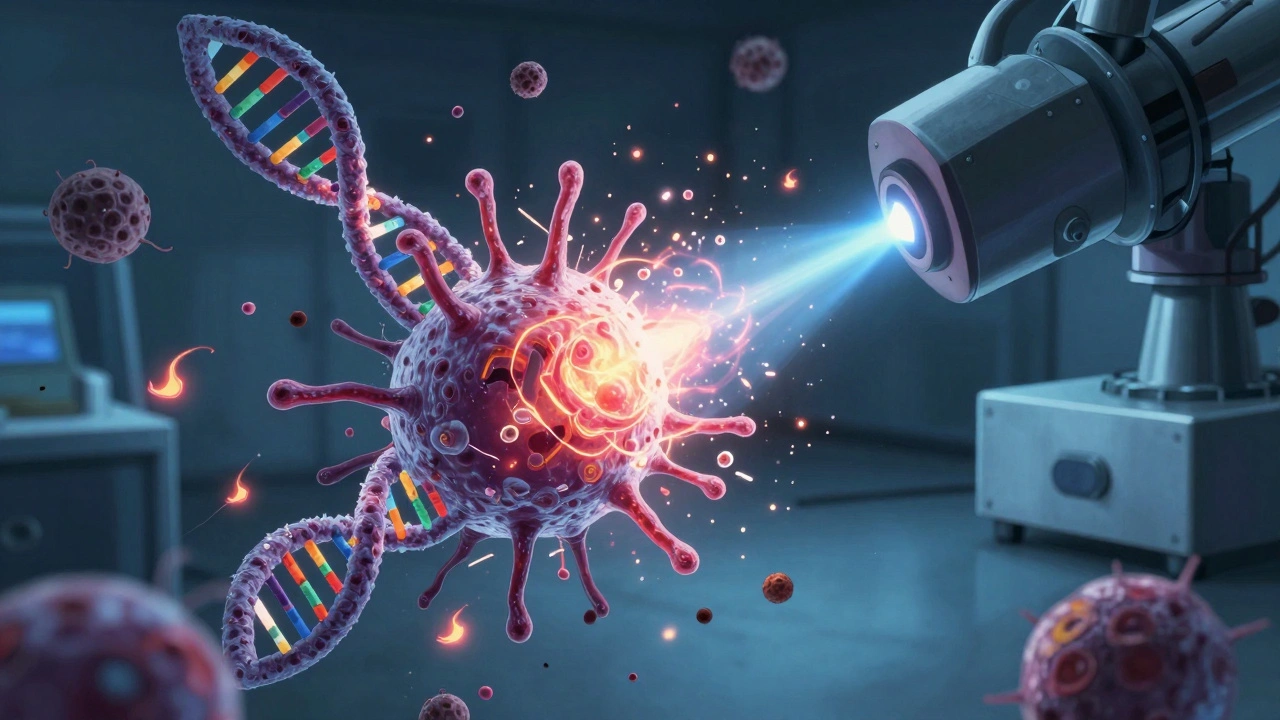
When you hear radiation therapy, you might think of scary images from old movies-glowing machines, hazmat suits, or people losing their hair. But modern radiation therapy isn’t about brute force. It’s a precise, science-backed way to kill cancer cells by targeting their DNA. And here’s the surprising part: it doesn’t just destroy cells. It can wake up your immune system to help finish the job.
How Radiation Actually Kills Cancer Cells
Radiation therapy uses high-energy particles-like X-rays or protons-to break apart the DNA inside cancer cells. This isn’t random damage. It’s focused. The goal is to deliver enough energy to shatter the double strands of DNA, which are the blueprint for how cells grow and divide. When both strands of DNA are broken at the same spot-a double-strand break-it’s nearly impossible for the cell to fix it correctly.
Most cancer cells are already stressed. They grow fast, they’re genetically messy, and they don’t have the same repair tools as healthy cells. Radiation exploits that weakness. While normal cells can often repair minor DNA damage, cancer cells are more likely to fall apart after a double-strand break. That’s the core idea: hit them where they’re weakest.
The Three Ways Radiation Destroys Cells
Radiation doesn’t kill cancer cells in just one way. It uses at least three biological pathways to do the job.
First, there’s direct DNA damage. The radiation particles smash into the DNA molecule like tiny bullets. This creates breaks, twists, and chemical changes that mess up the genetic code. When the cell tries to divide later, it can’t read its own instructions. It stalls, then dies.
Second, radiation creates reactive oxygen species (ROS)-highly reactive molecules that form when water in the cell is hit by radiation. These ROS attack proteins, lipids, and DNA. Think of them as molecular rust. They corrode the cell from the inside, especially damaging the cell membrane and mitochondria. This oxidative stress pushes the cell toward death.
Third, radiation triggers the ceramide pathway. When radiation hits the cell membrane, it activates an enzyme called acid sphingomyelinase. This enzyme turns sphingomyelin into ceramide-a signaling molecule that tells the cell to commit suicide. Ceramide doesn’t just cause one death. It starts a chain reaction that activates multiple cell death programs, including apoptosis and necroptosis.
Why Some Cells Die Immediately and Others Don’t
Not all cancer cells die right after radiation. Some collapse during the next cell division. Others hang on for days, then self-destruct. Why the delay?
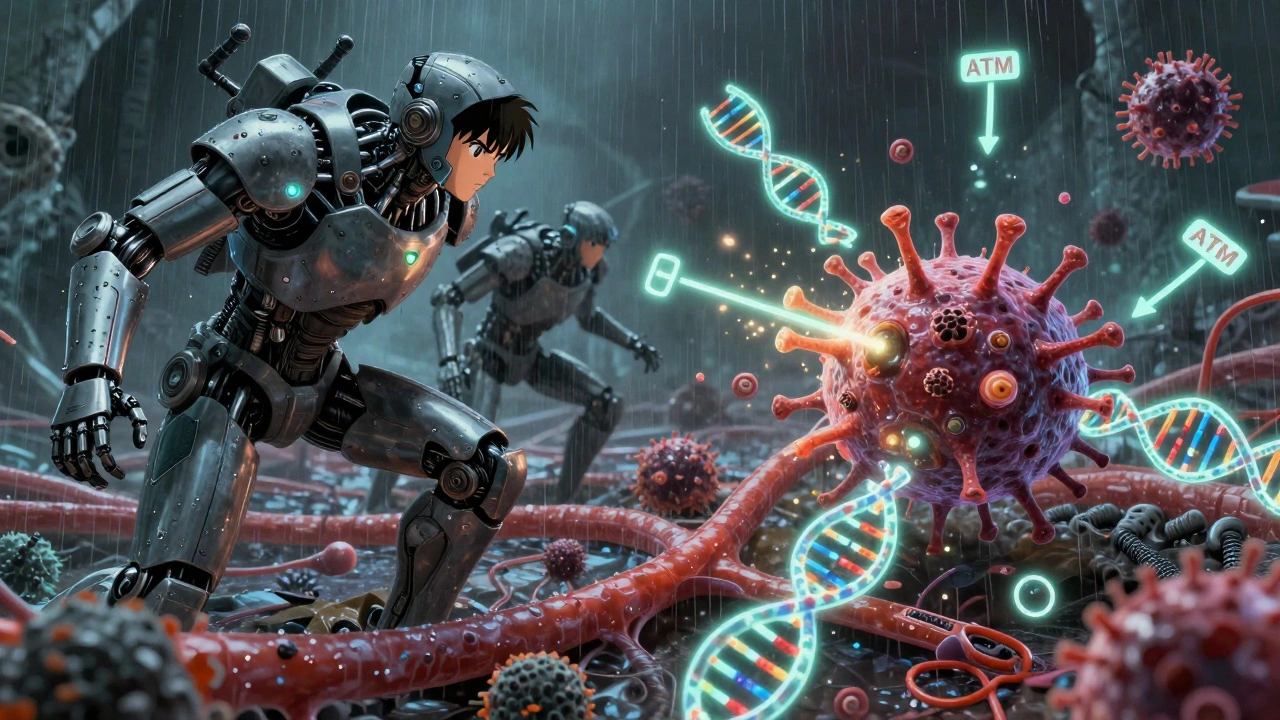
It comes down to how the cell tries to repair itself. After radiation, the cell detects the break and activates a rescue team: proteins like ATM and ATR. They stop the cell cycle and bring in repair crews. There are two main repair teams: non-homologous end joining (NHEJ) and homologous recombination (HR).
NHEJ is fast but sloppy. It glues broken ends back together, often making mistakes. This usually kills the cell. HR is precise-it uses a sister DNA strand as a template to fix the break perfectly. But here’s the twist: cells that use HR don’t trigger an immune response. They die quietly, unnoticed.
Cells that use NHEJ or other faulty repair methods? They leak signals. They release molecules that look like viral invaders. Your immune system sees them and sends in T-cells to clean up the mess. This is a game-changer. Radiation isn’t just a local treatment-it can become a systemic one if the immune system gets involved.
BRCA Mutations and the Immune Connection
Research from the Centre for Medical Research in Australia found something startling. Cancer cells with BRCA2 mutations-common in some breast and ovarian cancers-can’t use HR to repair DNA. So they’re forced to use sloppy repairs. That means they release more immune-alerting signals after radiation.
These cells don’t die during division like others. They explode later, screaming for help. And that’s exactly what you want. It turns radiation into a signal flare for the immune system. Scientists are now testing combinations of radiation and immunotherapy drugs like pembrolizumab. In one trial, response rates jumped from 22% to 36% in lung cancer patients when both were used together.
It’s no longer just about killing cells. It’s about making them scream so your body can finish the job.
Why Oxygen Matters More Than You Think
One of the biggest reasons radiation fails is simple: lack of oxygen. Tumors often have poor blood flow. The center of a big tumor can be hypoxic-starved of oxygen.
Oxygen makes radiation way more effective. When radiation hits water in a cell, it creates free radicals. But without oxygen, those radicals don’t turn into lasting damage. They just fade away. With oxygen, they become permanent. Hypoxic cells can need up to three times more radiation to die than well-oxygenated ones.
This is why doctors sometimes use hyperbaric oxygen chambers or drugs that improve blood flow before treatment. New techniques like SBRT (stereotactic body radiation therapy) deliver very high doses in fewer sessions, which helps overwhelm hypoxic zones before they adapt.
How Modern Machines Make Radiation Safer
Early radiation therapy was like using a sledgehammer. Today, it’s like using a scalpel made of light.
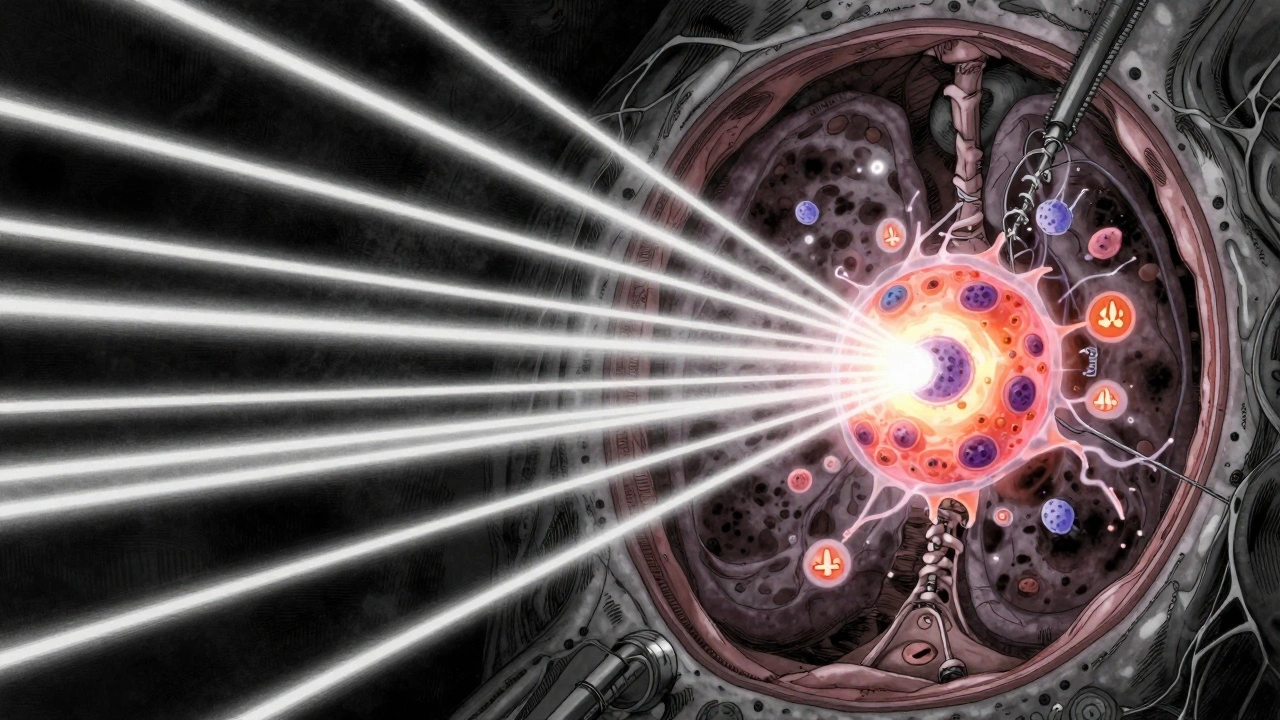
Linear accelerators now shape radiation beams with sub-millimeter precision. Intensity-modulated radiation therapy (IMRT) adjusts the beam’s strength across different areas. Stereotactic radiosurgery (SRS) and SBRT focus dozens of beams on a tumor from different angles, so healthy tissue gets almost no dose.
FLASH radiotherapy-a new experimental method-delivers the entire dose in less than a second. Early results show it kills tumors just as well but causes far less damage to skin and organs. Human trials started in 2020, and early data is promising.
Why Some Tumors Resist Radiation
Not all cancers respond. About 30-40% of tumors develop resistance. Why?
Some cancers overproduce repair proteins like 53BP1. A 2022 study found head and neck cancer patients with high 53BP1 levels had worse outcomes-only 45% responded to radiation, compared to 78% in those with low levels.
Others activate survival pathways. They pump out proteins that block apoptosis. Some even recruit immune-suppressing cells that shield them from attack.
And then there’s the tumor microenvironment. Fibroblasts and immune cells around the tumor can create a protective cocoon. They release growth factors and reduce oxygen, making radiation less effective.
What’s Next? The Future of Radiation Therapy
The next decade will be defined by combination therapies.
PARP inhibitors like olaparib block a backup DNA repair system. When given with radiation, they make BRCA-mutated tumors even more vulnerable. Early trials show longer survival in ovarian and prostate cancers.
AI is cutting planning time from hours to minutes. Deep learning models now predict how a tumor will respond based on its shape, density, and genetic profile. This lets doctors personalize dose and timing.
And the biggest shift? We’re no longer treating radiation as a standalone tool. We’re treating it as an immune activator. The goal isn’t just to kill the tumor. It’s to make your body recognize it as an enemy-and never forget it.
What Patients Should Know
If you’re undergoing radiation therapy, understand this: it’s not magic. It’s biology. Side effects like fatigue or skin redness happen because some healthy cells get caught in the crossfire. But modern techniques keep that to a minimum.
Your treatment plan is tailored. The number of sessions, the dose, the type of radiation-all depend on your tumor’s size, location, and genetic profile. Some need 30 sessions over six weeks. Others get five high-dose treatments in one week.
And if you have a BRCA mutation or other DNA repair gene changes, ask your oncologist about combining radiation with immunotherapy or PARP inhibitors. You might be a candidate for a treatment that turns radiation into a two-pronged attack.
Radiation therapy doesn’t just destroy cancer. It reveals its weaknesses. And science is learning how to use those weaknesses against it.

Erin Nemo
December 1, 2025 AT 20:36This is wild how radiation turns cancer into a beacon for your immune system. I had no idea it could work like a vaccine.
Debbie Naquin
December 2, 2025 AT 11:55The ceramide pathway activation via acid sphingomyelinase is a key mechanistic pivot most clinical summaries ignore. It’s not just genotoxic stress-it’s a lipid-mediated death signal cascade that synergizes with p53-independent apoptosis. The immunogenic cell death component is underappreciated in radiotherapy protocols.
Rachel Stanton
December 4, 2025 AT 03:06Really appreciate how this breaks down the science without dumbing it down. The part about HR vs NHEJ repair pathways explains why some tumors respond and others don’t. I’ve seen patients confused about why their treatment didn’t work-this is the kind of clarity oncologists should share.
Charlotte Collins
December 5, 2025 AT 05:24They call it precision medicine but let’s be real-radiation still fries your skin like a microwave burrito. They’re just better at hiding the collateral damage now. And don’t get me started on the ‘immune activation’ hype. It’s not a magic bullet, it’s a statistical blip in 30% of cases.
Suzanne Mollaneda Padin
December 5, 2025 AT 18:03As someone who’s worked in radiation oncology for 18 years, I’ve seen this evolution firsthand. The shift from ‘kill everything’ to ‘trigger the body’s cleanup crew’ is revolutionary. FLASH therapy? It’s not sci-fi anymore. We’re doing pilot trials here in California-skin toxicity dropped 70% without losing tumor control.
Scotia Corley
December 6, 2025 AT 15:19It is deeply concerning that the public perception of radiation therapy remains rooted in 1950s media tropes. The scientific rigor applied to modern radiotherapy protocols is unmatched in oncology. To suggest it is anything less than a meticulously calibrated biological intervention is not merely inaccurate-it is dangerously irresponsible.
Karandeep Singh
December 7, 2025 AT 03:56brca mutations make radiation work better? sounds like a scam to sell more drugs
Alexander Williams
December 9, 2025 AT 03:35Let’s not confuse correlation with causation. Just because BRCA2-deficient cells use NHEJ doesn’t mean the immune system is ‘woken up.’ The cytokine release profiles in those patients are inconsistent across cohorts. This is basic molecular biology, not a paradigm shift.
Kelly Essenpreis
December 10, 2025 AT 11:11Why do we keep giving radiation to people when we know it causes secondary cancers? I mean look at Hiroshima survivors. This is just chemical warfare repackaged as medicine. America needs to stop pretending its tech is ethical
elizabeth muzichuk
December 10, 2025 AT 19:09And who’s paying for all this ‘personalized’ radiation? Big Pharma. They’re selling you hope wrapped in a $200K treatment plan. You think they care about your DNA repair pathways? They care about your insurance card.
Margaret Stearns
December 11, 2025 AT 13:25I had radiation for breast cancer. My skin peeled. My energy vanished. But it worked. I’m alive. I don’t care about the science-just that it saved me.
Mary Ngo
December 12, 2025 AT 22:10Did you know the Department of Defense funded early FLASH research? They’re testing it for battlefield trauma. But the real agenda? Weaponizing the immune response. Radiation isn’t therapy-it’s a bioweapon prototype disguised as medicine. The FDA is complicit.
Amber-Lynn Quinata
December 13, 2025 AT 21:39My cousin got radiation and now she’s got lymphedema and can’t lift her arm. They never told her that. 😔 This isn’t healing. It’s a gamble with your body. And they call it ‘care’? 🤡
amit kuamr
December 15, 2025 AT 08:51in india we dont have access to this tech most patients get old school radiation with no imaging guidance its like shooting blind
James Allen
December 15, 2025 AT 12:39So let me get this straight-you’re telling me radiation doesn’t just kill cancer… it makes your body scream at it? 😱 That’s the most dramatic thing I’ve heard all week. I’m telling my sister she needs this. And also… can we make a TikTok about it? 🎥 #RadiationScreams #CancerIsScaredNow