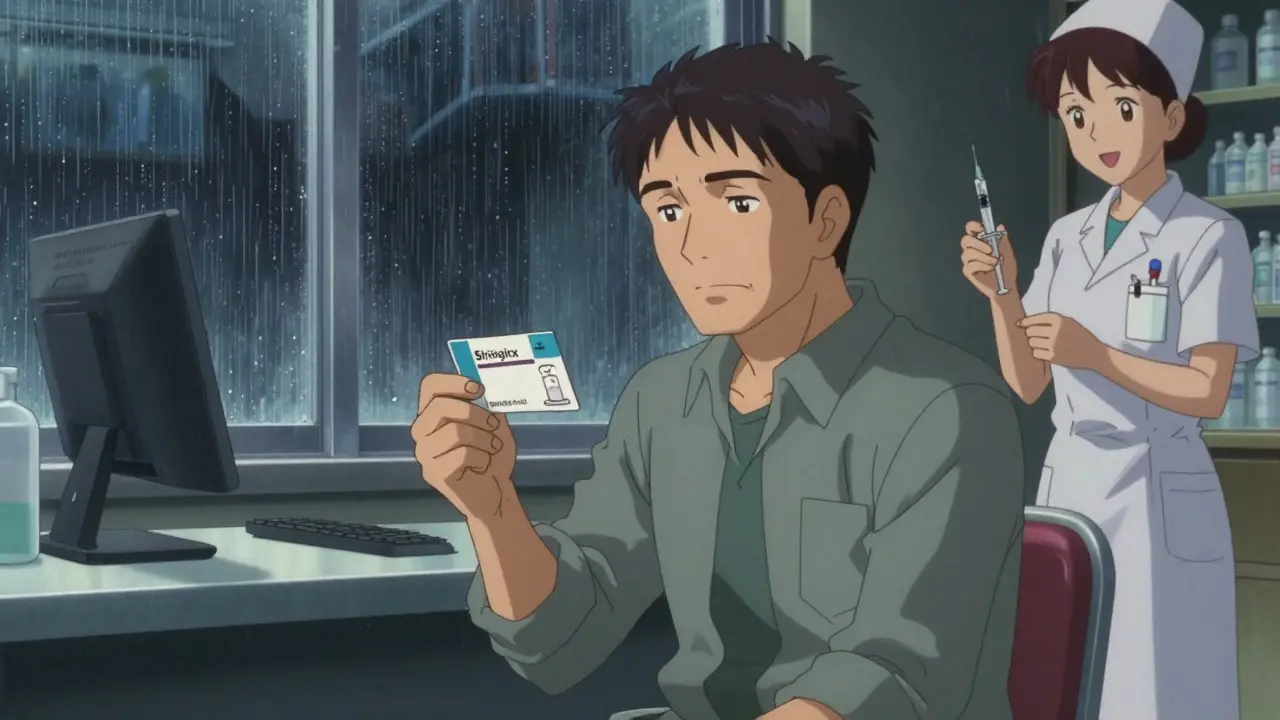
Shingles isn’t just a rash. For many people, it’s months of burning pain that won’t go away-even after the blisters heal. That lingering pain is called postherpetic neuralgia, and it affects about 1 in 5 people who get shingles. The good news? There’s a vaccine that cuts your risk of shingles by more than 90%. It’s called Shingrix, and it’s the only shingles vaccine available in the U.S. today. But who needs it? And when should you get it? The answers aren’t as simple as ‘over 60’ anymore.
Who Really Needs the Shingles Vaccine?
You don’t have to be old to get shingles. The virus that causes it-varicella zoster-is the same one that gives you chickenpox. After you recover from chickenpox, the virus stays quiet in your nerves. Years later, it can wake up. Stress, aging, or a weakened immune system can trigger it. That’s why the CDC recommends Shingrix for almost everyone over 50, even if you think you never had chickenpox. About 99% of adults over 40 have been exposed to the virus, whether they remember it or not.
People with weakened immune systems are at even higher risk. That includes those with diabetes, cancer, HIV, or those taking medications like steroids or biologics for autoimmune diseases. The old vaccine, Zostavax, was unsafe for these groups because it used a live virus. Shingrix doesn’t. It’s made from a piece of the virus and an immune-boosting ingredient called an adjuvant. That’s why it’s approved for adults as young as 19 who are immunocompromised.
Even if you’ve had shingles before, you can still get it again. The vaccine reduces your chance of a second outbreak by more than 90%. There’s no waiting period after an episode-you can get vaccinated as soon as the rash is gone.
When Should You Get It?
The vaccine comes in two doses. The first shot is just the start. The second dose is what makes the protection strong and long-lasting. For most people, the second dose should be given 2 to 6 months after the first. That window gives your body time to build a solid immune response.
But if you’re immunocompromised, the rules change. If you’re about to start chemotherapy, a transplant, or a high-dose steroid treatment, you can get the second dose as early as 1 month after the first. The CDC updated this guidance in 2024 because waiting 6 months could leave you unprotected during a high-risk time.
There’s a minimum gap: you can’t get the second dose before 4 weeks. If you accidentally get it too soon, you’ll need to repeat it. That’s why it’s important to write down your appointment dates and set reminders. About one in three people miss their second shot, and that cuts the vaccine’s effectiveness in half.
What Happens After the Shots?
Shingrix isn’t gentle. About 8 out of 10 people feel soreness, redness, or swelling at the injection site. Half report muscle aches. Nearly 4 in 10 feel tired. Headaches and chills are common too. These side effects usually hit within a day or two and fade in 2 to 3 days. They’re not signs of shingles-they’re signs your immune system is working.
Some people feel so wiped out they can’t work or drive for a day. That’s why it’s smart not to schedule a big event, a trip, or a family gathering right after your shot. If you’ve had a bad reaction to the first dose, you’ll likely feel it again with the second. But most people say it’s worth it. On Drugs.com, 78% of users rated Shingrix positively, with comments like, “Felt awful for two days-but no shingles at 71.”
If you’ve ever had a severe allergic reaction to any ingredient in Shingrix-like gelatin or polysorbate 80-you shouldn’t get it. If you’re sick with a fever, wait until you’re better. But if you have a cold or mild allergy, go ahead. Don’t let fear of side effects stop you.
How Effective Is It, Really?
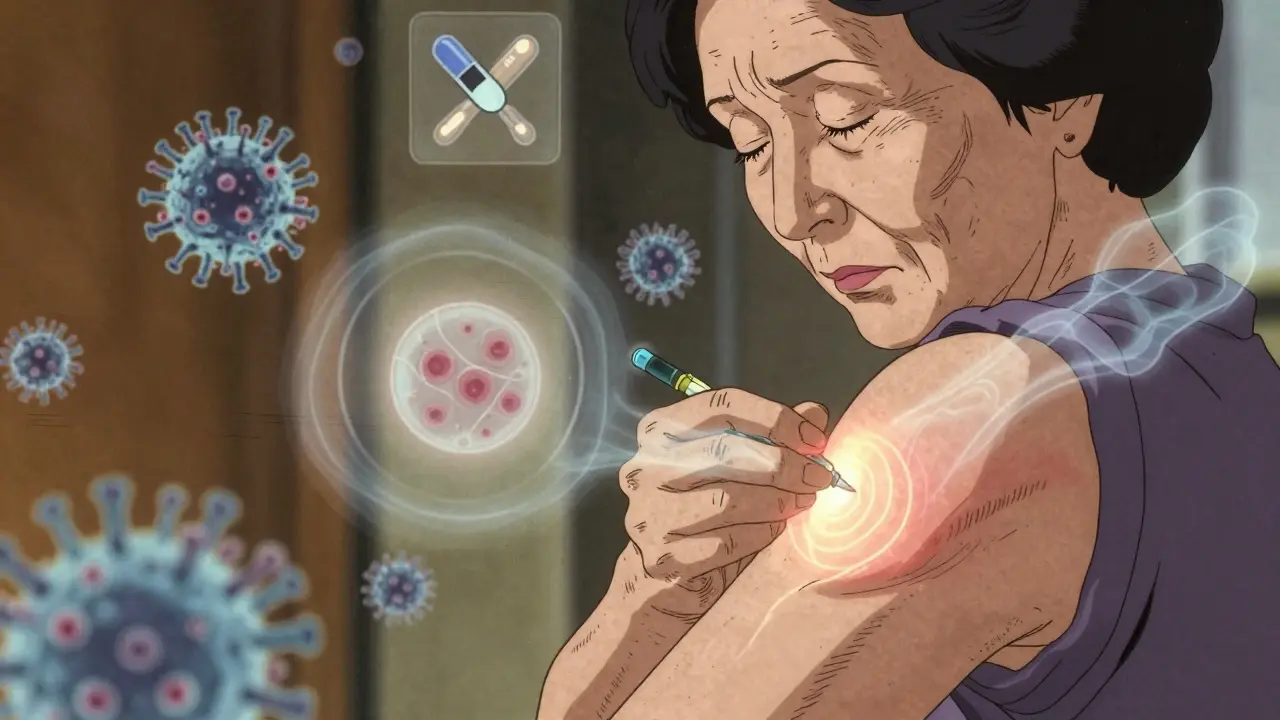
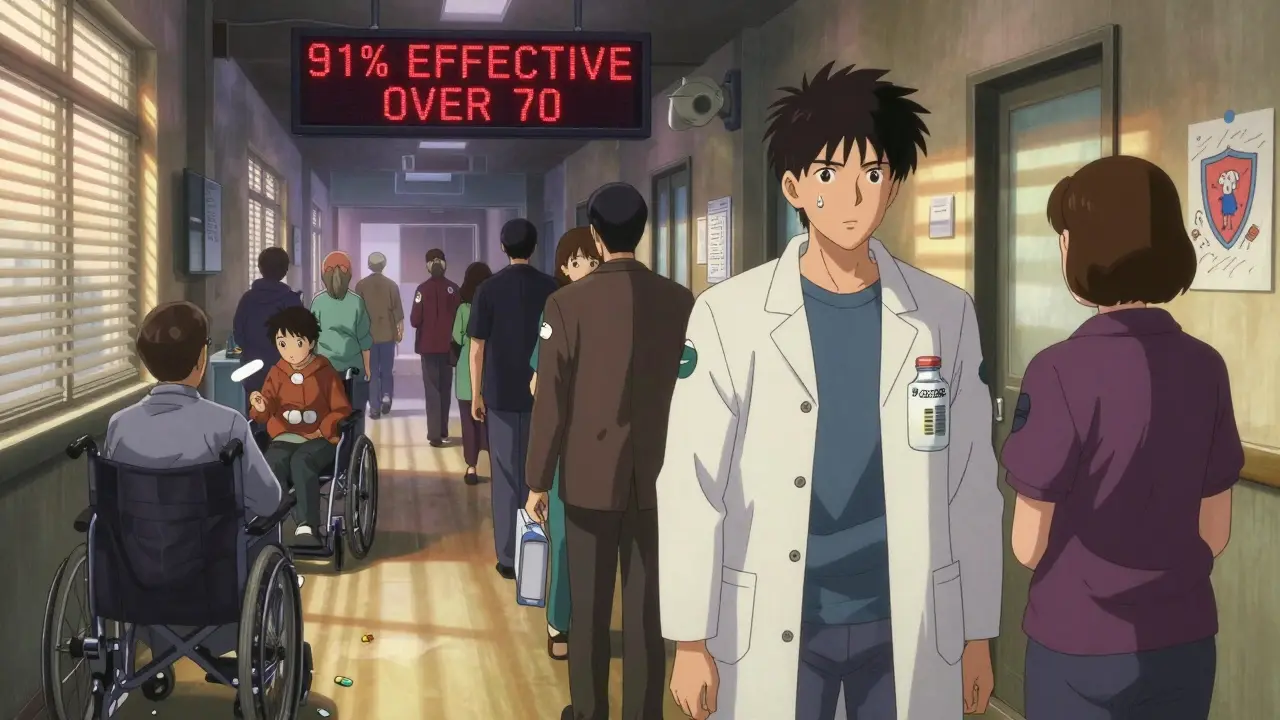
Shingrix works better than any shingles vaccine ever tested. In people 50 to 69, it’s 97% effective at preventing shingles. In those over 70, it’s still 91% effective. That’s compared to Zostavax, which only worked about 50% of the time. The difference isn’t close.
The real win? Protection against postherpetic neuralgia. Shingrix cuts the risk of this chronic pain by over 90%. Studies show this protection lasts at least 7 years, and experts believe it may last much longer. Unlike Zostavax, which lost effectiveness after 5 years, Shingrix doesn’t seem to fade quickly.
It also works well in people with chronic conditions. A 2023 study in the Journal of the American Geriatrics Society found that adults with diabetes had the same strong response as healthy people. That’s important because diabetes doubles your risk of shingles.
Cost and Insurance Coverage
Shingrix costs about $220 per dose. That’s $440 total for both shots. But most people pay much less-or nothing. Medicare Part D covers it with no out-of-pocket cost if you’re enrolled in a plan. Private insurance usually covers it too, but check with your provider. Some plans require you to get it from a pharmacy, not a doctor’s office.
If you’re uninsured, look into the Vaccines for Children program (for adults under 65 with low income) or manufacturer assistance programs. GSK offers a savings card that can cut the cost to $10 per dose for eligible patients. Pharmacies like CVS, Walgreens, and Rite Aid often have the lowest prices and can bill your insurance directly.
What About the Future?
GlaxoSmithKline is already working on a single-dose version of Shingrix. Early trials show promise, and if approved, it could be available by 2027. That would solve the biggest hurdle: getting people back for the second shot.
Doctors are also starting to recommend vaccination at age 50 instead of waiting until 65. That’s because shingles risk climbs steadily after 50. The American Geriatrics Society now says: “Talk about vaccination at your 50th birthday.”
Right now, only 42% of adults over 60 have gotten both doses. The biggest reason? Fear of side effects. But the risk of shingles-especially long-term pain-is far greater than the risk of a few days of feeling under the weather.
What If You Got Zostavax?
If you got Zostavax before it was pulled from the market in 2020, you still need Shingrix. The CDC says to wait at least 8 weeks after your last Zostavax shot before getting Shingrix. Even if you got Zostavax five years ago, you’re not fully protected. Shingrix gives you much stronger, longer-lasting defense.
There’s no need to wait for symptoms. If you’re over 50 and haven’t had Shingrix, make an appointment. Don’t wait until you’re in pain.
Can I get the shingles vaccine if I’m over 80?
Yes. Shingrix is recommended for adults 50 and older, no matter how old you are. It’s still 91% effective in people over 70 and continues to protect against shingles and long-term nerve pain even into your 80s and 90s. Age alone is not a reason to skip it.
Can I get Shingrix at the same time as my flu shot or COVID booster?
Yes. You can safely get Shingrix with other vaccines, including flu, pneumonia, and COVID-19 shots. They’re given in different arms. There’s no evidence that combining them reduces effectiveness or increases side effects. In fact, getting them together saves you trips to the clinic.
Is the shingles vaccine safe if I have an autoimmune disease?
Yes. Because Shingrix doesn’t contain live virus, it’s safe for people with lupus, rheumatoid arthritis, MS, and other autoimmune conditions-even if they’re on immune-suppressing drugs. The CDC and American College of Rheumatology both recommend it. Talk to your doctor about timing if you’re starting a new treatment.
What if I don’t remember if I had chickenpox?
You don’t need to prove you had chickenpox. Almost everyone over 50 has been exposed to the virus, even if they never had symptoms. Testing isn’t required. If you’re over 50, just get Shingrix. The vaccine won’t harm you if you’ve never had chickenpox.
How long does the protection from Shingrix last?
Data shows strong protection lasts at least 7 years, and studies are ongoing. So far, there’s no sign the protection fades significantly after that. Unlike the old Zostavax vaccine, which lost effectiveness after 5 years, Shingrix holds up. Experts believe it may last 10 years or more. A booster isn’t currently recommended.
Next Steps: What to Do Now
If you’re 50 or older and haven’t gotten Shingrix, call your doctor or local pharmacy. Ask if they have it in stock. Most pharmacies carry it and can give you both doses on the same visit if you’re eligible for the shorter interval.
Set a calendar reminder for your second shot right after your first. If you’re immunocompromised, ask your doctor if you qualify for the 1-month gap. Don’t wait until you’re sick to think about it. The vaccine works best before you’re exposed to the virus’s reactivation.
Shingles can strike anyone. But it doesn’t have to ruin your life. Getting vaccinated is the single most effective thing you can do to protect yourself from years of pain-and it’s easier than you think.

Wendy Claughton
January 17, 2026 AT 23:23I got Shingrix last year at 52... honestly, I thought I’d be bedridden for a week. I felt like a robot had punched me in the arm 🤖💥. Sore for two days, zero shingles. Worth every second of discomfort. My mom’s 84 and got hers too-still gardening like a champ. 🌿
Stacey Marsengill
January 19, 2026 AT 09:10Ugh. I hate how they push this vaccine like it’s the second coming. I had shingles at 38-no comorbidities, no stress, just bad luck. The vaccine didn’t stop it. Now they want everyone over 50 to get it? What’s next? Mandatory vitamin injections? 🤡
Aysha Siera
January 21, 2026 AT 01:09Shingrix? That’s just a Trojan horse for Big Pharma’s microchip agenda. They put tracking nanobots in the adjuvant. You think the side effects are just fatigue? Nah. They’re syncing your neural patterns to the cloud. I read it on a forum in 2019. Still no one listens.
rachel bellet
January 21, 2026 AT 03:28Let’s be clear: the adjuvant AS01B in Shingrix is a TLR4 agonist that potentiates Th1 and Th17 responses, which is why the reactogenicity profile is so pronounced. The CDC’s 2024 update on immunocompromised timing is evidence-based, but the public health messaging is catastrophically oversimplified. You can’t reduce immunology to ‘get two shots and you’re good.’
Also, the 97% efficacy is relative risk reduction. Absolute risk reduction in healthy 50-year-olds is under 2%. That’s not a vaccine-it’s a statistical mirage.
Pat Dean
January 22, 2026 AT 04:20Why are we letting Big Pharma dictate our health? I’ve seen what they do to veterans. First they give us the flu shot, then the COVID jab, now this? Who benefits? Not us. The VA doesn’t even stock it. They want us weak, dependent, and afraid. This isn’t medicine-it’s control.
Selina Warren
January 23, 2026 AT 02:57Look. I’m 56. I got shingles in 2018. It felt like someone poured acid on my ribs and set it on fire. I couldn’t sleep for weeks. I cried every morning. I didn’t even know what ‘postherpetic neuralgia’ meant until I lived it. So I got Shingrix. I felt like crap for two days. I’m not afraid of side effects-I’m afraid of the pain I already lived through. If you’re reading this and you’re over 50? Get the damn shot. Your future self will thank you.
Robert Davis
January 23, 2026 AT 22:10Interesting. I read a paper last week that said the immune response to Shingrix might be partially mediated by pre-existing varicella zoster memory T-cells. Which means… if you never had chickenpox, maybe the vaccine doesn’t work as well? But the article was in a ‘non-peer-reviewed’ journal. So… I guess we’re all just guessing?
Joni O
January 24, 2026 AT 08:54Just got my first shot yesterday! Felt like I got hit by a truck 😅 but I set a reminder for the second one in 3 months. I’m 51 and had chickenpox as a kid-never thought I’d be the type to get vaccines seriously. But after reading this, I’m glad I did. If you’re scared of the side effects, just do it on a Friday. Sleep it off. You’ll be fine. 💪
Max Sinclair
January 25, 2026 AT 08:29This is one of the most balanced, well-researched pieces on shingles I’ve ever read. The breakdown of efficacy by age group, the clarification on Zostavax vs. Shingrix, the insurance info-all of it matters. Too many health articles are either fearmongering or oversimplified. This? This is public health done right. Thank you.
christian Espinola
January 26, 2026 AT 20:5991% effective? That’s just marketing. Look at the FDA’s own data-42% of people who got Shingrix still reported mild nerve pain in trials. And the adjuvant? It’s aluminum-based. Same stuff they put in every vaccine. We’re being lied to. The real risk isn’t shingles-it’s what they’re putting in your body.
Robert Cassidy
January 26, 2026 AT 22:02They say ‘get it at 50’-but why not 45? Or 40? Next thing you know, they’ll be vaccinating toddlers against chickenpox again. This is the slippery slope. We used to trust our bodies. Now we’re just lab rats with injection schedules. I’m 58. I’ve had shingles once. I’m not getting it again. But I’m not getting this shot either. My immune system’s fine. Let it handle it.
Andrew Qu
January 28, 2026 AT 13:28For anyone worried about the second dose: I’m a nurse in a geriatric clinic. I’ve seen hundreds of patients get Shingrix. The second shot? Usually milder than the first. Most people think it’ll be worse-but it’s not. The real danger is skipping it. One dose is half as effective. Set a phone alert. Tell a friend. Don’t let logistics cost you protection.
Also-yes, you can get it with your flu shot. I give them both on the same day, different arms. No issues. Save yourself a trip.
Tyler Myers
January 29, 2026 AT 08:24Wait. So if you got Zostavax, you need Shingrix? But Zostavax was approved by the FDA. Now it’s ‘unsafe’? What if the government flips on Shingrix too in 5 years? Are we supposed to get a new shot every time they change their mind? This isn’t science-it’s corporate whiplash.