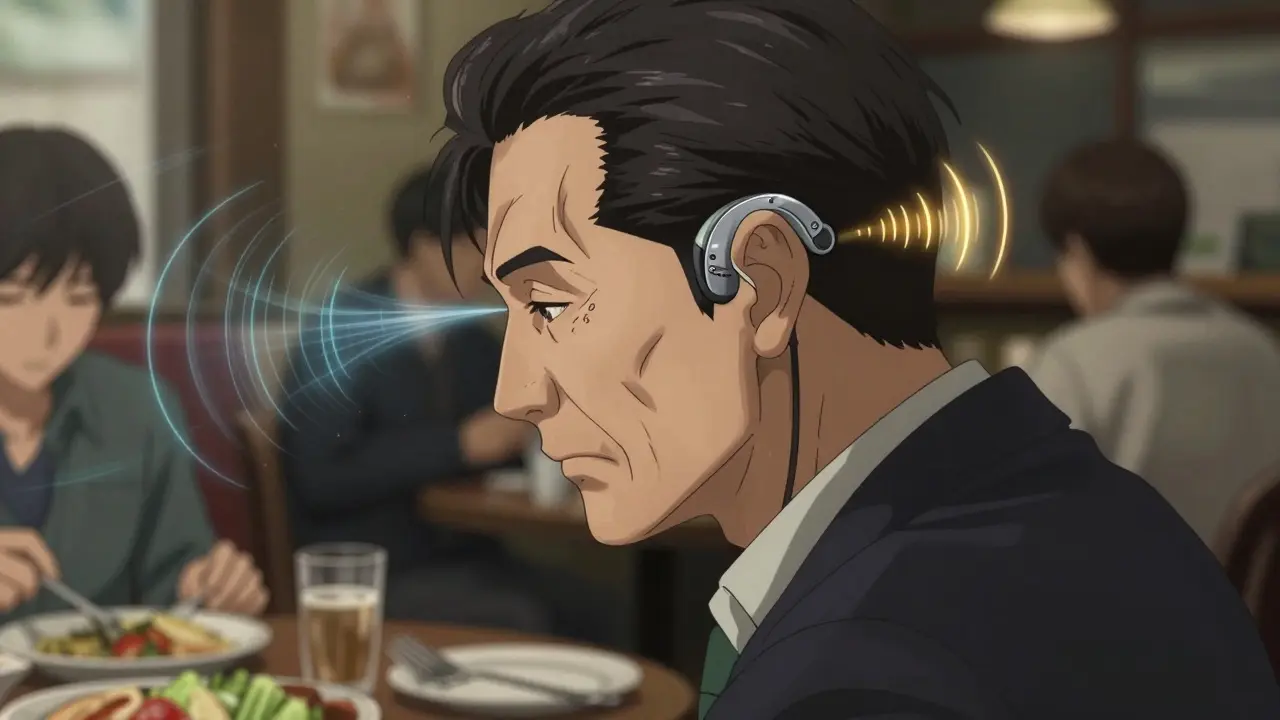
Imagine trying to follow a conversation in a busy café, but every time someone speaks from your left side, their voice disappears. Not muffled. Not quiet. Just gone. That’s the reality for people with single-sided deafness (SSD)-a condition where one ear has little to no hearing, while the other works fine. It’s not just about missing sounds. It’s about losing the ability to tell where sound is coming from, struggling in noisy places, and feeling like you’re always one step behind in conversations. About 4 to 5 out of every 100,000 people develop SSD each year, and most are adults between 45 and 64. The good news? There are real solutions today that can change how you experience sound. Two main options stand out: CROS hearing aids and bone-anchored devices. Neither is perfect, but knowing the difference can make all the difference in your daily life.
What Exactly Is Single-Sided Deafness?
Single-sided deafness isn’t just having one ear that’s a little worse than the other. It means the hearing in one ear is so poor-usually worse than 90 dB-that it’s effectively non-functional. The other ear, however, hears normally or close to it. This creates a problem called the head shadow effect. High-frequency sounds like consonants (s, t, k, f) can’t bend around your head to reach your good ear. So if someone speaks to your deaf side, you miss those critical sounds. In a noisy room, your brain gets overwhelmed trying to pick out speech from background noise, especially if the noise is coming from your deaf side. People with SSD often report feeling exhausted after social events, avoiding group settings, or even mishearing their own name because they didn’t catch the start of it.
CROS Hearing Aids: Wireless Sound Routing
CROS stands for Contralateral Routing of Signals. It’s a non-surgical solution that uses two devices: one microphone on the deaf ear and a hearing aid on the better ear. The microphone picks up sound from your deaf side and wirelessly sends it to the hearing aid on your good ear. Modern versions, like the Phonak CROS Marvel (2020), Oticon CROS Free (2021), and Signia CROS Pure 312 (2022), use Bluetooth-like 2.4 GHz signals, not wires. They’re small, discreet, and easy to put on in the morning. These devices reduce the head shadow effect by about 8-10 dB, meaning you’ll hear sounds from your deaf side more clearly. But here’s the catch: you’re still only hearing with one ear. Your brain doesn’t get true stereo sound. It gets a copy of the sound from the other side, delivered through your good ear.
Many users like CROS because it’s reversible. No surgery. No scars. No risk of infection. You can take it off at night, change the battery, and clean it easily. Battery life is short-typically 2 to 3 days on a size 13 or 312 battery. That means you’re changing batteries often. One Reddit user said, “I love not having surgery, but I’m changing batteries every two days like clockwork.” If you’re active, it can slip out during exercise. And in noisy environments, CROS can make things worse. When noise comes from your deaf side, the device picks it up and sends it straight to your good ear. Your brain doesn’t know how to filter it out. Studies show some users actually perform worse in restaurants with CROS than without any device at all.
Bone-Anchored Devices: Sound Through Bone, Not Air
Bone-anchored hearing systems (BAHS), like the Cochlear Baha 6 Max, Oticon Medical Ponto 5 SuperPower, and MED-EL Bonebridge, work differently. Instead of sending sound through the air, they send vibrations directly through your skull bone to your inner ear. This bypasses the outer and middle ear entirely. There are two types: percutaneous and transcutaneous. Percutaneous systems, like the original Baha, have a titanium implant screwed into the skull behind the ear. After 3 to 6 months of healing, the sound processor clips onto a small abutment sticking out of the skin. Transcutaneous systems, like the Ponto 5, use a magnet to hold the processor against the skin-no hole needed. The MED-EL Bonebridge is fully implantable: a tiny transducer sits under the skin and vibrates the bone directly.
The big advantage? Sound quality. Because the signal goes through bone, not air, you get a more natural, fuller sound. Wind noise is reduced. There’s no occlusion effect (that plugged-up feeling you get with ear molds). And since your good ear isn’t blocked, you still hear naturally from that side. In studies, users report better performance when speech comes from their deaf side. One user wrote, “The surgery healed well, but I get skin irritation twice a month. Still, the sound quality is worth it.”
But it’s not simple. You need surgery. That means downtime, healing time, and risks. About 15-63% of people with percutaneous systems get skin reactions around the abutment-redness, itching, sometimes infection. Cleaning it daily is non-negotiable. You’ll need special wipes and sometimes antibiotic cream. The cost is higher too. The device alone runs $4,000-$8,000, and surgery adds another $3,000-$7,000. Insurance doesn’t always cover it. And if your device breaks, repairs take weeks because only a few centers handle them. Still, long-term user retention is better. In one study, 93% of BAHS users came back for follow-up; only 46% of CROS users did.
Which One Works Better? The Data
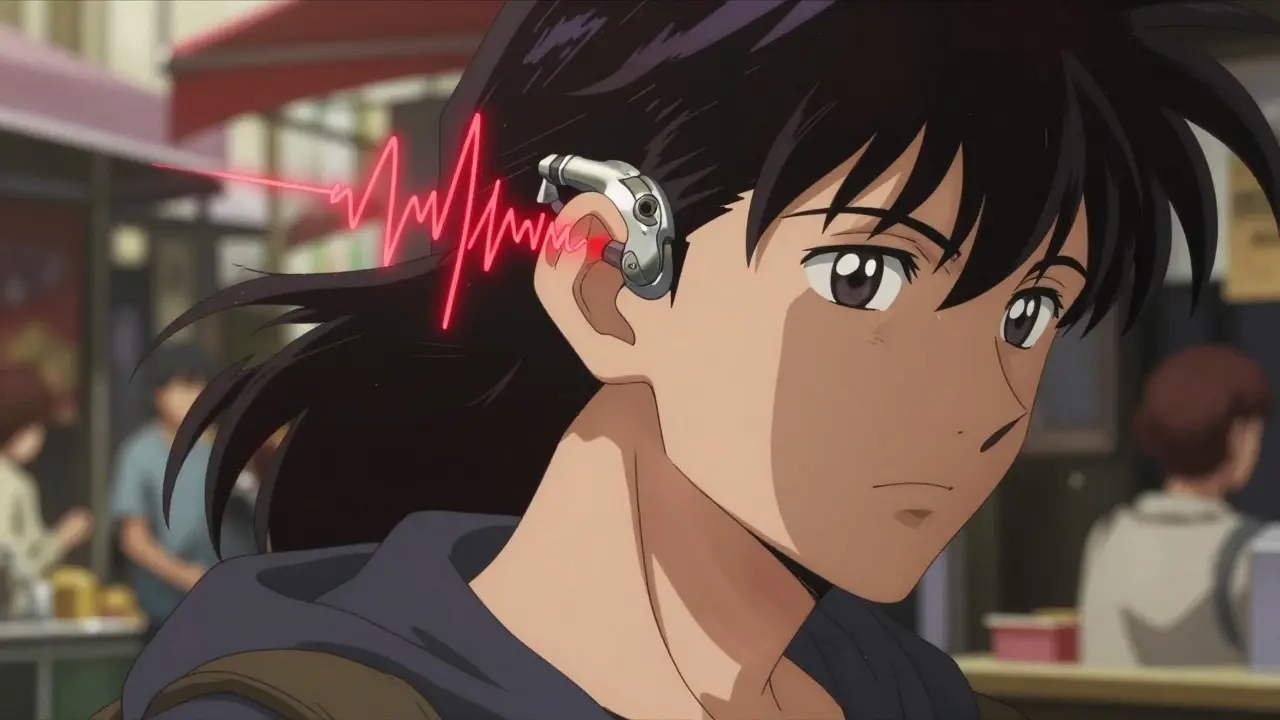
Let’s look at real results. The CINGLE trial, a major 2015 study with 113 SSD patients, showed that cochlear implants performed best at sound localization. But among non-surgical and surgical hearing devices, bone-anchored systems beat CROS in two key areas: speech understanding when noise was on the deaf side, and long-term use. CROS users often report that the system helps them hear more-but not understand better. In noisy places, CROS can amplify the wrong sounds. One 2022 study found CROS users had a 1.2 dB SNR (signal-to-noise ratio) loss when noise came from their deaf side. That means conversations became harder, not easier. BAHS users, by contrast, improved by 3.5 dB SNR in the same situation.
On the other hand, CROS wins on ease of use. Eighty-seven percent of users said fitting was simple. Only 72% said the same for BAHS. The learning curve is faster too. Most CROS users adapt in two weeks. BAHS users need 4 to 8 weeks to get used to the feeling of bone-conducted sound. It’s not like normal hearing-it’s more like hearing through your jawbone. Some say it sounds metallic at first. But most adjust.
Here’s a quick comparison:
| Feature | CROS Hearing Aid | Bone-Anchored Device (BAHS) |
|---|---|---|
| Surgery Required? | No | Yes |
| Cost (device only) | $2,500-$4,000 | $4,000-$8,000 |
| Additional Costs | None | $3,000-$7,000 surgery |
| Battery Life | 2-3 days | 5-7 days |
| Sound Quality | Good, but artificial | Natural, fuller |
| Performance in Noise (speech from deaf side) | Worsens slightly | Improves significantly |
| Long-Term Use Rate | ~46% return rate at 12 months | ~93% return rate at 12 months |
| Common Issues | Short battery life, noise amplification | Skin irritation, surgical risks |
| Best For | People avoiding surgery, budget-conscious, mild noise exposure | Active lifestyles, high noise environments, long-term solution |
Who Should Choose What?
If you’re unsure, start with CROS. Most clinics recommend a 2- to 4-week trial first. It’s low-risk. You can test it in real life-meetings, dinners, walks in the park. If you notice you’re still missing parts of conversations, especially when people speak from behind or to your deaf side, then CROS might not be enough. If you’re active-runner, cyclist, swimmer, or work in a loud job like construction-BAHS is more stable. No slipping. No wind noise. No battery anxiety.
Also consider your skin. If you have eczema, psoriasis, or heal slowly, BAHS might not be right. Skin reactions are common and can be persistent. If you hate the idea of anything sticking out of your skin or having surgery, CROS is safer. But if you’re willing to trade a little maintenance for better sound and reliability, BAHS wins.
And don’t forget tinnitus. About 78% of people with SSD also have ringing in the ears. Newer CROS models like Signia’s CROS Pure 312 now include tinnitus therapy built in. That’s a big plus if you’re dealing with both issues.
What’s Next? The Future of SSD Treatment
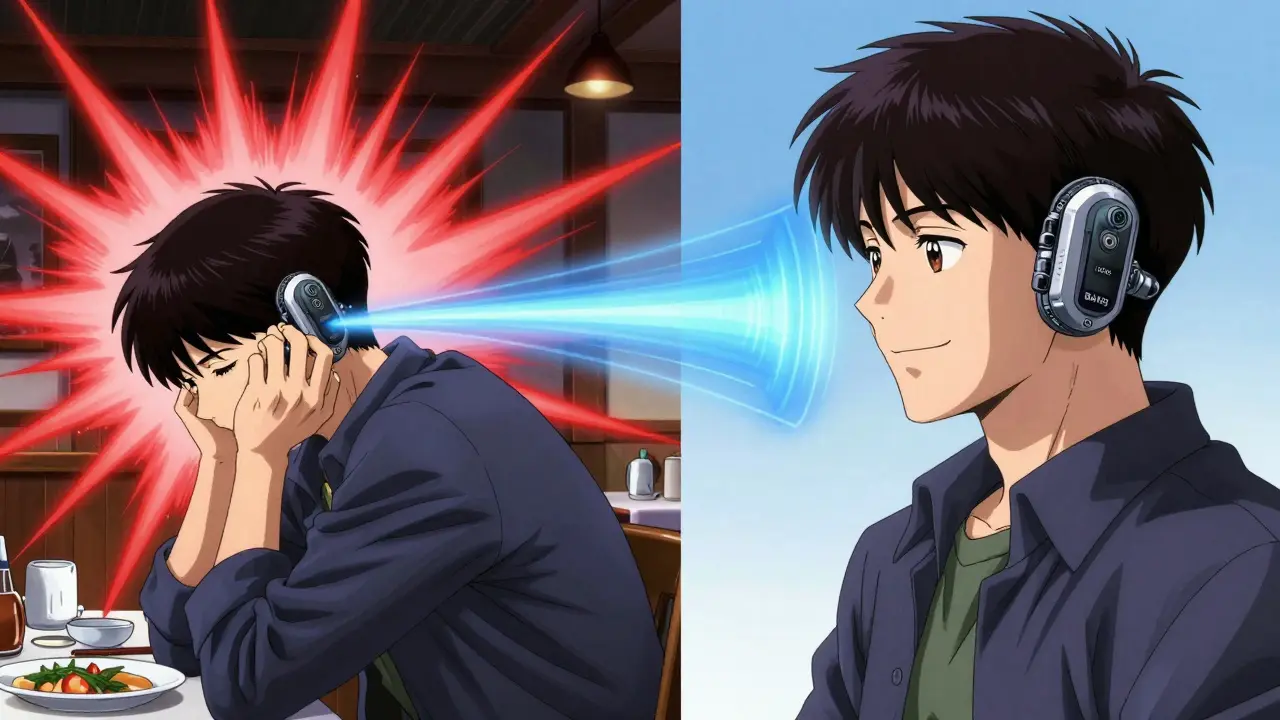
The field is changing fast. In January 2024, the FDA expanded approval for cochlear implants in SSD cases-something that was once reserved only for people with bilateral hearing loss. Early results show cochlear implants can restore near-normal sound localization. But they’re still expensive, invasive, and not for everyone. For now, CROS and BAHS remain the go-to options.
One thing’s clear: CROS isn’t going away. Wireless tech keeps improving. Battery life is getting better. AI noise filters are being added. But BAHS adoption is growing too. Transcutaneous systems like the Ponto 5 and Bonebridge are reducing skin problems. More insurance plans are covering them. And patients who stick with them are happier long-term.
There’s no one-size-fits-all. Your choice depends on your lifestyle, budget, tolerance for surgery, and how much you value sound quality over convenience. Talk to an audiologist who specializes in SSD-not just general hearing aids. Ask for a trial. Ask for data. And don’t rush. This isn’t just about hearing better. It’s about being able to relax in a crowd again.
Can CROS hearing aids restore normal hearing in single-sided deafness?
No. CROS hearing aids don’t restore hearing in the deaf ear. They route sound from the deaf side to the good ear. You still only hear with one ear, so you won’t get true stereo hearing or perfect sound localization. But they do help you hear sounds from your deaf side that you’d otherwise miss, especially in quiet environments.
Is bone-anchored surgery risky?
The surgery itself is low-risk and takes about 45 minutes under local anesthesia. But the main risks are long-term: skin irritation around the abutment (affects 15-63% of users), infection, or poor bone integration. People with skin conditions, poor healing, or thin skull bone may not be good candidates. Proper daily cleaning reduces most risks.
Why do some people stop using CROS hearing aids?
The most common reasons are short battery life (needs changing every 2-3 days), poor performance in noisy places (it amplifies background noise from the deaf side), and the unnatural feeling that sounds are coming from inside their head. About half of users stop using them within a year because the benefits don’t match their expectations.
Can I try CROS before buying?
Yes. Most clinics offer a 2- to 4-week trial with a loaner device. This is strongly recommended. You’ll learn how it works in your real-life situations-meetings, driving, restaurants-before committing to a purchase.
Do I need a CT scan for bone-anchored devices?
Yes. A CT scan is required before surgery to check the thickness and density of your skull bone. You need at least 3.5 mm of bone at the implant site for the titanium screw to hold properly. If the bone is too thin, the device won’t integrate, and surgery won’t be safe.
Will insurance cover bone-anchored hearing devices?
It depends. Many private insurers and Medicare now cover BAHS for SSD, especially if you’ve tried CROS first and it didn’t work. Medicaid coverage varies by state. Surgery costs are often covered separately. Always check with your provider and ask for a pre-authorization letter.
Can children use CROS or bone-anchored devices?
Yes. Children as young as 5 can use transcutaneous bone-anchored devices like the Ponto Softband (a headband version). CROS is less common in kids because they’re more likely to lose or damage the devices. Bone-anchored systems are often preferred for children with SSD because they’re more reliable and don’t require frequent battery changes.
What’s the difference between BAHS and cochlear implants for SSD?
Cochlear implants bypass the damaged inner ear and directly stimulate the auditory nerve. BAHS works through bone conduction and uses your existing healthy inner ear. Cochlear implants offer the best sound localization and speech understanding in noise, but they’re more invasive and expensive. BAHS is less invasive and preserves your natural hearing. Many experts now recommend trying BAHS before considering a cochlear implant.
Next Steps
If you think you might have SSD, start with a hearing test. Make sure the audiologist checks both ears separately and looks for single-sided deafness specifically. Don’t assume your good ear is compensating enough. Ask for a referral to a specialist in SSD. Request a CROS trial. If you’re considering surgery, ask for a CT scan and talk to a surgeon who’s done at least 50 BAHS procedures. Bring a friend to your appointments. This decision affects your daily life-don’t rush it.

Solomon Ahonsi
February 3, 2026 AT 01:54George Firican
February 4, 2026 AT 15:37Matt W
February 5, 2026 AT 17:20Anthony Massirman
February 5, 2026 AT 17:21Gary Mitts
February 6, 2026 AT 02:43clarissa sulio
February 7, 2026 AT 13:10Ansley Mayson
February 8, 2026 AT 15:46Bob Hynes
February 8, 2026 AT 20:11Eli Kiseop
February 9, 2026 AT 02:56Marc Durocher
February 11, 2026 AT 01:17Nick Flake
February 12, 2026 AT 13:26Akhona Myeki
February 13, 2026 AT 19:51