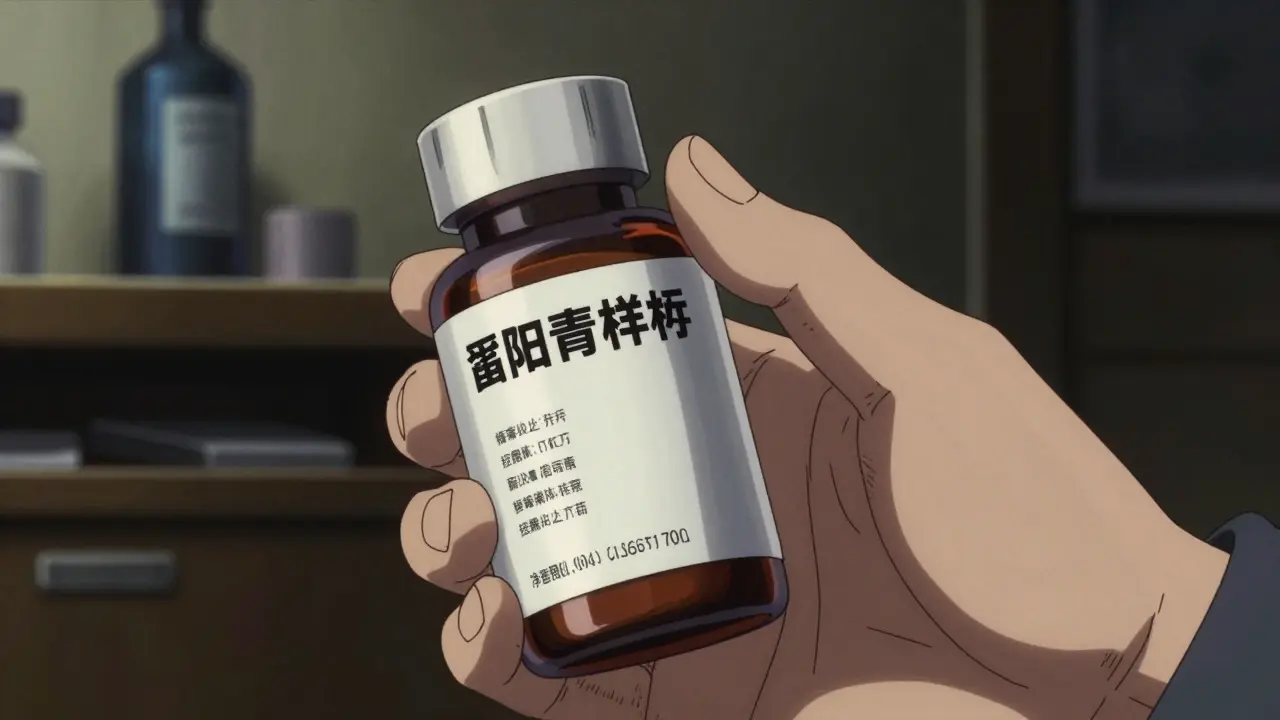
Have you ever looked at your medication bottle and noticed a strange code or a warning that seems more intense than usual? If you're taking a medication classified as a controlled substance, those labels aren't just pharmacy formalities-they are legal markers that tell your doctor, your pharmacist, and the government exactly how dangerous a drug could be if misused. Understanding these controlled substance labels is about more than just following directions; it's about knowing the risk profile of what you're putting into your body.
In the United States, this entire system is governed by the Controlled Substances Act (CSA). Launched in 1970, the CSA creates a "closed system" to track every single pill from the factory to the patient. The goal is simple: keep medicines that help people from falling into the wrong hands. To do this, the government assigns every drug to a "schedule" based on how likely it is to cause addiction and whether it actually has a medical use.
The Breakdown of Schedule Codes
When you see a schedule code on a label or in a pharmacy database, it's telling you where that drug sits on a spectrum of risk. These categories range from Schedule I (the most restrictive) to Schedule V (the least restrictive). Not all schedules are created equal; some are essentially banned, while others are common in many home medicine cabinets.
For instance, Schedule I substances are defined as having a high potential for abuse and no currently accepted medical use in the U.S. You won't find these on a legal prescription label because they cannot be prescribed. This category includes things like heroin and LSD. Interestingly, cannabis has historically lived here, creating a huge legal headache since many states now allow it medically while the federal government still views it as a Schedule I drug.
Once a drug has a recognized medical use, it moves into Schedules II through V. The difference comes down to the level of physical or psychological dependence the drug can cause. If you're taking a powerful painkiller like fentanyl or oxycodone, you're dealing with a Schedule II substance. These have the highest potential for abuse among the drugs that doctors can actually prescribe.
| Schedule | Abuse Potential | Medical Use | Example Drugs | Refill Rules |
|---|---|---|---|---|
| I | Highest | None | Heroin, LSD | Not Prescribable |
| II | High | Yes | Oxycodone, Morphine | No Refills |
| III | Moderate to Low | Yes | Ketamine, Anabolic Steroids | Max 5 refills / 6 months |
| IV | Low | Yes | Xanax, Ambien | Max 5 refills / 6 months |
| V | Lowest | Yes | Pregabalin, certain cough syrups | Varies by state |
Why the Label Details Matter for Patients
The schedule of your medication directly changes how you get your refills and how your pharmacist handles your order. If you've ever wondered why you can't just call in a refill for your heavy-duty pain medication, it's because of the regulations surrounding Schedule II drugs. In 47 states, these require a physical, hardcopy prescription on tamper-resistant paper to prevent fraud. Even with the rise of digital health, these drugs are handled with extreme caution.
Comparing a Schedule II drug to a Schedule IV drug like Xanax reveals a big difference in convenience. For Schedule IV medications, you might have a few refills available on a single prescription for six months. With Schedule II, you're starting from scratch every single time. This is why some patients feel the system creates barriers to care, while others argue it's the only way to prevent widespread addiction.
You might also see abbreviations on pharmacy labels or paperwork, such as "NARC" for Narcotic or "CSA SCH" for the specific schedule. These are shorthand for the Drug Enforcement Administration (DEA) and their internal tracking systems. The DEA assigns a unique Controlled Substance Code Number (CSCN) to each drug, which ensures that a pharmacy in Maine and a pharmacy in California are treating the same substance with the same set of rules.

The "Grey Areas" of Medication Scheduling
It's not always a straight line from I to V. Some medications change their schedule based on how they are made. Take codeine as an example. If it's pure codeine, it's a Schedule II drug. If it's mixed with acetaminophen in a tablet, it often drops to Schedule III. If it's in a cough syrup with a very low concentration, it might be Schedule V. The concentration and formulation change the risk profile, which in turn changes the label and the law.
This nuance is where things get tricky for both patients and providers. Doctors must maintain a specific DEA registration number for every location where they prescribe these drugs. This isn't just a simple license; it's a monitored registration that can be revoked if the DEA finds inconsistencies in their records. In fact, a large portion of DEA audit failures are linked to incomplete records for Schedule II substances, proving that the paperwork is just as critical as the prescription itself.

Practical Tips for Managing Controlled Substances
Navigating this system can be stressful, especially when you're dealing with a health crisis. To avoid delays at the pharmacy, keep a few things in mind. First, always check your refill date. If you're on a Schedule III or IV medication, remember that the five-refill limit usually expires after six months, regardless of whether you've used all the pills. If you run out of refills or hit that six-month mark, the pharmacist cannot legally dispense more without a new script.
For those on Schedule II medications, plan ahead. Since these cannot be refilled, you need a new prescription for every fill. Because of the strict handling requirements, some pharmacies may take longer to process these orders. In some cases, an oncology nurse might spend 15 minutes longer processing a single Schedule II script compared to a standard one because of the documentation required. Don't expect a five-minute turnaround for these high-schedule drugs.
Finally, be aware of the security of your medication. Controlled substance labels are a signal to others that the medication in that bottle has a high street value or a high potential for misuse. Store these medications in a locked cabinet and never share them. Sharing a Schedule II substance isn't just a health risk-it's a federal crime under the CSA.
Can a drug move from one schedule to another?
Yes. The DEA and FDA regularly review substances based on new scientific evidence. For example, there have been recent recommendations to move cannabis from Schedule I to Schedule III to reflect its medical utility. When a drug is rescheduled, the rules for prescribing and refilling it change accordingly.
Why can't I refill my Schedule II prescription?
Schedule II drugs have a high potential for abuse and dependence. To prevent "pill mill" scenarios and over-prescribing, federal law requires a new prescription for every single fill. There are no refills permitted for this category.
What does a DEA number on a prescription actually do?
The DEA number is a unique identifier for the healthcare provider. It allows the government to track who is prescribing controlled substances and in what quantities. This helps identify abnormal prescribing patterns and prevents the illegal distribution of medications.
Are all addictive drugs listed as controlled substances?
Not necessarily. While the CSA covers thousands of substances, some drugs that can cause dependence might not be formally "scheduled" if they don't meet the specific legal criteria for abuse potential or if they haven't been reviewed by the DEA and FDA.
Does the schedule of a drug affect the price?
Not directly, but the cost of compliance is high. Pharmacies and manufacturers spend billions annually on the security, tracking, and documentation required for controlled substances, which can indirectly influence the operational costs of providing these medications.
Next Steps for Patients and Caregivers
If you are managing a complex medication list, the best first step is to create a medication log. Note the schedule of each drug and the specific refill rules. For those using Schedule II medications, set a calendar reminder three to five days before your current supply runs out so you have time to secure a new prescription from your doctor.
If you're a caregiver, ensure you have a copy of the prescriber's DEA registration and a clear understanding of the dosage. Because controlled substance labels are so strictly regulated, any discrepancy between the label and the bottle can lead to a pharmacy refusing to dispense the medication until the doctor is contacted and the error is corrected. Keep your records precise to avoid these delays.

william wang
April 16, 2026 AT 15:57It's really helpful to have this laid out so clearly. A lot of people don't realize that the specific formulation-like adding Tylenol to codeine-actually changes the legal schedule of the drug. Definitely makes the pharmacy experience less confusing when you know why they're being so strict about the paperwork.
Nikki Grote
April 18, 2026 AT 00:03The discrepancy between state-level medical cannabis legality and its federal Schedule I classification is a textbook example of regulatory dissonance. From a clinical perspective, the pharmacological profile doesn't align with the legal designation, which creates a massive hurdle for provider documentation and patient access to standardized care protocols.
Anmol Garg
April 19, 2026 AT 21:21It's a bit sad how the system prioritizes paperwork over the actual human experience of pain, but I guess the balance between safety and access is always a tricky dance. We just have to find a way to be patient with the pharmacists who are just following the law.
ira fitriani
April 20, 2026 AT 23:33OMG the struggle with Schedule II scripts is REAL!! 😱 I always forget that I can't just hit a 'refill' button on my app and then I'm panicking on a Sunday night! 😭 Definitely setting those reminders now! ✨💊
Rock Stone
April 21, 2026 AT 20:05Just keep it chill and plan ahead. No point getting stressed at the counter when you know the rules.
Bonnie Piersall
April 23, 2026 AT 04:42This is some gold-standard info right here. Managing a medication cocktail can feel like a full-time job, and having the roadmap for these codes keeps you from getting blindsided by the pharmacy's red tape. Stay on top of your game, folks!
Ben Ferguson
April 23, 2026 AT 23:56I find it absolutely fascinating, and perhaps a bit overwhelming, how the administrative side of healthcare in the United States has evolved into this intricate web of DEA registrations and tamper-resistant paper, which, while necessary for the prevention of diversion, often feels like it adds a layer of bureaucracy that can be quite taxing for the average patient who is just trying to manage a chronic condition without spending half their morning on hold with a doctor's office!
Michael Lewis
April 25, 2026 AT 13:18Stop complaining about the red tape. These rules exist for a reason. If we didn't have strict Schedule II controls, we'd have even more people struggling with addiction. Deal with the paperwork and keep your meds secure.
Anna BB
April 25, 2026 AT 20:08I totally agree with the idea of a medication log!!! It just makes life so much smoother... especially when you're dealing with multiple doctors!!! 🌟
Heer Malhotra
April 27, 2026 AT 10:01The regulatory framework described is strictly a manifestation of American legalism. It is imperative that individuals adhere to these mandates without deviation to maintain the integrity of the healthcare system.
Josephine Wyburn
April 28, 2026 AT 17:02Ugh, I can't even imagine the stress of this!! 😩 My last pharmacy experience was a total nightmare where they lost my script and I had to wait three days in total agony because it was a Schedule II and they wouldn't just 'trust' my doctor's word, and I swear I almost had a meltdown right there in the lobby while everyone just stared at me like I was the crazy one, which is just so typical of how this whole broken system treats people who are actually suffering! 💔😭💊
Joshua Nicholson
April 30, 2026 AT 01:48Kinda long read, but yeah, basic stuff. Just don't lose your bottle.
Adele Shaw
April 30, 2026 AT 09:00This is why we need better laws in this country. It's all just a mess of paperwork and DEA numbers while people are actually suffering. Absolute disaster.