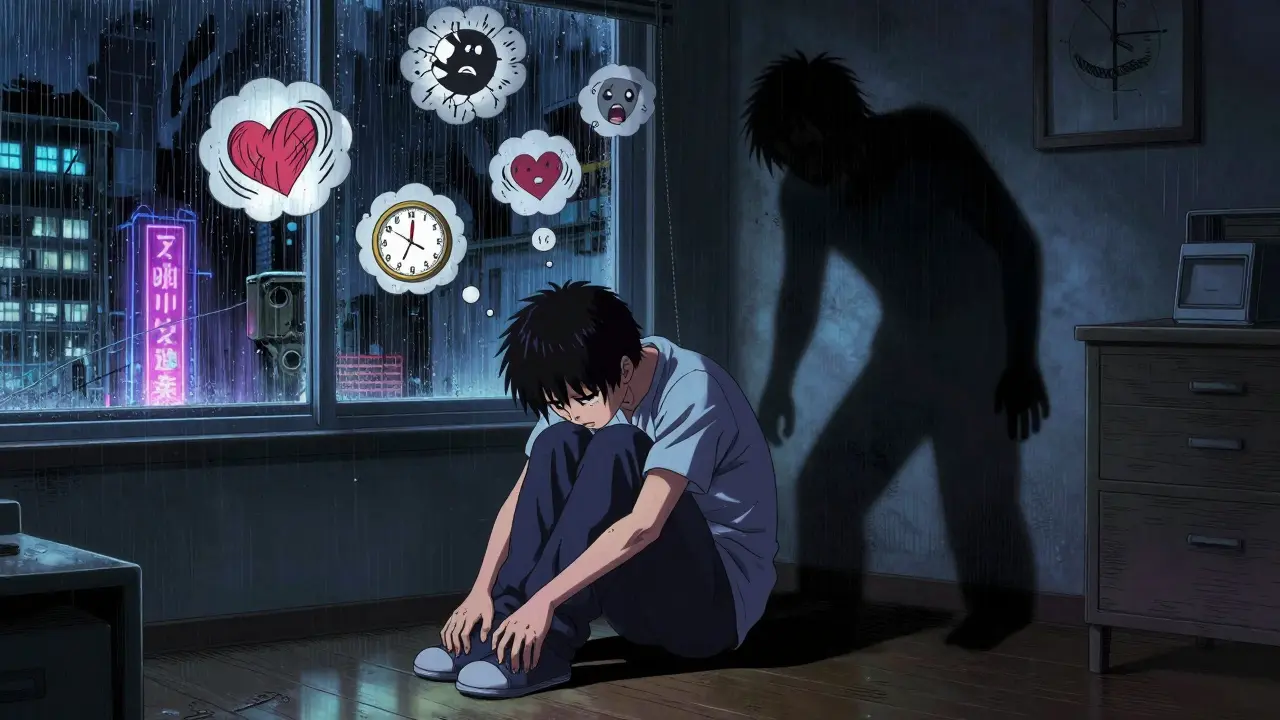
When your heart races for no reason, your thoughts spiral out of control, or you avoid social situations just to feel safe - it’s not just stress. It’s an anxiety disorder. These aren’t moments of nervousness. They’re persistent, overwhelming conditions that hijack your daily life. Around 19.1% of U.S. adults live with one right now, and many don’t even know what they’re dealing with. The good news? We know exactly how to treat them - and the science is clear.
What Are the Main Types of Anxiety Disorders?
Anxiety isn’t one thing. It shows up in different forms, each with its own pattern of fear and avoidance. The DSM-5, the standard used by doctors worldwide, recognizes seven major types.Generalized Anxiety Disorder (GAD) is the most common. People with GAD don’t just worry about a big presentation or a bill. They worry about everything - their health, their job, their kids, even the weather - and it’s constant. More days than not, for six months or longer, their mind is stuck in a loop of "what if?" About 3.1% of adults in the U.S. have this.
Panic Disorder hits like a lightning strike. One minute you’re fine, the next you’re gasping for air, your chest feels like it’s being crushed, and you’re sure you’re having a heart attack. These panic attacks come without warning. After the first one, the fear of having another can become worse than the attack itself. Around 2.7% of adults experience this.
Social Anxiety Disorder isn’t just being shy. It’s the terror of being judged, embarrassed, or humiliated in everyday situations - speaking up in a meeting, eating in public, even making small talk. People with this disorder often avoid social events altogether. It affects 7.1% of U.S. adults - that’s more than 1 in 14 people.
Specific Phobias are intense fears of specific things: heights, spiders, flying, needles. The fear is out of proportion to the actual danger. You might know rationally that a spider won’t hurt you, but your body still screams danger. Nearly 9% of adults have one or more specific phobias.
Obsessive-Compulsive Disorder (OCD) is now classified separately, but it still belongs here in practice. It’s not just being neat. It’s being trapped by intrusive thoughts - like fearing you’ll hurt someone - and feeling forced to do rituals (handwashing, checking locks) to quiet the anxiety. It affects 1.2% of adults.
Separation Anxiety Disorder isn’t just for kids. Adults can feel extreme panic when separated from loved ones - a partner, a child, even a pet. They might call constantly, refuse to travel, or feel physically ill when alone.
Selective Mutism mostly affects children. They speak normally at home but freeze up completely in school or with strangers. It’s not defiance - it’s fear so intense, their voice shuts down.
What Do Anxiety Disorders Actually Feel Like?
The physical symptoms are real - and they’re terrifying. During a panic attack, your heart can spike to 140 beats per minute. You sweat so much your clothes stick to you. Your hands shake. You feel dizzy, nauseous, or like you’re going to pass out. These aren’t "just in your head." They’re your nervous system firing on overdrive.Cognitive symptoms are just as damaging. You can’t focus. Your mind races with worst-case scenarios. You replay every awkward conversation from the past week. You think, "I’m losing control," or "Something terrible is about to happen." Eighty-nine percent of people with GAD say they can’t concentrate. Ninety-one percent ruminate - meaning they get stuck in loops of thinking about the same fear over and over.
Emotionally, it’s exhausting. You feel like doom is always right around the corner. Ninety-five percent of panic attack sufferers report a sense of impending disaster. You feel trapped, powerless, and alone - even when surrounded by people.
These symptoms don’t go away after the situation ends. For someone with anxiety, the fear lingers. The body stays tense. The mind stays alert - always waiting for the next threat.
What Treatments Actually Work?
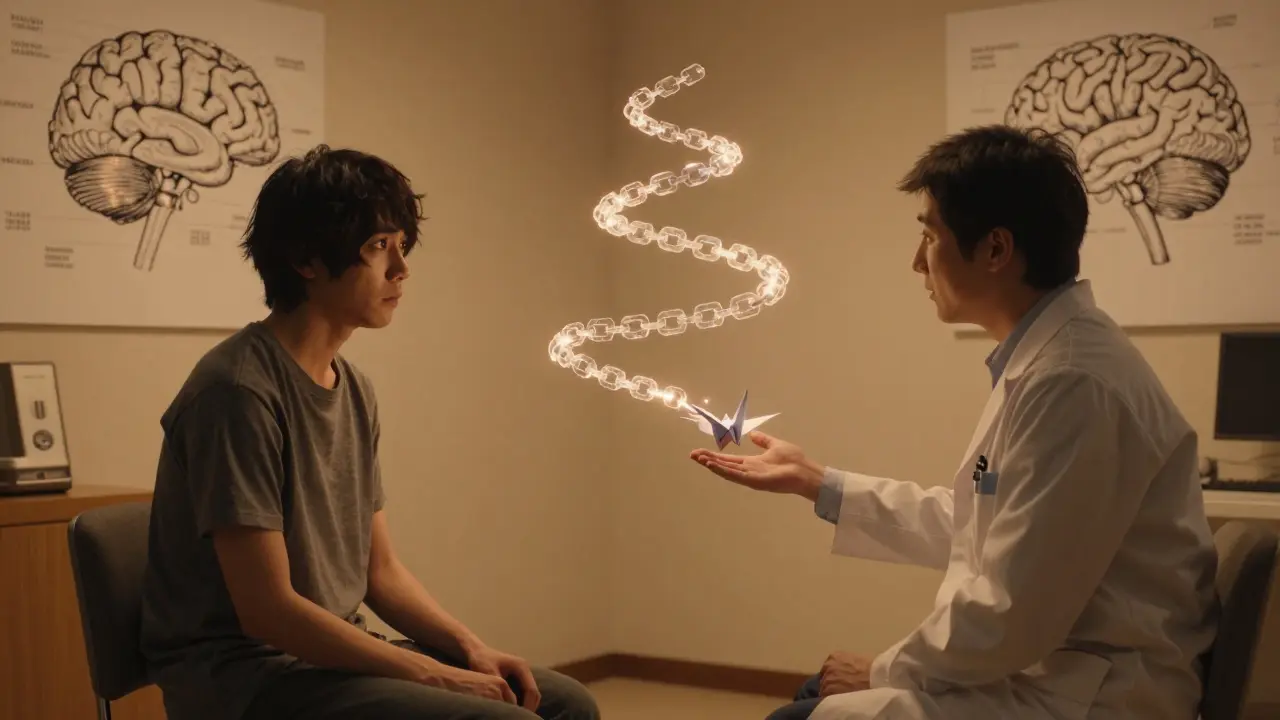
The best treatments aren’t magic pills or quick fixes. They’re proven, science-backed approaches that retrain your brain and body.Cognitive Behavioral Therapy (CBT) is the gold standard. It’s not just talking. It’s learning skills. You identify the thoughts that trigger your anxiety - like "Everyone thinks I’m stupid" - and test whether they’re true. You learn to breathe through panic instead of fighting it. You slowly face what scares you, starting with small steps. Studies show 50-60% of people see major improvement after 12-20 sessions. For social anxiety and phobias, exposure therapy - a core part of CBT - works in 60-80% of cases when done right.
Medication isn’t a crutch. It’s a tool. SSRIs - like sertraline (Zoloft) and fluoxetine (Prozac) - are first-line choices. They don’t make you "happy." They take the edge off the panic, so you can actually use therapy. After 8-12 weeks, 40-60% of people respond well. SNRIs like venlafaxine work similarly. Benzodiazepines (like Xanax) give fast relief, but they’re risky. Long-term use leads to dependence in 15-30% of people. That’s why doctors now avoid them for ongoing treatment.
Combining therapy and medication works better than either alone. A 2023 NAMI survey found 58% of people improved with both, compared to 42% with meds only and 38% with therapy alone. It’s not about taking pills instead of therapy - it’s about using both to break the cycle.
Why Do So Many People Struggle to Get Help?
The treatments work - but getting them is hard. A 2022 VA survey of 12,500 patients found only 37% reached remission after six months. Why?First, wait times. Finding a therapist who specializes in anxiety can take 6-8 weeks. In rural areas or low-income communities, it’s longer. Second, cost. Insurance often limits therapy sessions. Some people can’t afford copays. Third, side effects. Some people on SSRIs feel emotionally numb. Others can’t sleep or gain weight. It’s frustrating when the treatment feels worse than the anxiety.
And then there’s the fear of exposure. CBT asks you to face your fears - which means feeling worse before you feel better. One Reddit user wrote: "I started CBT. Panic attacks dropped from 5-7 a week to 1-2. But the exposure exercises made me want to quit."
That’s normal. Progress isn’t linear. Temporary worsening during exposure is expected - 75% of patients experience it. But sticking with it changes everything.

New Frontiers in Treatment
The field is moving fast. In 2023, the FDA approved zuranolone (Zurzuvae), the first oral drug specifically for postpartum anxiety, with a 54% remission rate in trials. That’s huge - it means we’re finally treating anxiety as a biological condition, not just a psychological one.Research is also uncovering biological subtypes of anxiety. A 2023 study in Nature Medicine used brain scans to identify three distinct "anxiety biotypes." This could mean future treatments are personalized - not trial-and-error. One person might respond to SSRIs, another to CBT, and a third to something entirely new.
AI tools are now predicting panic attacks 24 hours in advance with 87% accuracy. Apps like nOCD and Wysa offer CBT-based programs you can use daily. They’re not replacements for therapy, but they help bridge gaps - especially when you can’t find a therapist right away.
Ketamine-assisted therapy is showing promise for treatment-resistant anxiety. In 2022 trials, 65% of patients had rapid relief after just a few sessions. It’s still experimental, but it’s a breakthrough for people who’ve tried everything.
And the stigma? It’s shrinking. In 2010, only 42% of Americans saw anxiety as a medical condition. By 2023, that number jumped to 67%. More people are talking about it. More employers are offering mental health support. More insurance plans are covering digital CBT programs.
What Can You Do Right Now?
If you recognize yourself in this:- Start with your doctor. Ask for a referral to a therapist trained in CBT.
- Don’t wait for "perfect" conditions. Even one session can give you tools.
- Try a free CBT app like Woebot or Sanvello. Use it for 10 minutes a day.
- Practice diaphragmatic breathing: inhale for 4 seconds, hold for 4, exhale for 6. Do this 5 times when you feel panic rising.
- Join a support group. NAMI and ADAA offer free weekly groups - in person and online.
- If medication is suggested, give it 8-12 weeks before deciding. Side effects often fade.
Anxiety disorders don’t define you. They’re not weakness. They’re a medical condition - and like diabetes or high blood pressure, they respond to treatment. The path isn’t always easy, but it’s well-lit. You don’t have to suffer alone. The tools are here. The science is solid. And you’re not broken - you’re just stuck in a system that’s been misfiring. It can be fixed.
Can anxiety disorders go away on their own?
Rarely. While some people experience less intense symptoms over time, anxiety disorders rarely disappear without treatment. Left untreated, they often get worse or lead to other problems like depression, substance use, or chronic physical conditions. The brain learns to stay in high-alert mode - and without intervention, that pattern becomes automatic.
Is CBT better than medication?
Neither is "better" - they work differently. CBT teaches skills that last long after therapy ends. Medication reduces symptoms quickly, making it easier to engage in therapy. Research shows combining both gives the best long-term results. CBT alone works well for many, especially for phobias and social anxiety. Medication is often needed when symptoms are severe or when CBT alone isn’t enough.
How long does it take for SSRIs to work?
It usually takes 4-8 weeks to feel the full effect. Some people notice small improvements in sleep or energy within the first two weeks, but the real change - reduced panic, less constant worry - comes later. Don’t stop taking them just because you don’t feel better right away. Side effects like nausea or drowsiness often fade within a few weeks too.
Can children have anxiety disorders?
Yes - and it’s common. Half of all anxiety disorders begin by age 11. In kids, it often looks like school refusal, tantrums, clinginess, or physical complaints like stomachaches. Selective mutism and separation anxiety are especially common in childhood. Early treatment with CBT adapted for kids is highly effective and prevents lifelong struggles.
Are anxiety disorders genetic?
Genetics play a role - if a close family member has an anxiety disorder, your risk is higher. But genes aren’t destiny. Environment, trauma, stress, and life experiences shape whether those genes turn on. You can’t change your genes, but you can change how your brain responds to stress - through therapy, exercise, sleep, and support.
What if I can’t afford therapy?
You’re not alone. Many community health centers offer sliding-scale fees based on income. Online platforms like Open Path Collective connect people with therapists charging as little as $30-$60 per session. Free or low-cost CBT apps like Woebot and Moodfit are clinically validated. Support groups through NAMI or ADAA are free and available nationwide. Start small - even one tool, one breathing technique, one supportive conversation can make a difference.
