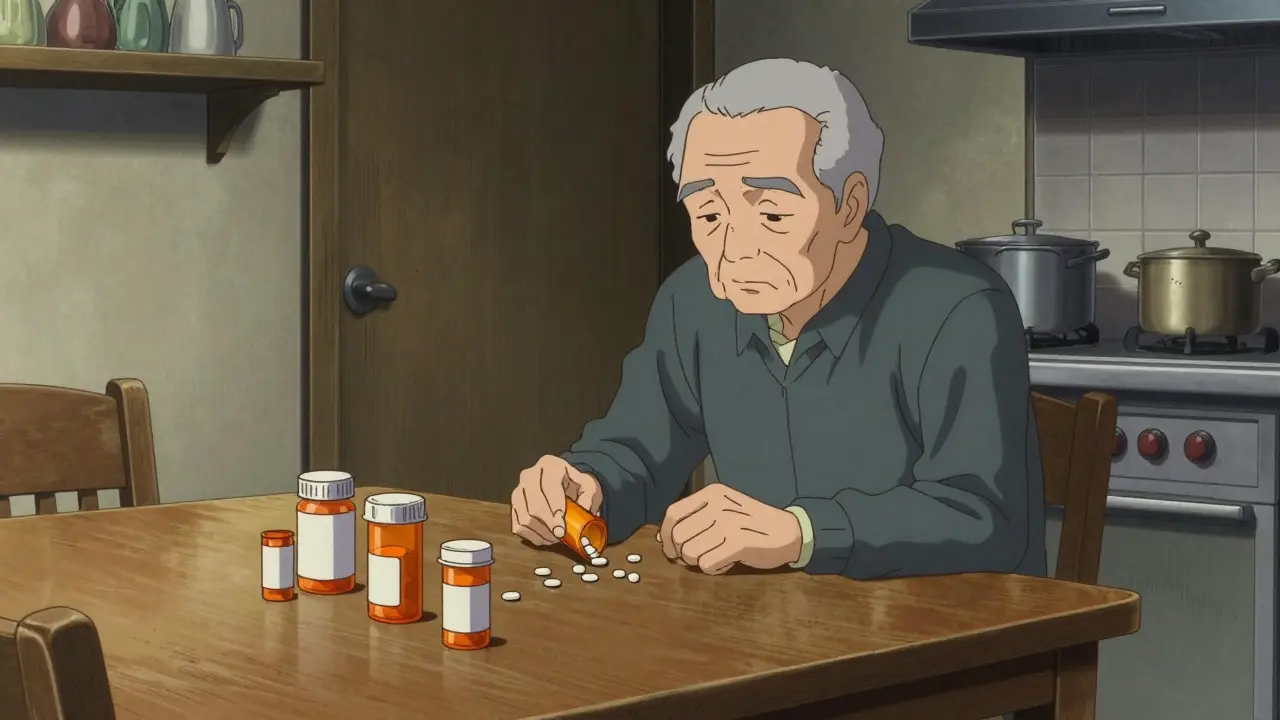
Imagine waking up and realizing you're taking twelve different pills every morning, but you can't remember why you started half of them. For many seniors, this isn't a hypothetical-it's daily life. We often think of medicine as something that only adds value, but as we age, the scales can tip. What worked for you at 50 might be doing more harm than good at 80. This is where deprescribing is the intentional process of reducing or stopping medications when the risks outweigh the benefits or no longer align with a patient's health goals. It isn't about just cutting pills to save money; it's a clinical strategy to improve quality of life and prevent dangerous drug interactions.
The Growing Problem of Polypharmacy
The reality of modern medicine is that we are very good at adding drugs but not very good at taking them away. This leads to polypharmacy, which is generally defined as taking five or more medications concurrently. The numbers are staggering. In the United States, the percentage of older adults facing polypharmacy tripled between 1994 and 2014, jumping from about 13.8% to over 42%.
Why does this matter? Because your body changes. Your kidneys and liver don't process drugs as quickly as they used to, and your brain becomes more sensitive to certain chemicals. When you pile on more medications, you increase the risk of adverse drug events. In fact, the U.S. spends roughly $30 billion every year treating these preventable complications. For a senior, a simple drug interaction doesn't just cause a side effect; it can lead to a fall, a hip fracture, or a sudden bout of confusion that looks like dementia but is actually just medication toxicity.
When is it Time to Consider Deprescribing?
You shouldn't just stop taking a pill because you feel "too old" for it. However, there are specific red flags that suggest a medication review is overdue. If you or a loved one fit into these categories, it's time to have a serious conversation with a doctor:
- New, Unexplained Symptoms: If you suddenly feel dizzy, confused, or excessively sleepy, it might not be "just old age." It could be a side effect of a drug you've taken for years.
- Advanced Health Changes: When someone is dealing with severe dementia, extreme frailty, or end-stage organ failure, the goal of care shifts from long-term prevention to comfort and quality of life. A statin to prevent a heart attack 10 years from now isn't helpful if the person can no longer walk or recognize family.
- High-Risk Combinations: Certain drug pairings are notorious for causing problems in seniors. For example, combining certain blood pressure meds with diuretics can lead to severe dehydration or kidney strain.
- Preventative Meds with No Immediate Payoff: Some drugs take years to show a benefit. If a patient's life expectancy is short, the burden of the daily pill often outweighs the theoretical future benefit.

How Professionals Identify "Wrong" Meds
Doctors don't just guess which meds to cut. They use evidence-based tools to spot Potentially Inappropriate Medications (PIMs). The most famous of these is the Beers Criteria, a guideline developed by the American Geriatrics Society that lists medications that are generally avoided in older adults due to a high risk of side effects. Another key tool is STOPP (Screening Tool of Older Persons' Potentially Inappropriate Prescriptions), which helps clinicians identify specific drugs that don't fit the patient's current clinical picture.
| Tool/Approach | Primary Goal | Who Uses It | Key Focus |
|---|---|---|---|
| Beers Criteria | Identify high-risk drugs | Doctors, Nurses | Drug-specific safety lists |
| STOPP Criteria | Screen for inappropriateness | Geriatricians, Pharmacists | Patient-specific drug fit |
| Pharmacist Review | Optimize regimen | Clinical Pharmacists | Dose reduction & interactions |
| Patient-Led Review | Align with values | Patient & Caregiver | Quality of life & preference |
The Safe Way to Stop: A Step-by-Step Process
Stopping a medication cold turkey can be dangerous. Some drugs, like certain blood pressure meds or antidepressants, require a slow "taper" to avoid withdrawal symptoms or a "rebound effect" where the original condition comes back worse than before. A safe deprescribing plan usually follows these steps:
- The Audit: Bring every single bottle-including over-the-counter vitamins and herbal supplements-to the appointment. Many seniors take things they forgot they were prescribed five years ago.
- Goal Setting: Decide what matters most. Is it staying alert? Reducing falls? Being able to eat without nausea? This guides which meds are prioritized.
- One at a Time: This is the golden rule. Never stop three drugs at once. If you do and you feel sick, you won't know which drug caused the reaction or which one you actually miss.
- The Taper: Gradually reduce the dose over weeks or months. For example, if you're cutting a Proton Pump Inhibitor (PPI), your doctor might move you from twice-daily to once-daily, then to every other day.
- Monitoring: Keep a simple log of how you feel. Are the symptoms the drug was treating returning? Or do you actually feel better and more energetic?

Common Pitfalls and Barriers
One of the biggest hurdles is the "prescribing habit." Many doctors are trained to treat a condition with a drug and then simply renew the prescription every six months without questioning if the drug is still needed. This creates a cycle where the patient is afraid to stop and the doctor is afraid to suggest it.
Another issue is the transition from hospital to home. Hospital stays are often too short to see the full effect of a medication change. If a doctor reduces a dose in the hospital, the patient might feel fine for three days, but the real impact-or the return of symptoms-might not happen until two weeks later at home. This is why a strong connection between the hospital discharge team and the primary care physician is vital.
The Bottom Line on Quality of Life
When done correctly, deprescribing isn't about taking away care; it's about adding quality to life. Evidence shows that appropriate medication reduction can lower adverse drug events by up to 30% and reduce hospital readmissions by as much as 25%. It simplifies the daily routine, reduces the financial burden of pharmacy bills, and most importantly, clears the mental fog that often accompanies polypharmacy.
Next time you're at the pharmacy or the clinic, don't just ask "Do I still need this?" Ask "What happens if I stop this?" and "Is this drug still serving my current goals?" Turning the conversation toward deprescribing is one of the most effective ways to ensure that medicine remains a tool for health, not a burden of age.
Is deprescribing the same as just quitting my meds?
Absolutely not. Quitting medications without medical supervision can be dangerous and lead to withdrawal or a relapse of the condition. Deprescribing is a planned, clinical process led by a healthcare provider who tapers the dose and monitors your reaction.
Why would a doctor want me to take fewer medications?
As we age, our bodies process drugs differently. Medications that were helpful in the past may now cause side effects like dizziness, confusion, or kidney strain. Reducing unnecessary meds lowers the risk of dangerous drug-drug interactions and improves overall alertness and mobility.
Which medications are most commonly targeted for deprescribing?
Common targets include long-term Proton Pump Inhibitors (PPIs) for acid reflux, certain benzodiazepines for anxiety or sleep, and some blood pressure medications if the patient's blood pressure becomes too low (hypotension), which can cause falls.
How often should a senior have their medications reviewed?
Ideally, a comprehensive review should happen at least once a year. However, it should be done sooner if there is a change in health status, a new diagnosis, a hospital admission, or the onset of new symptoms like confusion or frequent falls.
What should I bring to a medication review appointment?
Bring every single medication you take. This includes prescription drugs, over-the-counter meds, vitamins, supplements, and herbal teas. Using the actual bottles is better than a written list, as it prevents errors in dosage or drug names.

Nikita Shabanov
April 24, 2026 AT 05:06It's worth noting that pharmacists are often the most overlooked resource here. They see the interaction between drugs from different specialists that the primary care doctor might miss entirely because the prescriptions come from three different clinics.
Sharyl Foster
April 24, 2026 AT 21:00Please, give me a break. The Beers Criteria is basically a suggestion list, not a law. Plenty of people stay on "inappropriate" meds for years and do just fine because every body reacts differently. Just because a guideline says so doesn't make it a fact for everyone.
Anand Mehra
April 25, 2026 AT 08:48pill cycles are just modern rituals no more no less we treat symptoms to ignore the decay
Michael Deane
April 25, 2026 AT 12:11This is exactly why the American healthcare system is a total disaster and a joke compared to how things should be run, because we've got doctors just pumping out scripts like candy and then we act surprised when our seniors are basically walking pharmacies while the big pharma companies just keep raking in the cash from these pointless long-term prescriptions that don't even help anymore!
Vijay AGarwal
April 25, 2026 AT 16:47ABSOLUTELY CRITICAL POINT! I've seen cases where a simple diuretic adjustment completely transformed a patient's mental clarity! It is an absolute tragedy that so many seniors are left in a fog simply because a doctor was too rushed to look at the whole picture! We need a revolution in geriatric care RIGHT NOW!
Ben Jima
April 27, 2026 AT 11:27If you're helping a parent with this, I highly recommend creating a shared digital spreadsheet. List the drug, the dose, the prescribing doctor, and the specific reason for taking it. This makes the "audit" phase mentioned in the post much more efficient and ensures nothing is missed during the appointment.
Carol Yang
April 28, 2026 AT 22:08Love this approach. It's all about quality of life in the end.
Brittney Prince
April 30, 2026 AT 10:14Sure, "deprescribe" is just a fancy word they use to stop giving you the meds that actually work so the insurance companies can stop paying for them. They'll tell you it's for your "quality of life" but really it's just another way to control what we put in our bodies and save the corporations a few bucks while we just get sicker.
Daniel Runion
April 30, 2026 AT 17:31Ridiculous...!!! Why are we acting like this is a new discovery...??? Every single medical student knows about polypharmacy...!!! The real problem is that doctors are too lazy to actually spend more than ten minutes with a patient...!!! This whole "step-by-step" guide is just fluff for people who don't actually understand how clinical practice works in the real world...!!!
Kristen O'Neal
May 2, 2026 AT 04:29I really appreciate the emphasis on goal setting. It changes the entire dynamic from "what drug do I need" to "how do I want to feel." I wonder if incorporating palliative care specialists earlier in the process would make the transition to deprescribing smoother for families who are afraid of the changes.
Nila Sawyer
May 3, 2026 AT 06:25This is such an important conversation to have! 🌟 I remember helping my grandmother go through this and it was truly a blessing to see her wake up from that medication fog and start enjoying her morning tea and gardening again! 🌸 We really need to encourage all our loved ones to be brave and have these talks with their doctors because it can honestly change everything about their daily happiness and spirit! ✨💖
Eric Mwiti
May 4, 2026 AT 20:55Oh great, another list of rules for doctors to follow while they charge us 500 dollars for a fifteen-minute visit. I'm sure the "Beers Criteria" is a real game-changer for the three doctors who actually read it.
sachin singh
May 5, 2026 AT 02:32It is very heartening to see such a structured approach to improving the well-being of the elderly. I believe that a collaborative effort between the patient, the family, and the medical team is the most effective way to ensure a dignified quality of life.